


French Pastel Painting
French pastel painting brings soft colour and intimate portraiture into a room, executed on paper with delicate chalk mediums.

French Pastel Painting
A French pastel painting captures portraits, figures, and landscapes through soft chalk marks on paper, preserved behind glass within timber frames. The examples found here span from the eighteenth century through to the mid-twentieth century, recording changing tastes from classical portraiture to modern impressionism.
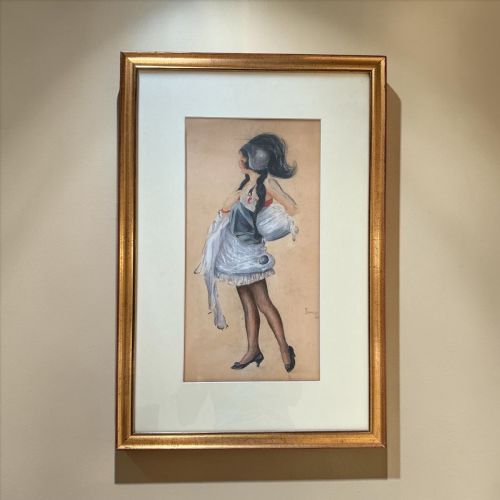
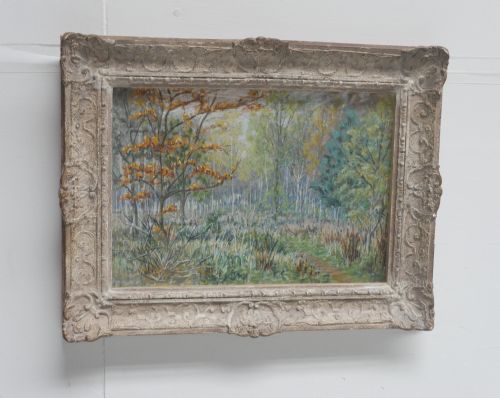
Portraits of young ladies and female subjects dominate the selection, often rendered in oval formats or framed in giltwood. Landscapes and still life compositions also appear, shifting from nineteenth-century realism towards post-impressionist scenes of the French coast and countryside.
Buyers will most frequently encounter nineteenth-century works alongside pieces from the 1920s and 1930s. These later twentieth-century examples introduce modernist florals and art deco ballerinas alongside traditional rural views.
How they were made
Pastel pigment is applied directly to paper or board, relying on chalk and dry colour rather than wet binders. Artists built up layers of hue by hand, creating subtle tonal shifts without the use of oil or turpentine.
Protection is paramount for these fragile works, requiring paper to be mounted securely beneath glass. Frames of giltwood, carved wood, or simple timber enclose the fragile surface to prevent pigment disturbance.
Several ladies wear remarkably large hats.
What varies in quality
The sophistication of the draughtsmanship dictates the standing of a piece, distinguishing stiff academic exercises from fluid, confident portraiture. Masterly handling of light across fabric and skin demonstrates a superior hand.
Preservation of the chalk surface determines long-term visual integrity. Works that retain their original glass and framing without pigment scatter or foxing on the paper show greater care through the decades.
Antoine Calbet·Augustus William Enness·Gaston Bouy·Lamorna Birch
The French Pastel Painting Glossary
- Pastel
- A dry painting medium composed of powdered pigment and a binder, shaped into sticks for drawing. It creates velvety textures and soft gradations of tone.
- Giltwood
- Timber carved and coated with a thin layer of gold leaf or metallic powder. It provides opulent framing for nineteenth-century portraits.
- Gouache
- An opaque water-based paint often used alongside pastel to add highlights and solid colour. It gives greater density to specific areas of the composition.
- Bisque
- Unglazed ceramic porcelain fired once to produce a matte, white finish resembling marble. It appears in sculptural forms alongside flat works on paper.
French Pastel Painting: Frequently Asked Questions
How should I frame a pastel painting?
Pastel works require framing behind glass with a mat or spacer to prevent the delicate pigment from touching the glass surface. This protects the friable chalk medium from moisture and physical disruption.
Traditional giltwood or simple wood frames complement the period aesthetic of these French works. Proper sealing at the reverse prevents dust and insects from reaching the paper.
Where should I hang a pastel painting?
Display these works away from direct sunlight to prevent the fugitive pigments from fading over time. Stable indoor humidity levels protect both the paper support and the timber frames.
Placing them in low-traffic rooms or hallways reduces the risk of accidental knocks. Wall placement should avoid exterior walls prone to dampness.
What periods do these paintings cover?
The available selection spans from the eighteenth century through to the mid-twentieth century. Earlier pieces often feature formal portraiture, while twentieth-century examples embrace impressionist and modernist movements.
Victorian and art deco influences appear frequently across the nineteenth and early twentieth-century entries. This chronological breadth records the evolution of French artistic styles.