

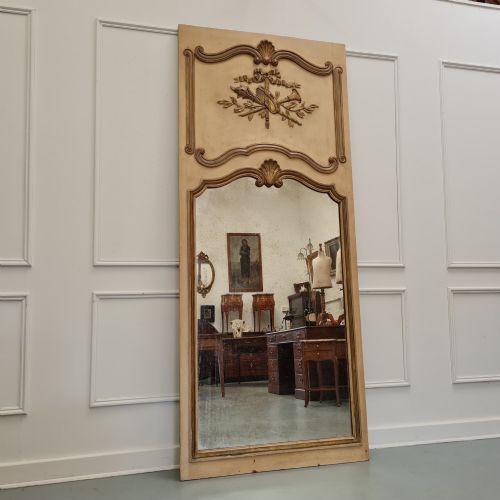


French Panel Wall Mirror
A french panel wall mirror brings architectural character and reflected light to a room, spanning grand gilt overmantels and painted trumeaux.
French Panel Wall Mirror
When you search for a french panel wall mirror, you encounter wall mirrors, overmantel mirrors, and pier mirrors designed with integrated decorative panels above or beside the glass. These pieces span the nineteenth century and early twentieth century, incorporating Victorian, Louis XVI style, and French Empire aesthetics.
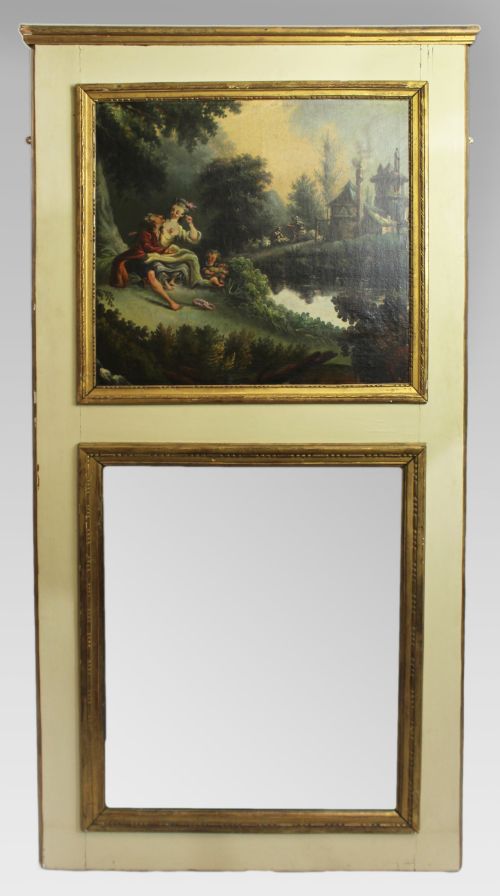
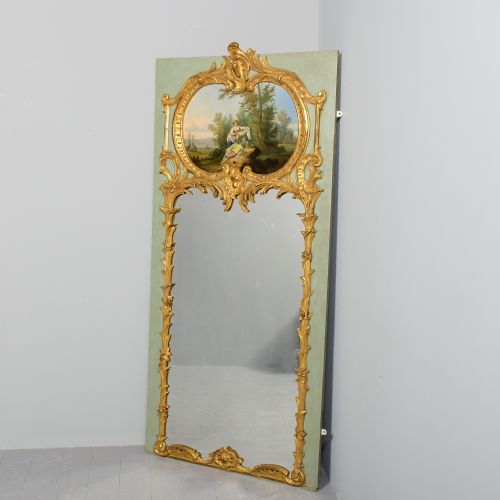
The most common form on this page is the trumeau mirror, frequently featuring an oil painting, canvas, or relief panel set within carved wood or gesso frames. Surviving examples reflect periods from the early eighteen-hundreds through to nineteen-twenty, finished in giltwood, gold leaf, or painted wood.
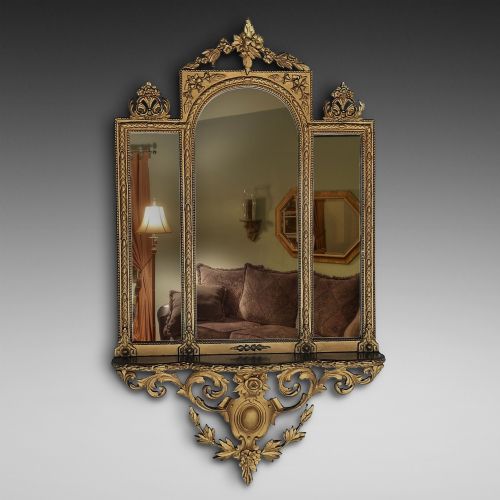
Makers and artisans adapted classical motifs, pastoral scenes, and Rococo revival lines to suit domestic interiors across France and Britain. You find pieces ranging from tall overmantels intended for chimney breasts to smaller wall-mounted items and ornate château mirrors.
Assessing quality and execution
The standard of carving and the refinement of the gesso work distinguish finer pieces from simpler decorative items. Crisp relief mouldings and deep, articulate hand-carving indicate skilled craftsmanship in the original frame construction.
The artistic merit of any integrated panel or pastoral oil painting plays a major role in the overall character of a trumeau mirror. Original gilding, subtle parcel gilt treatments, and well-preserved painted surfaces carry more decorative presence than later repainting.
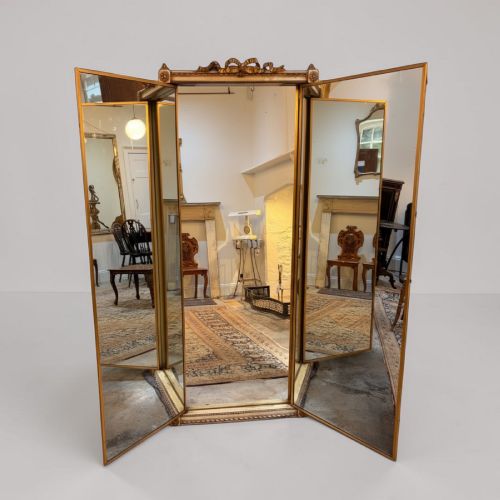
One remarkably adaptable item listed is a triple wall-mounted adjustable mirror from nineteen-twenty, built for inspecting every angle at once.
The French Panel Wall Mirror Glossary
- Trumeau
- A decorative wall mirror featuring an upper panel containing a painting, canvas, or carved relief. These architectural elements originated in eighteenth-century French interior design.
- Gesso
- A plaster-like mixture applied to wood frames to create a smooth surface for gilding or carving. Artisans build up layers before incising or moulding fine details.
- Giltwood
- Timber coated with gold leaf or metallic powder applied over a prepared bole and gesso ground. This technique provides a warm, reflective metallic finish.
- Overmantel
- A large mirror designed specifically to hang above a fireplace mantelpiece. Proportions are typically wider than they are tall to suit the chimney breast.
- Pier mirror
- A tall mirror designed to hang on the narrow wall space between two windows. They often sit above small consoles or pier tables.
French Panel Wall Mirror: Frequently Asked Questions
What is a trumeau mirror?
A trumeau mirror combines a looking glass with an upper decorative panel, usually containing a pastoral oil painting or carved relief. The design derives from interior wood panelling found in traditional French châteaux.
These pieces served to break up large wall expanses, combining art and reflection in a single architectural unit. They suit placement above mantelpieces, console tables, or as focal points in reception rooms.
How do I hang a heavy antique mirror?
Heavy antique mirrors require secure wall fixings distributed across appropriate anchor points in solid masonry or wall studs. Professional mirror hangers utilise heavy-duty D-rings and braided steel wire rated for the specific weight.
Check the structural integrity of the wooden frame and backing boards before mounting. Ensure the hanging weight rests evenly to prevent distortion of the glass and frame over time.
Where should I place an overmantel mirror?
An overmantel mirror traditionally hangs centrally above a fireplace breast, reflecting light and surrounding furniture. The horizontal proportions match the span of the mantel below.
You can also mount overmantels on blank living room walls to create the illusion of architectural depth. Ensure the lower edge sits at a balanced height relative to the mantelpiece or surrounding seating.
How do I clean antique mirror glass?
Clean antique mirror glass gently using a soft microfibre cloth and a mild, ammonia-free glass cleaner. Avoid spraying liquid directly onto the glass, as moisture can seep behind the plate and damage the silvering.
Apply cleaner to the cloth rather than the mirror to protect vulnerable gesso and giltwood frames. Take care around the edges of the glass where historical silvering is often fragile.