




French Painted Box
These french painted box pieces bring hand-painted porcelain, enamel, and gilt detailing to dressing tables and desks.
French Painted Box
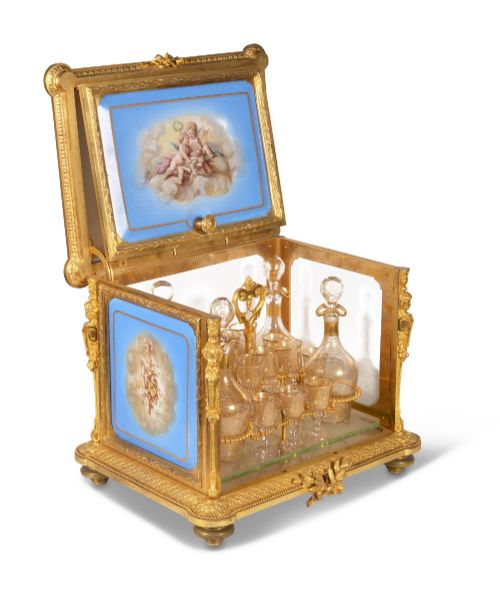
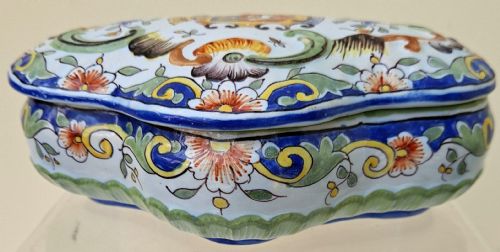
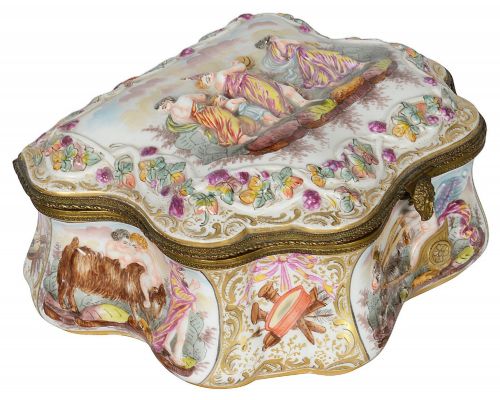
A french painted box encompasses small decorative containers designed for trinkets, jewellery, and snuff, originating from nineteenth-century France. The selection on this page leans toward porcelain jewellery caskets, painted glass jars, and ceramic powder boxes bearing hand-painted decoration.
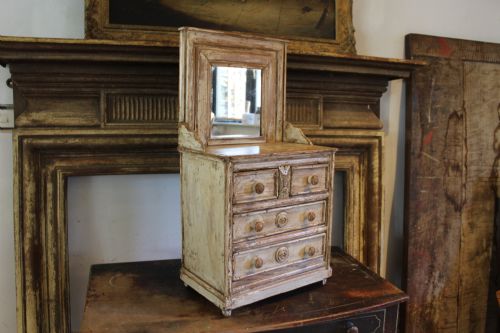
Makers utilised various forms ranging from round porcelain boxes with gilt detailing to miniature chests of drawers and papier-mâché snuff boxes. These objects reflect nineteenth-century styles including French Rococo Revival, Second Empire, and provincial designs.
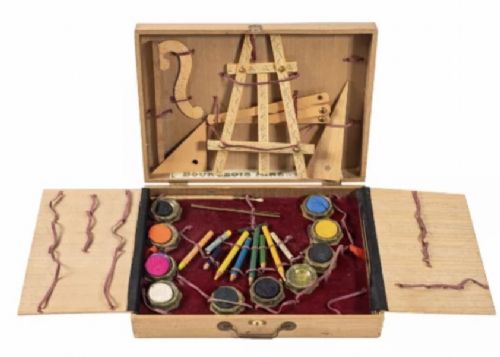
Alongside small dressing table accessories, the category includes larger storage items such as beechwood artist paintboxes, tin donation boxes, and sheet metal toleware hoppers. Each piece serves a decorative function while retaining its original utilitarian purpose.
Materials and Construction Techniques
Makers constructed these items using porcelain, glass, wood, and sheet metal, often mounting smaller vessels in brass or ormolu mounts. Porcelain bodies received hand-painted floral or figural scenes finished with gilt detailing.
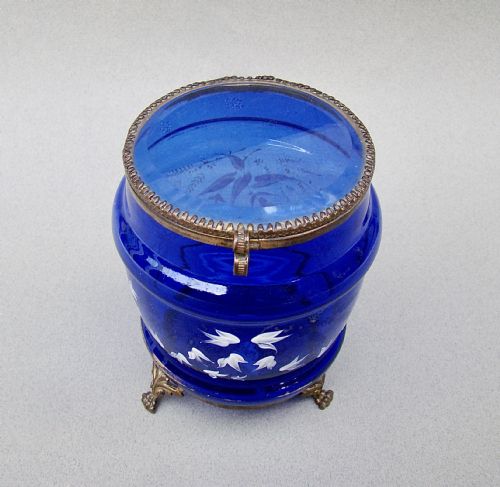
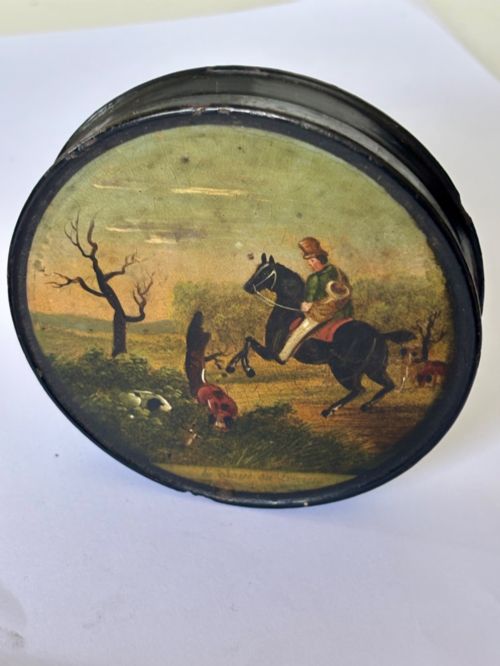
Papier-mâché and wood formed the base for snuff boxes and artist boxes, frequently decorated with painted hunting scenes or finished in plain wood. Glass vessels in Bristol blue or cobalt utilised enamel painting directly onto the surface.
French Painted Box Retail Price Guide 2026
Typical asking prices for french painted box among the pieces listed under this phrase on Sellingantiques today, from the lower quarter to the upper quarter. They describe what is for sale here now, not the wider market.
An eighteenth-century fox hunting scene painted on a snuff box reminds us that even tobacco storage demanded dramatic artistic flair.
Distinctions in Quality
Quality rests upon the execution of the hand-painted details and the precision of the metal mounts. Finer porcelain caskets feature crisp ormolu frames fitted securely around Sevres or Limoges ceramic panels.
The sophistication of the painted surface determines the standing of an item, distinguishing freely rendered miniature artwork from simpler stencilled decoration. Sturdiness of hinges and the preservation of original gilding complete the assessment.
BOURGEOISE AINE, PARIS·Sevres·Limoges·Desvres / Rouen
The French Painted Box Glossary
- Ormolu
- Gilded bronze mounts applied to furniture, clocks, and porcelain caskets. This technique added decorative weight and structural framing to nineteenth-century French pieces.
- Faience
- Tin-glazed earthenware produced in European centres such as Desvres and Rouen. It provides an opaque white background suitable for painted surface decoration.
- Tole
- Lacquered or enamelled sheet metal fashioned into household containers and hoppers. Artisans painted these metal surfaces to resemble porcelain or wood.
- Sevres
- Porcelain produced by the royal French factory, known for fine ceramic bodies and rich cobalt blue glazes. Pieces often feature hand-painted details framed in brass.
- Papier-mâché
- A composite material made from paper pulp mixed with glue and oil, pressed into moulds. It formed durable light boxes for snuff and small accessories.
French Painted Box: Frequently Asked Questions
What were french painted boxes used for?
These boxes served to hold personal items like jewellery, trinkets, powder, and tobacco. Owners kept them on dressing tables, desks, and in parlours for everyday convenience.
Smaller boxes functioned as pocket accessories for snuff, while larger timber or tin boxes stored artist supplies and household goods.
How do I care for antique porcelain boxes?
Clean painted porcelain and glass surfaces gently with a dry or barely damp cloth to protect delicate gilding. Avoid harsh chemical cleaners that can damage enamel work.
Keep ormolu mounts free of moisture to prevent tarnishing and check brass hinges regularly for smooth movement.
How do I identify a nineteenth-century piece?
Examine the construction methods, such as hand-cut dovetails on wooden boxes and hand-painted brushwork on porcelain panels. Nineteenth-century French pieces frequently utilise ormolu mounts and specific ceramic marks.
Styles like Rococo Revival and Second Empire offer clear clues to the manufacturing decade.
Where were these boxes made?
Most items originate from French workshops, factories, and provincial towns active during the nineteenth and early twentieth centuries. Cities like Paris and Limoges served as primary manufacturing hubs.
Regional potteries such as Desvres and Rouen also produced distinct painted ceramic containers.