



French Ormolu Trinket Box
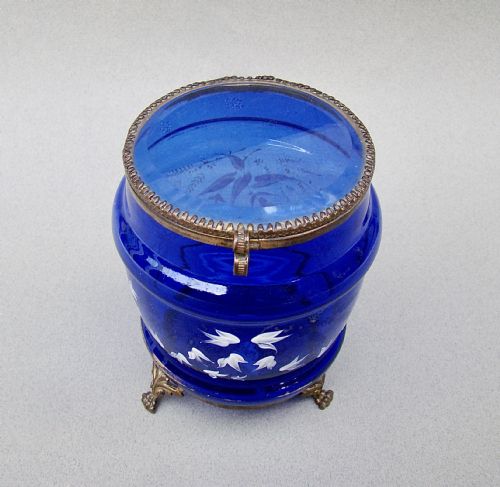
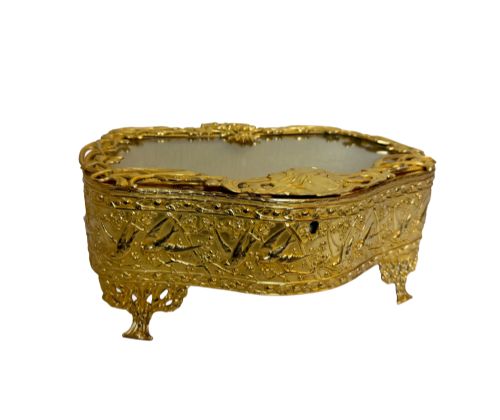
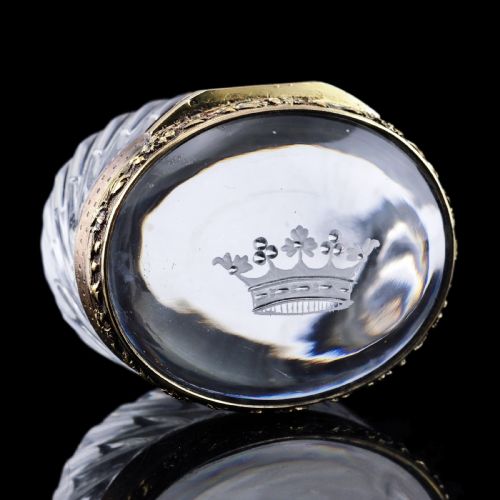
These french ormolu trinket box examples bring gilt bronze and crystal together to hold small keepsakes on a dressing table.
French Ormolu Trinket Box
A french ormolu trinket box is a decorative container designed for dressing tables, frequently encountered in forms such as jewellery caskets, display boxes, and miniature commodes. These pieces originate across the nineteenth century, spanning periods from Napoleon III and the Second Empire to Art Nouveau and Rococo Revival styles.
The objects serve primarily as receptacles for small valuables, utilising hinged lids and secure mounts to protect their contents. Buyers often find variations that incorporate miniature furniture designs or glass bodies mounted in gilded metal frames.
How they were made
The construction relies heavily on ormolu and gilt bronze mounts, which provide the structural frames and decorative feet for glass, porcelain, and stone bodies. Craftsmen combined cast bronze elements with cut crystal, bevelled glass, and panels of Sevres porcelain or Limoges enamel.
Wood elements also appear in the selection, utilising kingwood and tulipwood veneers over solid carcases to form miniature commodes and display cabinets. Metal mounts are securely fixed to these diverse materials using traditional pins and screws.
French Ormolu Trinket Box Retail Price Guide 2026
Typical asking prices for french ormolu trinket box among the pieces listed under this phrase on Sellingantiques today, from the lower quarter to the upper quarter. They describe what is for sale here now, not the wider market.
Current listings feature materials including ormolu, gilt bronze, enamel, porcelain, cut crystal, glass, brass, bevelled glass, onyx, kingwood, and tulipwood.
What varies in quality
The fineness of the cast ormolu mounts dictates much of the visual merit, with superior examples showing crisp chasing and deep gilding rather than flat, machine-smoothed surfaces. The integration of high-grade materials, such as heavy cut crystal or hand-painted Sevres porcelain plaques, elevates the status of an individual box.
Structural integrity depends on the precise fitting of hinged lids and the clarity of bevelled glass or unblemished marble panels. Pieces that retain original gilding and undamaged ceramic inserts command greater attention from collectors.
The French Ormolu Trinket Box Glossary
- Ormolu
- Gilt bronze produced by applying a finely ground high-carat gold mercury amalgam to a bronze object, then heating it to drive off the mercury. This technique creates a rich, durable golden surface characteristic of nineteenth-century decorative arts.
- Sevres porcelain
- Fine ceramics produced by the French national porcelain factory, frequently mounted into nineteenth-century metalwork. These porcelain panels are typically hand-painted with cobalt blue grounds and pastoral scenes.
- Bevelled glass
- Plate glass featuring an edge ground and polished at an angle thinner than the rest of the pane. This treatment catches the light and adds depth to glass and crystal jewellery caskets.
- Napoleon III style
- A lavish eclectic French design movement spanning the mid to late nineteenth century, drawing inspiration from Second Empire opulence and historical revivals. It heavily utilises gilt bronze mounts and inset porcelain.
- Kingwood
- A dense, heavily figured exotic timber with dark violet-brown and golden streaks, utilised in French veneered boxes and miniature furniture. It provides a rich contrasting ground for gilt metal mounts.
French Ormolu Trinket Box: Frequently Asked Questions
What were these boxes used for?
These containers were kept on dressing tables and boudoirs to hold rings, brooches, and delicate personal items.
They also functioned as decorative display pieces in nineteenth-century reception rooms to showcase wealth and taste.
How do I date a french ormolu trinket box?
Dating relies on stylistic clues, such as the sweeping curves of Rococo Revival mounts or the organic motifs of Art Nouveau.
Material combinations, like Sevres porcelain plaques paired with mid-nineteenth-century bronze castings, also help narrow down the decade of production.
Are these boxes fragile?
The glass, porcelain, and crystal elements require careful handling to avoid chipping or cracking during movement.
Ormolu mounts and hinges are generally robust, but the delicate panels inset into the frames need gentle cleaning without harsh chemicals.
What is the difference between ormolu and gilt bronze?
Ormolu specifically refers to historical mercury gilding on bronze, though the terms are often used interchangeably today.
Both describe a layer of gold applied over a bronze base to provide a lasting metallic finish that does not tarnish easily.