





French Ormolu Lustre
These french ormolu lustre pieces combine gilded metal and hanging glass drops to catch and scatter candlelight across a room.
French Ormolu Lustre
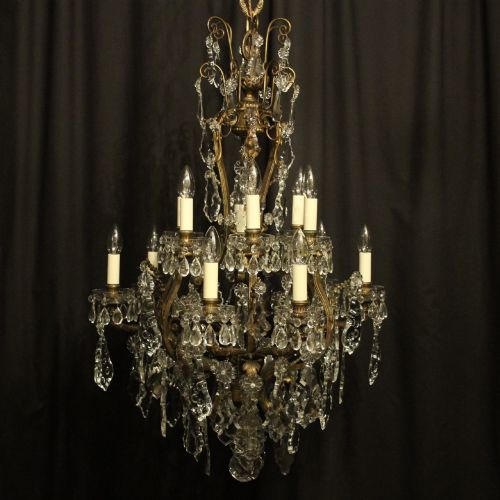
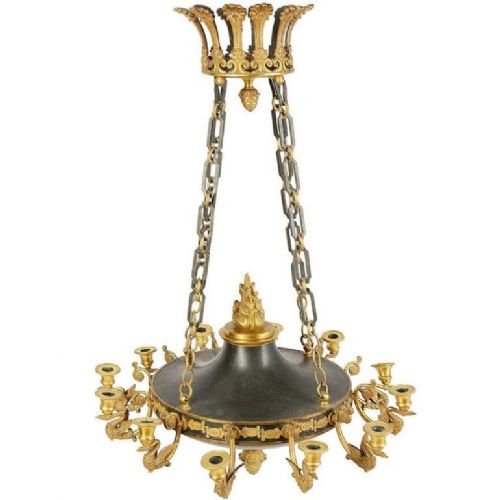
When you search for french ormolu lustre, you are looking at decorative lighting and mantel pieces designed to illuminate rooms through reflected candlelight. These objects function as candlesticks, candelabras, wall lights, and chandeliers, often enhanced by suspended crystal drops. The pieces found here span the nineteenth century into the twentieth century, reflecting the enduring taste for French decorative arts.
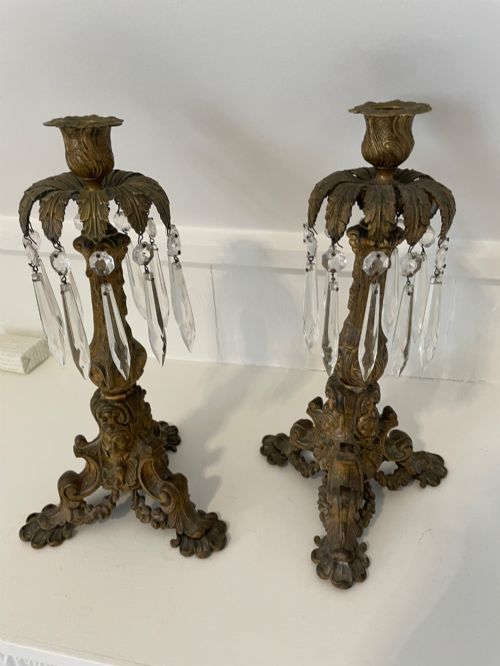
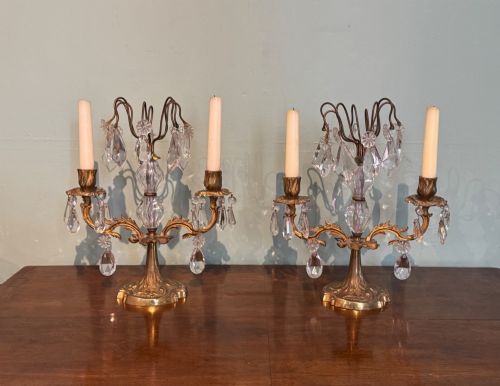
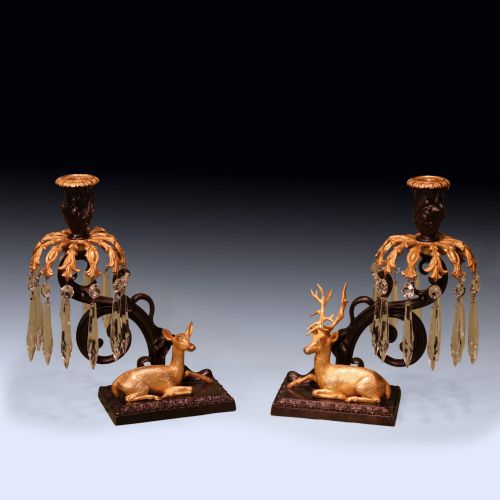
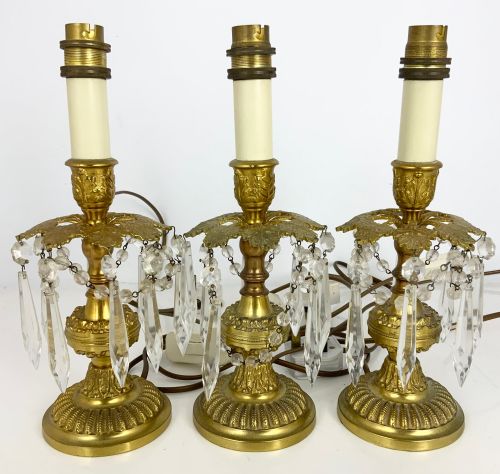
The version you are most likely to meet on this page is a pair of table candlesticks or candelabras featuring gilt metal mounts and cut glass pendants. These items frequently incorporate figural elements such as stags, does, or cherubs alongside traditional foliate scrolls. Originating from periods influenced by Regency, French Empire, and Rococo styles, these works bring a distinct architectural presence to an interior.
How they were made
Makers constructed these items by combining cast metal frames with hand-cut glass and crystal elements. Gilt bronze, ormolu, gilt brass, and gilt metal form the structural chassis, often paired with patinated bronze to create contrasting dark and metallic surfaces. Artisans suspended glass drops from the upper rings using wire loops, allowing the pendants to move and chime slightly in a draft.
Foundries cast the metal components in sections before applying fire gilding or chemical treatments to achieve the golden finish. Workers then cut and polished the glass drops by hand, drilling tiny suspension holes through the crystal facets. This combination of metalwork and glasscutting required specialised workshops collaborating to finish a single chandelier or pair of wall lights.
French Ormolu Lustre Retail Price Guide 2026
Typical asking prices for french ormolu lustre among the pieces listed under this phrase on Sellingantiques today, from the lower quarter to the upper quarter. They describe what is for sale here now, not the wider market.
Listings here feature materials including cut glass, ormolu, gilt bronze, crystal, and patinated bronze across nineteenth and early twentieth-century periods.
What varies in quality
The standard of a piece rests on the crispness of the metal casting and the depth of the gilding. Finer examples display sharp chasing across leaves and figures, whereas simpler items show softer edges from worn moulds. The choice of materials also divides the range, with heavy gilt bronze and genuine crystal drops sitting above lighter gilt brass and pressed glass.
Proportion and completeness dictate the character of the object. Pieces that retain their original complement of glass drops without replacements hold greater visual coherence. The integration of figural work, such as cast stags or cherubs, adds complexity that elevates the design beyond standard domestic lighting.
The French Ormolu Lustre Glossary
- Ormolu
- A gilded bronze technique utilising a mercury amalgam applied to a cast metal base. This method creates a durable golden surface that resists tarnishing over decades.
- Lustre
- A candlestick or lighting fixture hung with cut glass pendants designed to refract light. These drops surround the candle nozzle to amplify the glow.
- Candelabra
- A branched candlestick holding multiple candles on a single base. These fixtures often feature removable arms or central decorative finials.
- Patinated bronze
- Bronze treated with chemical solutions to darken the surface tone. This creates a contrast against the bright areas of ormolu or gilding.
- Regency
- An architectural and decorative style spanning the early nineteenth century. Pieces from this period emphasise classical symmetry and Greco-Roman motifs.
French Ormolu Lustre: Frequently Asked Questions
What is a french ormolu lustre?
A french ormolu lustre is a decorative lighting fixture made from gilded bronze or brass and decorated with hanging glass pendants. These items are designed to hold candles or direct electric light through faceted crystals.
They appear as candlesticks, candelabras, wall lights, and chandeliers originating from nineteenth and early twentieth-century French design traditions.
How do I clean glass lustre drops?
Clean glass drops by removing them individually and washing them in warm soapy water using a soft cloth. Dry each pendant thoroughly before rehanging them with fresh wire.
Avoid immersing the metal ormolu frame in water, as harsh cleaning agents can strip the historic gilding from the bronze.
Were these electrified later?
Many nineteenth-century candlesticks and candelabras were adapted for electricity during the twentieth century to suit modern homes. These conversions often route wiring through the central column while retaining the original candle nozzles.
Some pieces remain configured strictly for candles, preserving their original mechanical setup without drilled wiring channels.
How do I date a lustre?
Dating relies on observing the casting style, metal composition, and the cut of the glass drops. Regency and French Empire pieces display strict classical geometry, while later nineteenth-century examples lean into ornate Rococo revival curves.
Examining the fixing pins and the method used to attach the glass pendants also helps establish the period of manufacture.