





French Oak Writing Table
A french oak writing table brings together honest timber and practical proportions, offering a sturdy surface designed for daily correspondence.
French Oak Writing Table
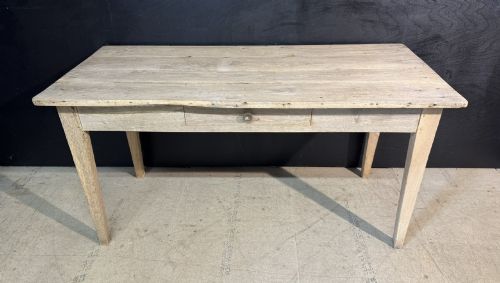
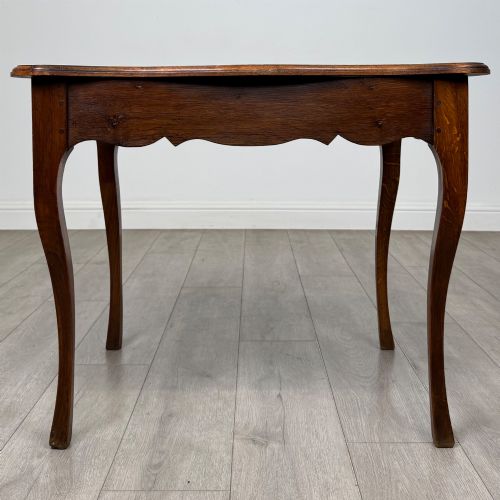
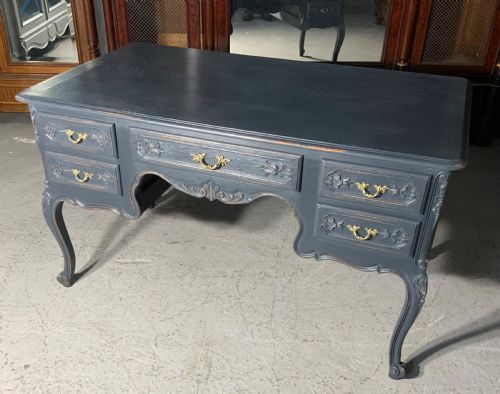
A french oak writing table serves as a functional workspace, appearing across periods from the eighteenth century through to the art deco era. You will encounter provincial farmhouse pieces alongside carved revival designs, each shaped by regional French cabinetmaking traditions.
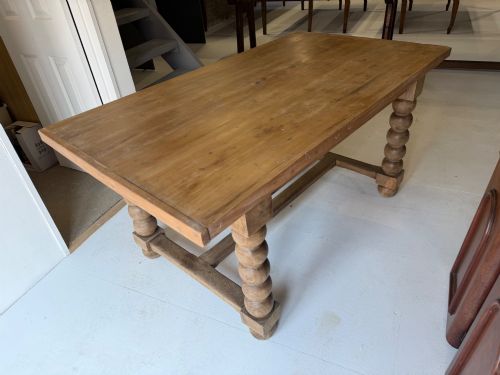
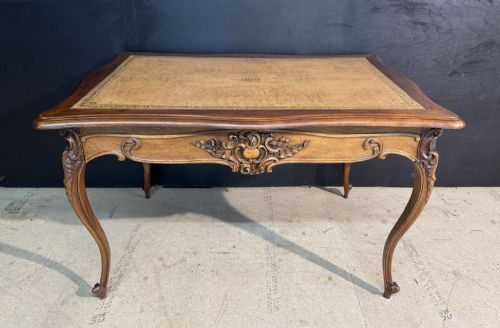
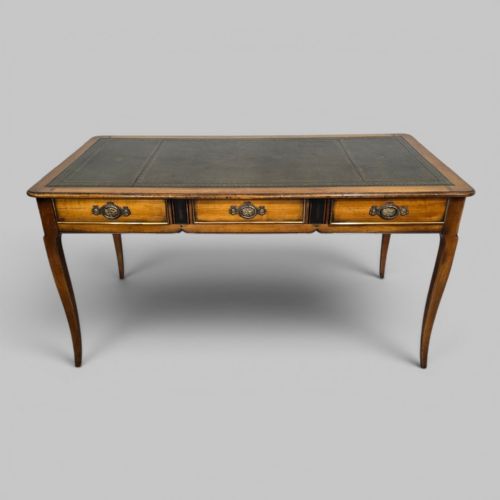
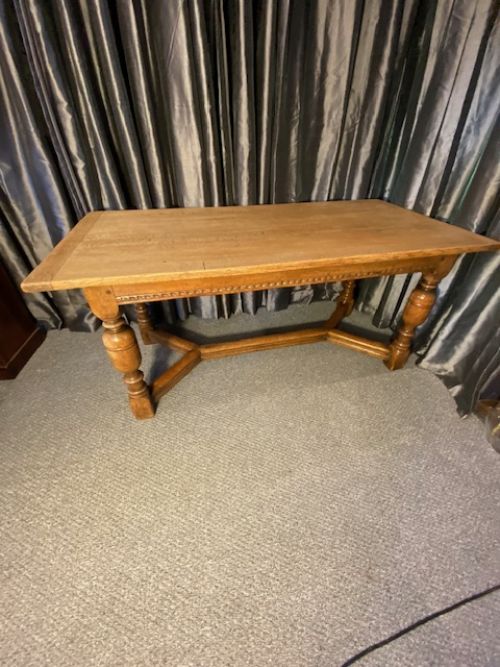
The selection ranges from simple rustic tables with bobbin legs to grand partners desks and carved library tables. Many examples incorporate leather inserts, drawers, or stationary galleries to suit domestic administration.
These desks reflect the changing interior styles of their respective decades, utilising solid timber construction designed for enduring daily service. The eighteenth-century provincial pieces sit alongside nineteenth-century carved variants and twentieth-century interpretations.
Assessing quality and proportion
The distinction between standard and superior examples lies in the depth of carving and the selection of the timber. Dense golden oak with pronounced medullary rays indicates careful log selection by the maker.
Proportion and structural integrity separate utilitarian work tables from sophisticated salon pieces. Refined turning on the legs and well-integrated drawer construction elevate the finished desk.
French Oak Writing Table Retail Price Guide 2026
Typical asking prices for french oak writing table among the pieces listed under this phrase on Sellingantiques today, from the lower quarter to the upper quarter. They describe what is for sale here now, not the wider market.
Listings feature pieces spanning from the mid eighteenth century through to the nineteen-thirties, utilising oak, beech, walnut, brass, and leather.
Étienne Kohlmann
The French Oak Writing Table Glossary
- Partners desk
- A large double-sided desk designed for two people to sit opposite one another, featuring drawers on both faces. These grand pieces often served in libraries and administrative offices.
- Bonheur de jour
- A light lady's writing desk featuring a small cabinet or superstructure with shelves and drawers above the main writing surface. This form gained popularity in eighteenth-century France.
- Bobbin legs
- Turned furniture legs shaped with a series of rounded spheres resembling bobbins of thread. This decorative turning style appears frequently on seventeenth and nineteenth-century seating and tables.
- Renaissance Revival
- A nineteenth-century architectural and furniture style drawing inspiration from sixteenth-century motifs. Pieces feature heavy relief carving, pilasters, and classical architectural elements.
- Provincial
- Describing furniture made in the regions outside Paris, characterised by simpler regional interpretations of fashionable urban styles. These pieces prioritize local timbers and practical utility.
French Oak Writing Table: Frequently Asked Questions
What is a french oak writing table?
It is a practical wooden desk originating from France, constructed primarily from oak and designed for correspondence, reading, and administrative tasks.
These tables range from simple provincial work tables to heavily carved library desks spanning the eighteenth to twentieth centuries.
How do I date a french oak writing table?
Dating relies on observing construction methods, joinery, hardware, and stylistic details such as provincial turning or art deco lines.
Evidence from nineteenth and early twentieth-century examples shows distinct shifts from rustic farmhouse styles to refined revival and modernist forms.
Did these desks always have leather tops?
Not all writing tables include leather inserts, as many feature solid timber tops suitable for general utility.
When present, black or toned leather writing surfaces provide a traditional contrasting texture to the surrounding oak frame.
How should I care for a french oak writing table?
Maintenance involves keeping the timber away from direct heat sources and sudden humidity changes to prevent wood movement.
Regular dusting with a dry cloth and occasional application of appropriate furniture wax helps preserve the finish of the oak.