



French Neoclassical Vases
French neoclassical vases bring classical antiquity into nineteenth-century interiors through sculptural bronze, polished marble, and painted porcelain.
French Neoclassical Vases
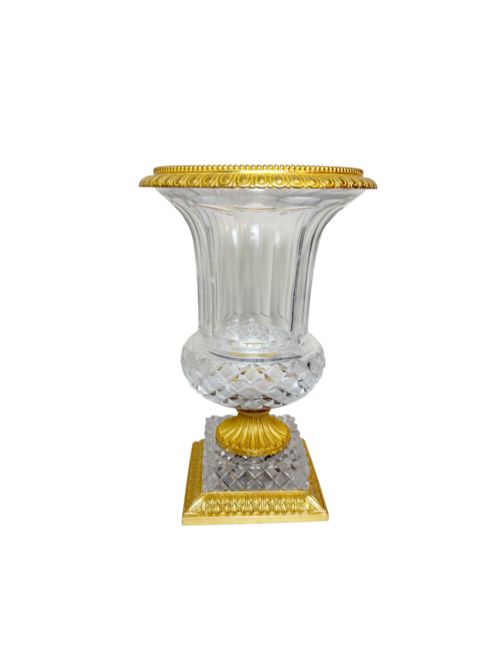
French neoclassical vases draw directly upon ancient Greek and Roman forms, including campana urns, krater shapes, and classical amphorae. These objects served primarily as decorative table pieces, mantel ornaments, or grand tour souvenirs during the nineteenth century.
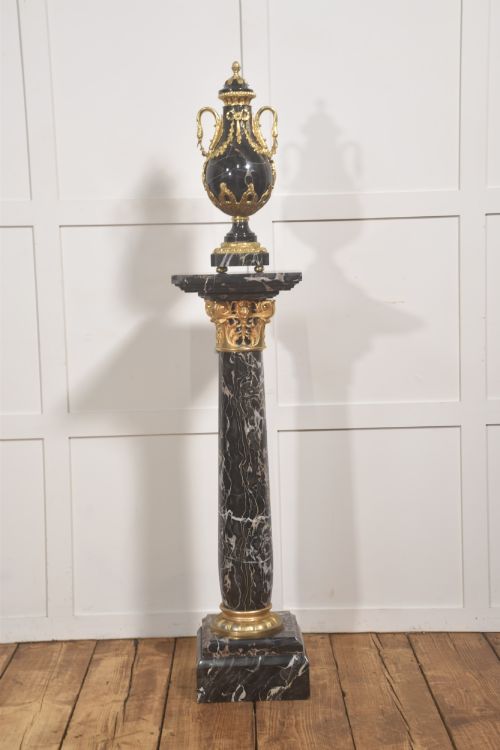
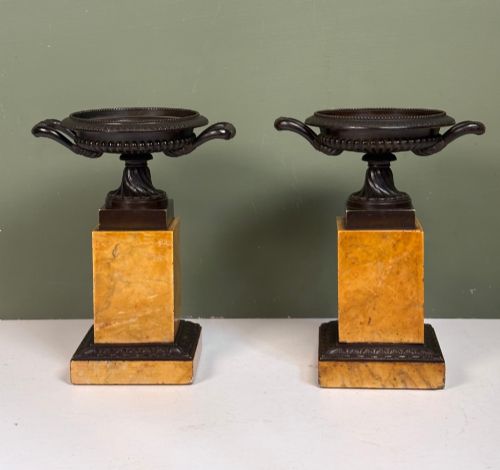
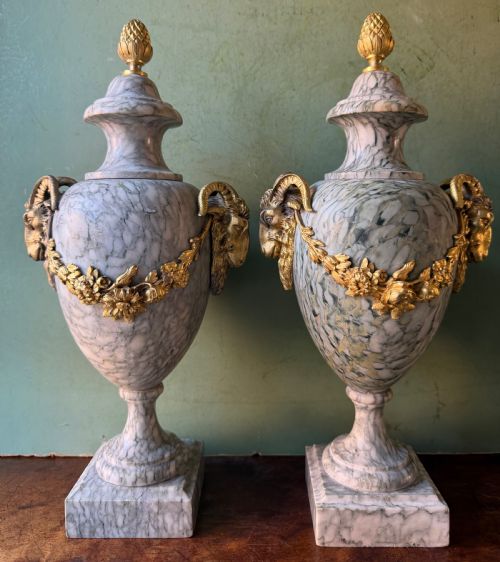
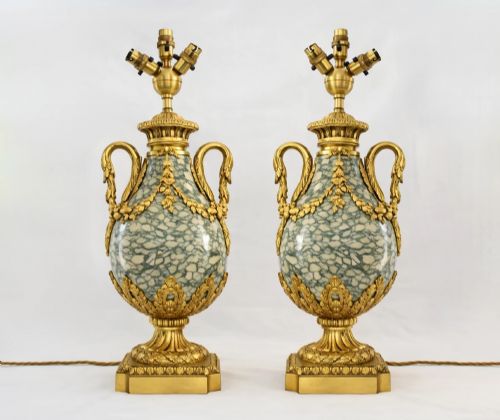
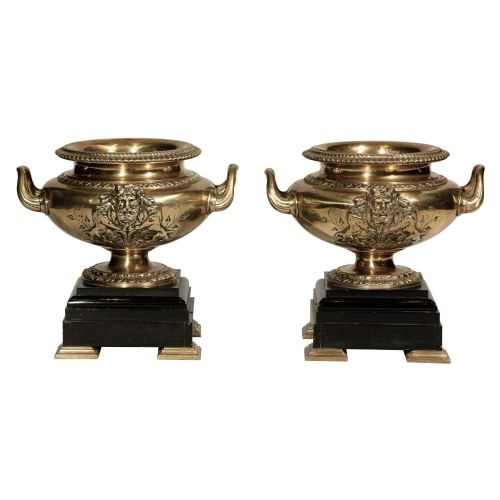
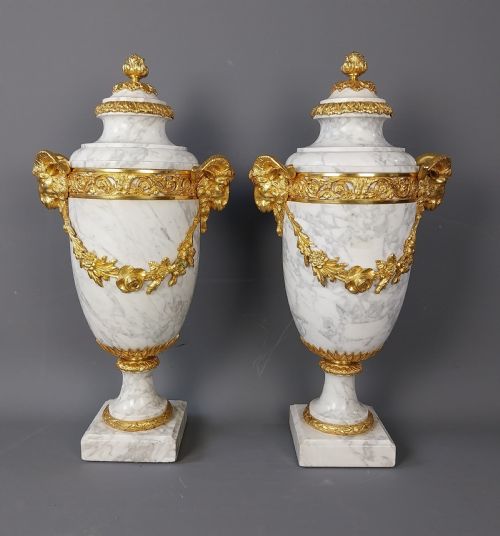
The versions most commonly found here are pairs of nineteenth-century decorative urns and cassolettes mounted with gilt bronze or ormolu trim. They frequently combine white, rouge, or grey-green veined marble plinths with cast metal bodies.
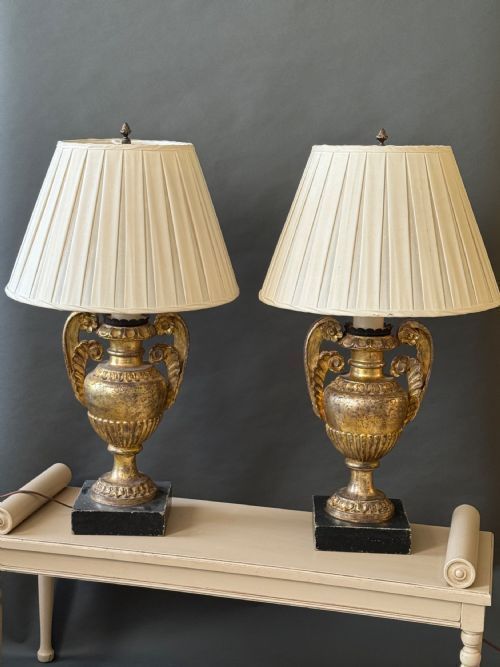
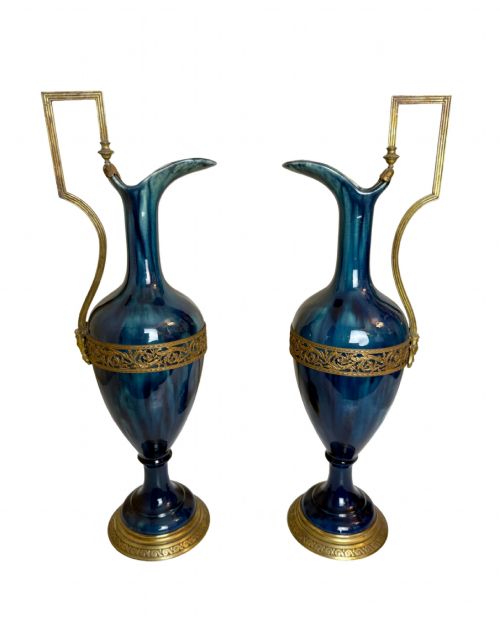
Makers and manufacturers during this period also produced functional variations, transforming classical vases and ewers into table lamps while retaining traditional proportion and symmetry.
Materials and construction methods
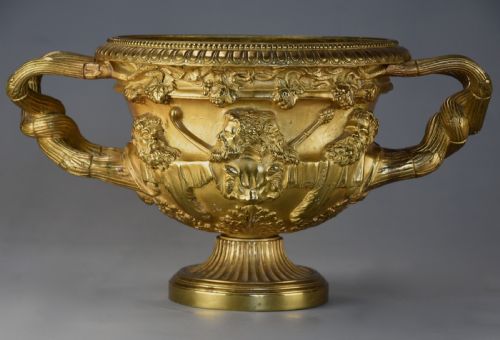
Foundry workers cast mounts, handles, and plinths in bronze, ormolu, and spelter, often applying a mercury gilt finish to achieve a bright golden lustre. These metal elements were hand-chased to sharpen the leaf and dart motifs derived from classical architecture.
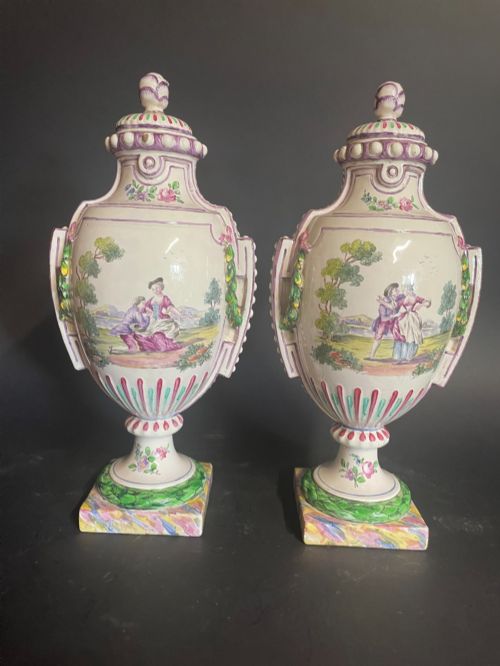
Lapidaries turned blocks of white marble, rouge marble, and campan vert marble into hollow vessel bodies and fitted them with turned stone bases. Porcelain components, including Paris porcelain and Sevres style bodies, were hand painted with classical scenes and floral details before undergoing kiln firing.
French Neoclassical Vases Retail Price Guide 2026
Typical asking prices for french neoclassical vases among the pieces listed under this phrase on Sellingantiques today, from the lower quarter to the upper quarter. They describe what is for sale here now, not the wider market.
Several heavy marble urns successfully disguise themselves as ancient relics while secretly hiding nineteenth-century lampholders inside.
Quality differences across the range
The crispness of the bronze casting separates standard production from superior examples, as finer pieces retain sharp chisel work on acanthus leaves and guilloche bands after casting. Softer details and shallower chasing indicate mass production or later commercial output.
The selection and treatment of the stone body also dictate worth, where heavily figured quartz or veined marble blocks display superior natural patterning compared to plain or uniform substitutes. Heavy fire gilding on the bronze mounts demonstrates a higher initial workshop cost than thin electroplating.
Sceaux Faience·Sevres
The French Neoclassical Vases Glossary
- Cassolette
- A decorative vase featuring a reversible lid that functions as a small bowl or burner on one side. This dual-purpose form is frequently mounted in ormolu and paired with marble plinths.
- Ormolu
- Finely chopped high-zinc brass applied to bronze objects via a mercury amalgamation process. The technique produces a rich golden surface that resists tarnishing over decades.
- Campana urn
- A vessel shaped like an inverted bell with an everted rim and a footed base. This ancient silhouette forms the basis for numerous nineteenth-century bronze and spelter decorative pieces.
- Grand tour
- A prolonged European journey undertaken by wealthy collectors to acquire classical antiquities and miniature reductions. Many nineteenth-century bronze reductions of famous museum vases originate from this tradition.
French Neoclassical Vases: Frequently Asked Questions
What is a cassolette?
A cassolette is a decorative covered vase where the lid turns over to reveal a small receptacle. Nineteenth-century examples often combine marble bodies with ormolu mounts.
They stood on mantelpieces and tables as ornamental objects rather than holding water or floral arrangements.
How do I date these vases?
Dating relies upon stylistic markers, material combinations, and casting methods typical of nineteenth-century workshops. Pieces span the Empire, Louis XVI revival, and late Victorian periods.
Examination of the bronze chasing and the turning marks on the marble interiors provides further chronological clues.
Were these made for holding flowers?
Most French neoclassical vases served purely decorative purposes within formal nineteenth-century rooms. Cassolettes and solid bronze urns lack the watertight interiors needed for cut stems.
Porcelain variants with painted scenes occasionally accommodated dried botanicals or simply ornamented a salon table.
What is ormolu?
Ormolu describes gilded bronze mounts cast and chased by nineteenth-century metalworkers. The finish uses mercury gilding to bond gold leaf to a bronze substrate.
This technique yields a warm metallic glow that contrasts against white marble or painted porcelain bodies.