
French Neoclassical Sconces
French neoclassical sconces combine classical symmetry with rich gilding, offering atmospheric wall lighting shaped by Louis XVI and Empire design.
French Neoclassical Sconces
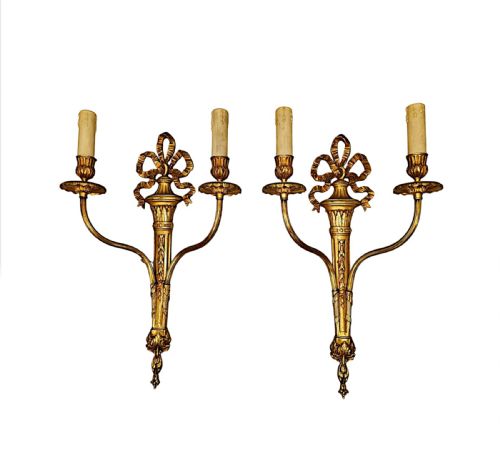
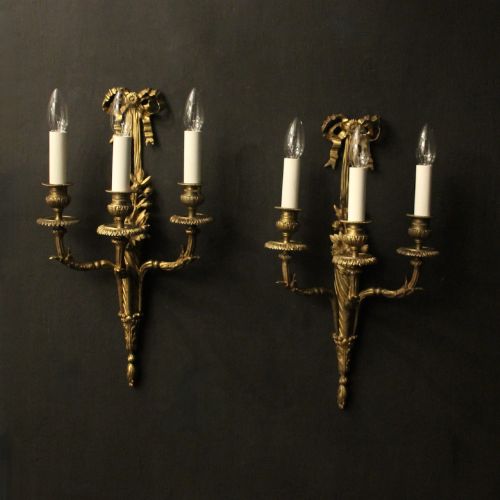
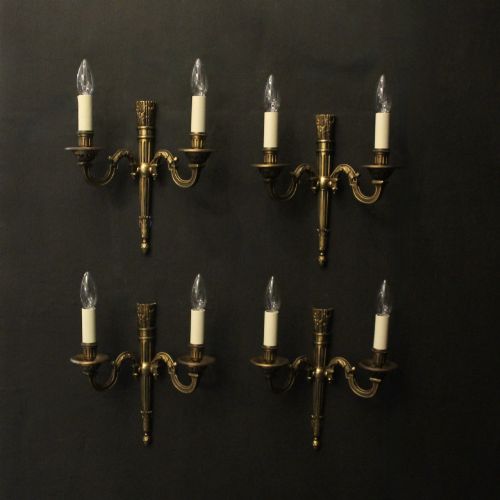
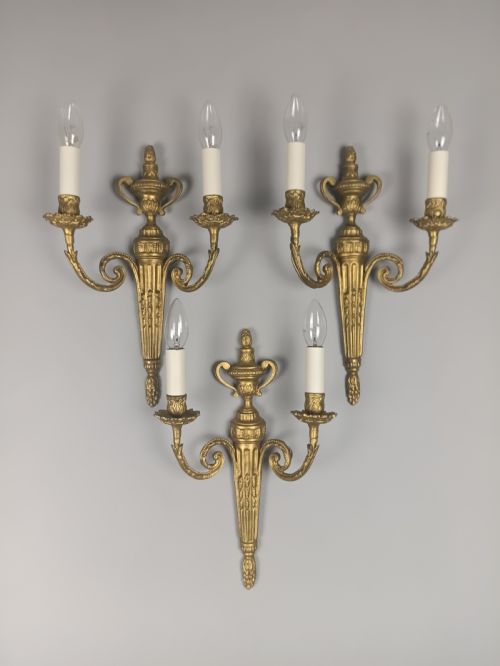
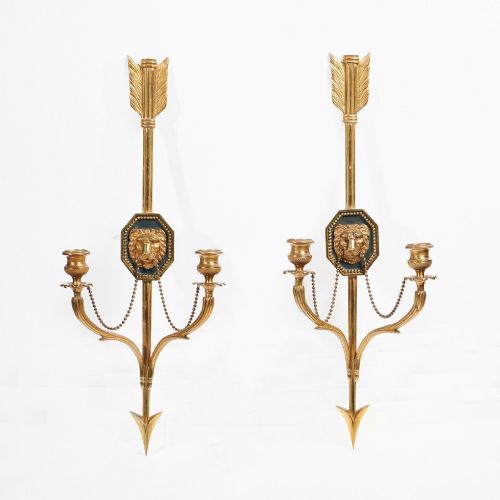
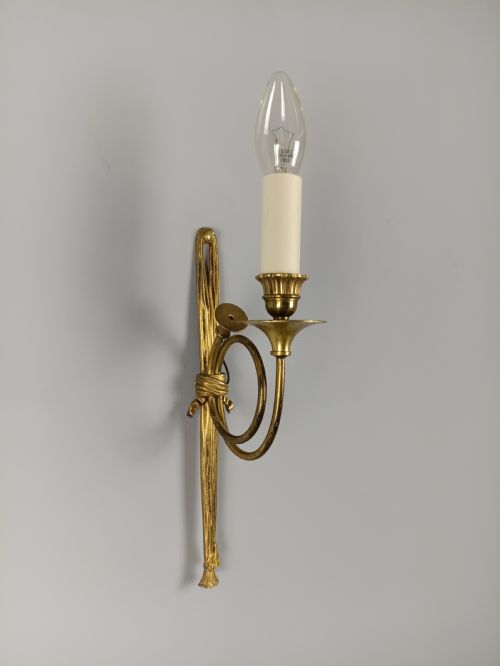
French neoclassical sconces are wall-mounted light fittings defined by classical motifs, strict symmetry and restrained ornamentation. When you search for french neoclassical sconces, you encounter pieces primarily from the nineteenth and early twentieth centuries, alongside items in the Louis XVI and Empire styles.
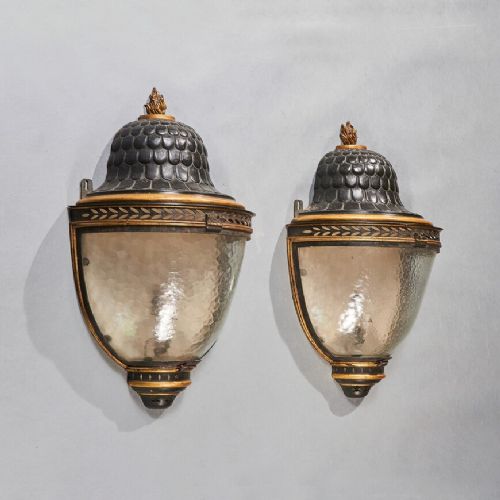
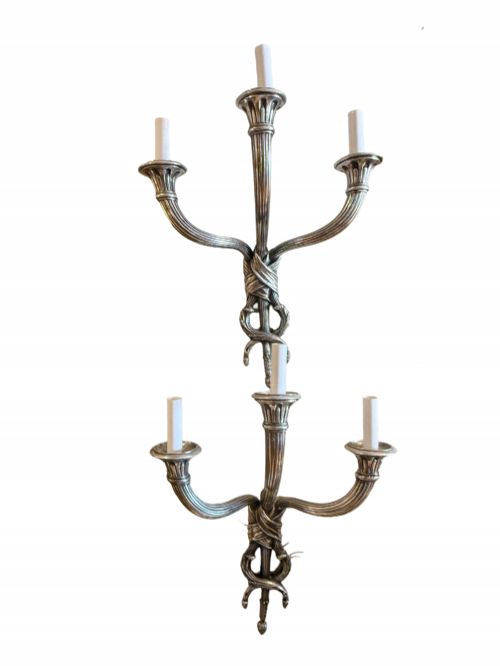
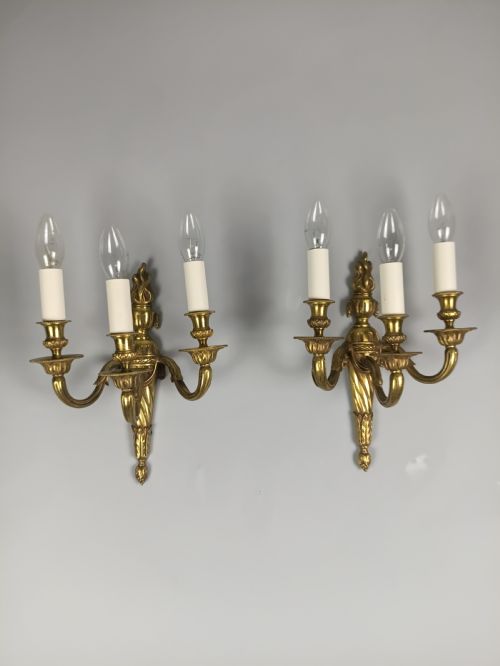
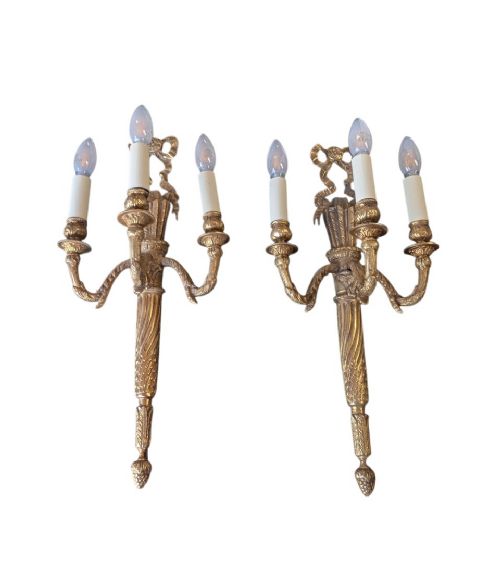
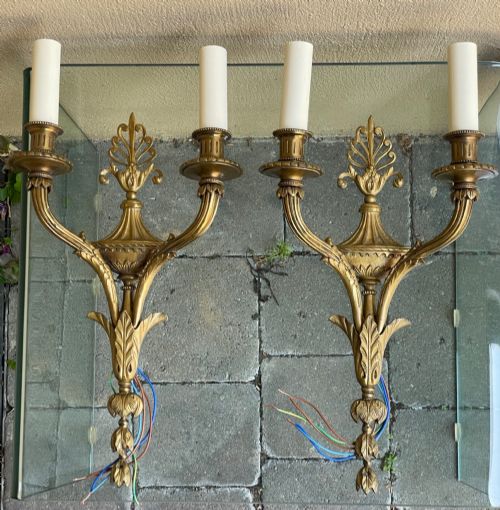
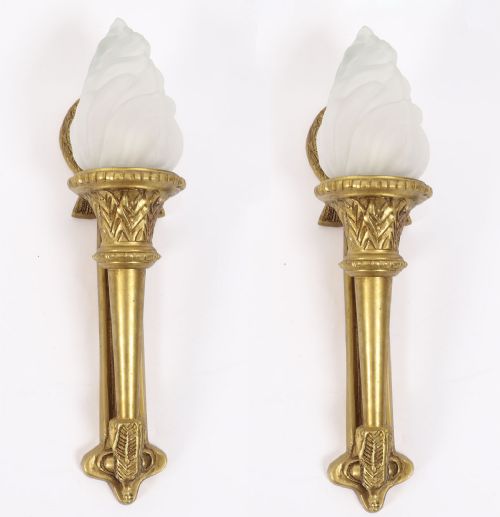
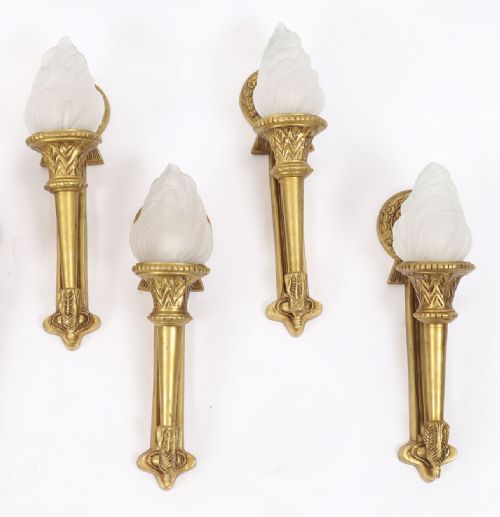
The selection ranges from single-arm brackets to multi-arm fixtures carrying two, three, or five lights. Common configurations include flaming torch designs, items featuring ram's head masks, and variations incorporating glass elements or white marble components.
While many examples originate from French workshops, related pieces reflect Georgian, Adam and Regency interpretations of the same classical vocabulary. The forms serve both functional illumination and decorative symmetry on panelled or plastered walls.
How they were made
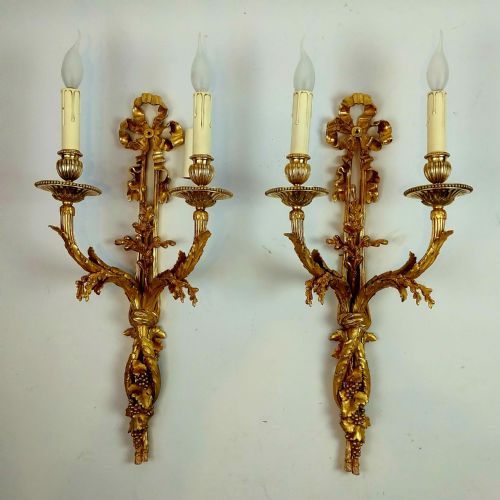
Makers utilised cast bronze, brass and ormolu as the structural base for these wall lights, applying fire gilding or gold leaf to achieve a lustrous metallic finish. Bronze and ormolu combinations create distinct tonal contrasts between patinated dark metal and bright gilded highlights.
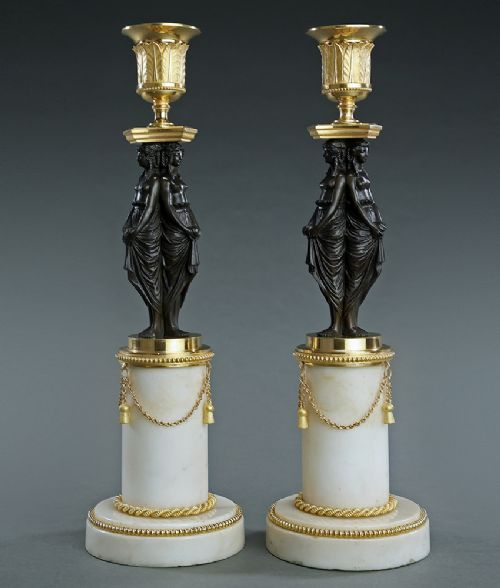
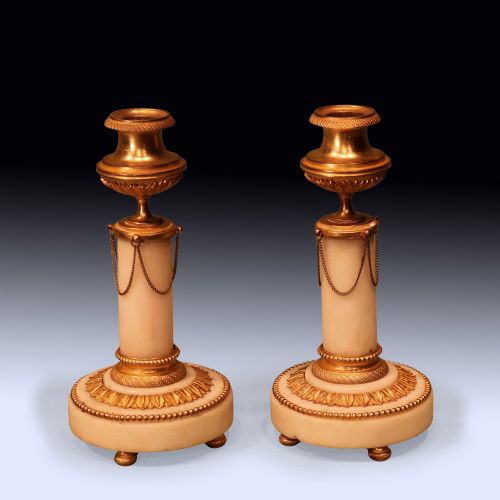
Detailing often involved skilled channelling, casting and parcel-gilding, particularly on mounts depicting caryatids, griffins, and classical foliage. Selected pieces incorporate secondary materials such as tole peinte, white marble, and cut glass to diffuse light and vary texture.
Certain nineteenth-century models incorporate ferocious ram's heads and mythical griffins to hold your candles aloft, proving that neoclassical restraint loves a touch of theatre.
What varies in quality
The method and preservation of the gilding further distinguish the work, with genuine fire-gilded ormolu retaining a soft, warm lustre compared to flat modern metallic paints. Heavier gauge brass and bronze impart structural rigidity, ensuring arms remain firmly aligned.
Henri Vian·Maison Baguès
The French Neoclassical Sconces Glossary
- Ormolu
- Gilt bronze produced by applying a mixture of gold and mercury to a bronze base and heating it until the mercury vaporised. This historic technique creates a durable, deep golden surface.
- Caryatid
- A sculpted female figure serving as an architectural support or decorative mount. In lighting, these figures often form the main vertical stem of a sconce or candlestick.
- Tole peinte
- Painted sheet metal used for decorative objects and light housings. It provides a smooth surface for coloured pigments and parcel-gilt highlights.
- Patinated bronze
- Bronze that has been chemically treated to alter its surface colour. This process darkens the metal to contrast with gilded ormolu details.
French Neoclassical Sconces: Frequently Asked Questions
How do I hang heavy wall sconces?
Heavy bronze and ormolu sconces require secure anchorage directly into wall studs or through appropriate heavy-duty cavity fixings. The weight of cast metal demands robust support behind the backplate to prevent sagging over time.
Professional installation is recommended for multi-arm fixtures to ensure the electrical wiring safely connects to standard wall circuits while maintaining the correct vertical alignment on the wall surface.
Are these wired for modern electricity?
Many period wall lights arrive adapted for modern electrical supplies, though older wiring standards often require updating by a qualified electrician. Conversion usually involves running heat-resistant flex through the original arms and backplate.
Buyers should inspect the internal channels and lampholders to verify compatibility with current safety regulations before mounting the fixtures in a domestic setting.
How do I clean gilded bronze sconces?
Gilded surfaces require gentle dusting with a soft, dry brush to prevent the accumulation of dirt within intricate cast details. Avoid harsh chemical cleaners, abrasive cloths, or metal polishes that can strip away historic gilding.
Light application of a conservation-grade microcrystalline wax can protect exposed bronze and brass from atmospheric tarnishing without harming the original finish.
What is the difference between Louis XVI and Empire styles?
Louis XVI lighting draws inspiration from archaeological discoveries at Pompeii, favouring lighter proportions, straight fluted columns, urns and delicate ribbon motifs. The aesthetic remains balanced, refined and classical in scale.
Empire style, emerging under Napoleon, introduces heavier, more militaristic and imperial symbols such as sphinxes, wreaths, heavy laurel bands and dense ormolu mounts designed to project authority.