





French Narrow Tallboy
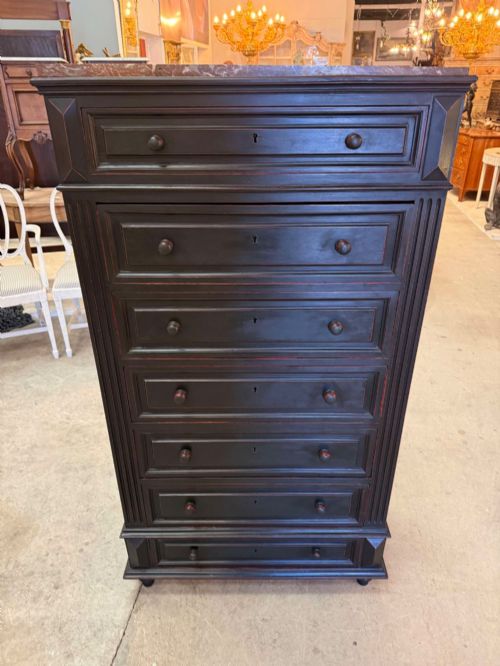
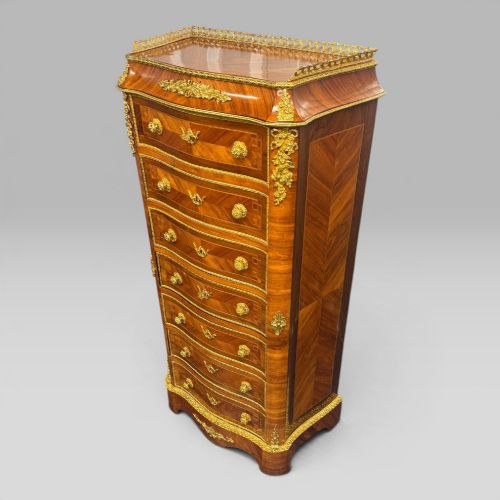
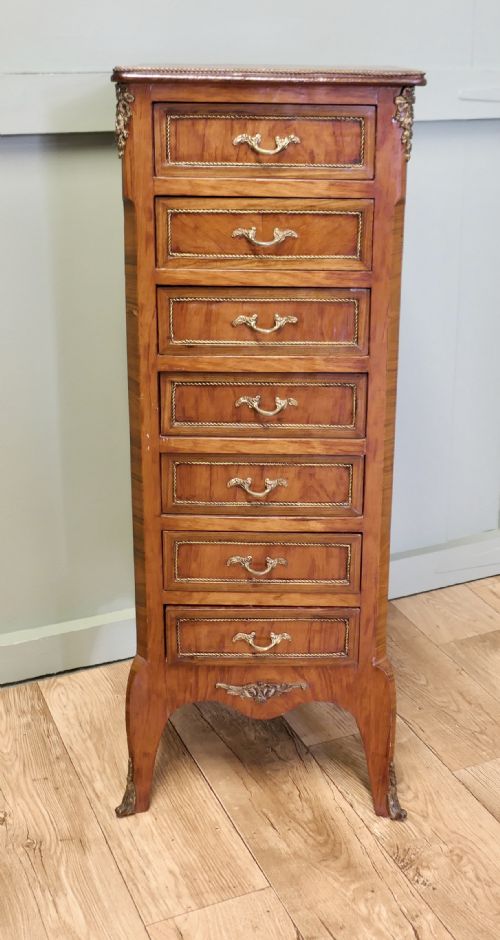
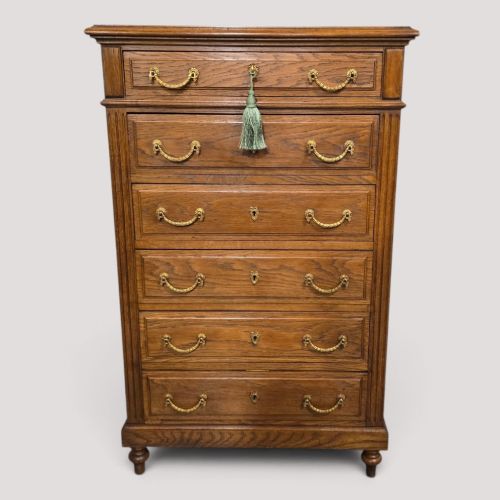
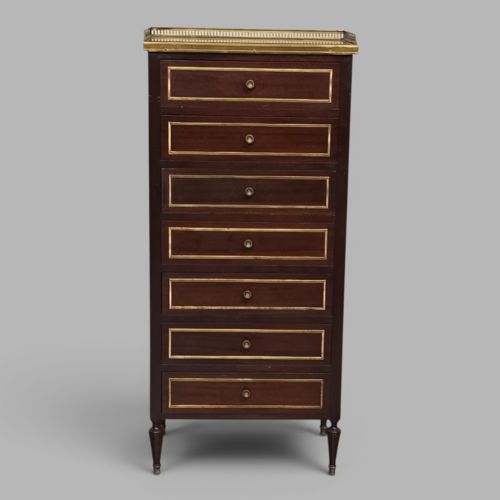
These pieces known as a french narrow tallboy are vertical storage units combining timber, marble, and brass mounts, offering compact elegance for the bedroom.
French Narrow Tallboy
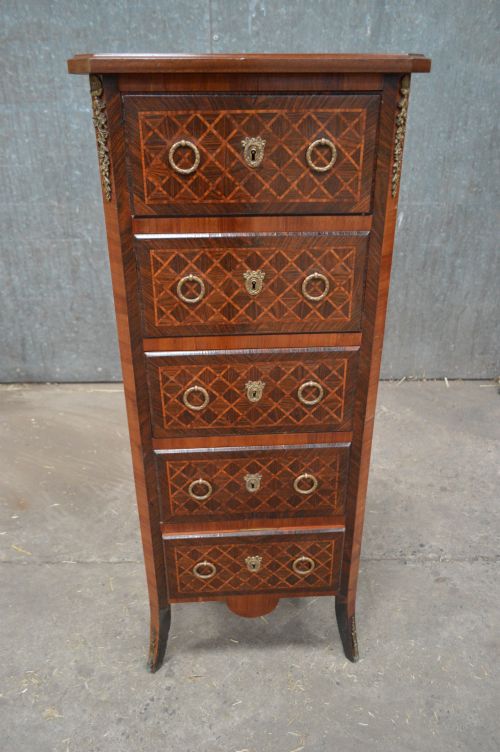
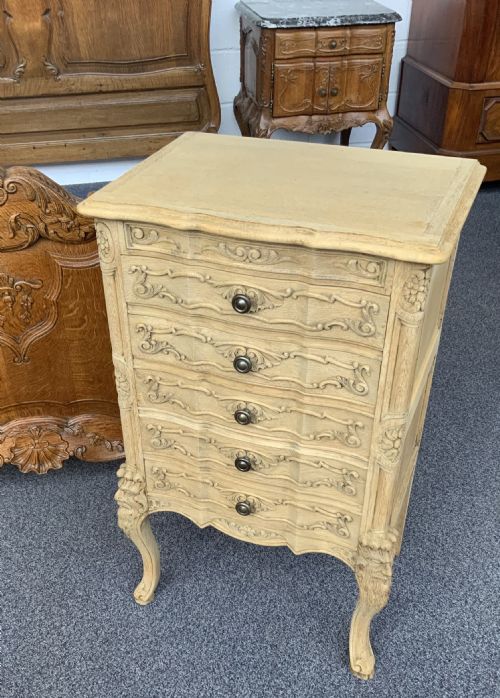
When you search for a french narrow tallboy, you find vertical storage forms designed for footprint economy, most frequently represented here by tall chests of drawers, semainiers, and Wellington chests dating from the nineteenth and early twentieth centuries. These pieces span styles from French Provincial and Louis XV to French Empire and Victorian, typically arriving as narrow chests with multiple stacked drawers.
The selection on this page relies heavily on nineteenth-century examples alongside items from the decades around nineteen hundred, including bedside cabinets and nightstands of similarly slender proportions. Walnut, oak, mahogany, and rosewood form the structural basis of these upright units, often enhanced with marquetry, parquetry, or veneer work.
Materials and construction
Makers built these tall chests using solid foundational timbers such as oak, mahogany, and walnut, frequently applying fine walnut veneer, tulipwood, or rosewood to the exterior surfaces. Decorative elements incorporate parquetry and marquetry patterns, matched with brass inlays and ormolu mounts to accent the vertical lines of the furniture.
Many examples feature fitted marble tops, requiring precise stone-cutting and levelling to sit flush atop the wooden carcase. Drawer construction employs traditional joinery methods to support the height of the narrow framework, while carved details appear directly on the oak or walnut bodies.
French Narrow Tallboy Retail Price Guide 2026
Typical asking prices for french narrow tallboy among the pieces listed under this phrase on Sellingantiques today, from the lower quarter to the upper quarter. They describe what is for sale here now, not the wider market.
Listings feature woods including walnut, mahogany, rosewood, and oak, alongside marble and brass.
Indicators of quality
The grade of a french narrow tallboy depends on the crispness of its marquetry or parquetry and the precision of its brass inlays, which distinguish standard utility pieces from finer decorative works. Superior examples display carefully selected grain figures in the walnut or rosewood veneers, along with well-executed carving on the timber carcase.
Hardware and mounts also dictate standing within the range, where cast ormolu and substantial brass handles indicate higher workshop standards than simpler metalwork. The integration of a heavy marble top that fits the proportions of the tall chest without awkward overhang marks a superior standard of manufacture.
The French Narrow Tallboy Glossary
- Semainier
- A tall, narrow seven-drawer chest traditionally designed so that the owner could use one drawer for each day of the week. This form is common among nineteenth-century French tall chests.
- Wellington chest
- A tall, secure chest of drawers featuring a hinged locking stile on one side that fastens over the drawer edges. These pieces typically display narrow proportions.
- Parquetry
- A geometric mosaic of wood pieces used for decorative surface veneer on furniture. It appears frequently on the drawer fronts and sides of these tall cabinets.
- Ormolu
- Gilded bronze used for decorative mounts, handles, and feet on furniture. It provides metallic contrast against dark timbers like walnut and mahogany.
- Marquetry
- The art of applying pieces of veneer to a structure to form decorative patterns and pictures. Floral and geometric designs decorate the surfaces of many pieces listed here.
French Narrow Tallboy: Frequently Asked Questions
What is a semainier?
A semainier is a tall, narrow chest featuring seven stacked drawers, created to hold a week of personal garments.
This specific form dominates the narrow tall furniture in the current selection, often incorporating marble tops.
How do I place a tall chest in a small room?
The vertical design of these narrow pieces allows them to fit into tight corners and alcoves where standard dressers fail.
They provide substantial drawer capacity without occupying excessive floor space.
How do I date a piece?
Dating relies on identifying material choices like walnut veneer, rosewood, or bleached oak alongside specific styles such as Louis XV Revival or Victorian.
Construction details and hardware styles also help assign pieces to the nineteenth or early twentieth century.
What is a Wellington chest?
A Wellington chest is a vertical locking chest with a side-hinged pilaster bar that secures all the drawers at once.
Examples listed here showcase this secure format in nineteenth-century walnut and mahogany.