



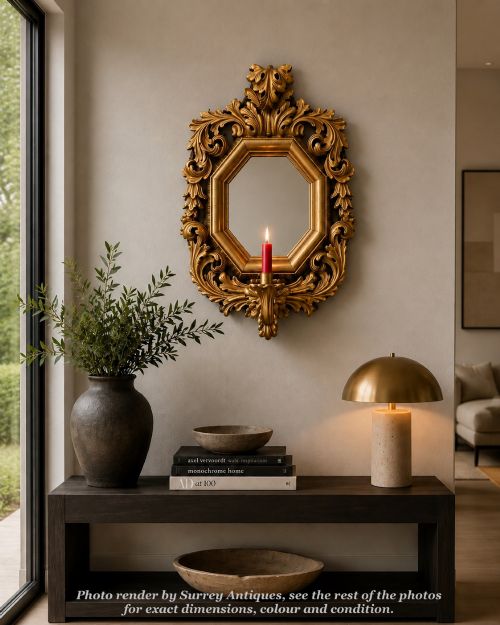


French Mirror Wall Lights
French mirror wall lights combine reflective glass with candle or lamp branches, offering warmth and elegance to any room.
Materials and construction
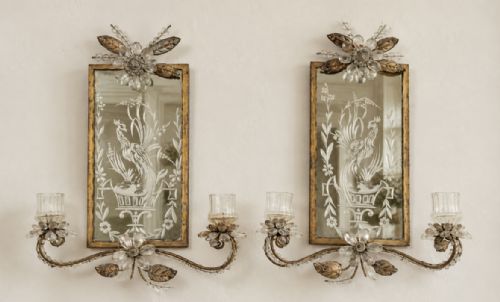
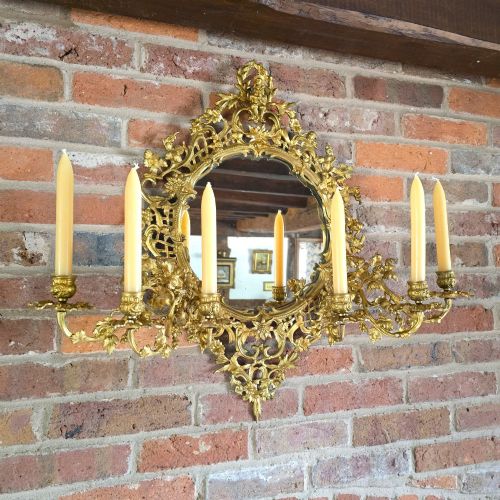
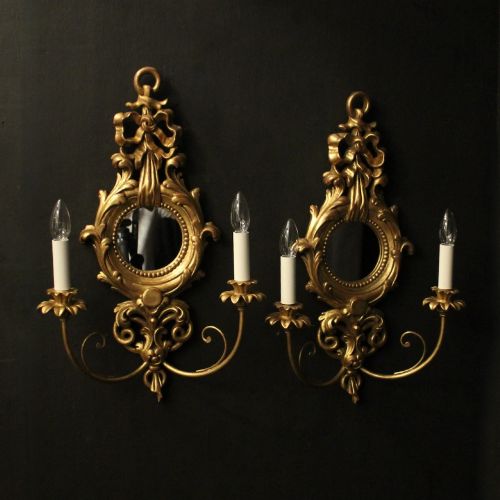
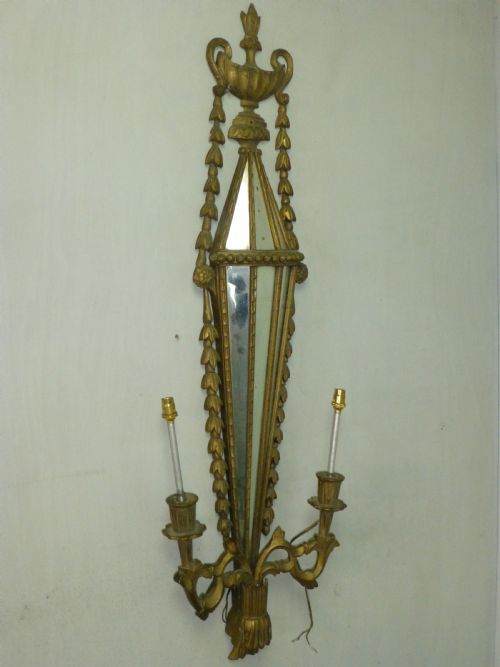
Frames rely heavily on carved wood finished with gesso and gilt, alongside cast metals such as bronze, brass, ormolu, and gilt metal. Artisans carved wooden frames by hand or cast metal components in sections before applying gold leaf or metallic finishes.
Reflective surfaces utilise silvered mirror glass, occasionally paired with cut glass or crystal drops to refract light from the candle branches. The integration of mirror plates required precise joinery to secure the glass behind or within heavy gilded and metallic armatures.
Judging quality and execution
Quality rests upon the crispness of the carving or the detail within the bronze casting, where sharper chiselling and deeper relief indicate superior craftsmanship. Finer examples display meticulous attention to proportion, balancing the weight of the mirror plate against the projection of the candelabra arms.
The integrity of the original gilding and the depth of the mirror plate silvering separate standard production from exceptional pieces. Superior items retain their original structural harmony, with heavy metal branches securely anchored to sturdy wooden or bronze backplates.
French Mirror Wall Lights Retail Price Guide 2026
Typical asking prices for french mirror wall lights among the pieces listed under this phrase on Sellingantiques today, from the lower quarter to the upper quarter. They describe what is for sale here now, not the wider market.
One signed piece proudly bears the mysterious stamp E.G - Paris no: 525, leaving a subtle trace of its nineteenth-century maker.
E.G Paris
The French Mirror Wall Lights Glossary
- Girandole
- A decorative wall mirror featuring attached candle branches or sconces designed to reflect light. These fixtures often serve as the focal point of a formal interior.
- Ormolu
- Gilded bronze achieved through a mercury amalgamation process common in French decorative arts. This technique produces a rich, durable golden surface on cast metal elements.
- Gesso
- A plaster-based mixture applied to wood frames to create a smooth surface for gilding. It allows carvers to achieve sharp decorative details before applying gold leaf.
- Overmantel mirror
- A large mirror designed specifically to hang above a fireplace mantelpiece. Many historical examples include integrated candle arms projecting from the lower frame.
- Rococo Revival
- A nineteenth-century design movement favouring asymmetrical scrollwork, naturalistic floral motifs, and flowing organic lines. This style dominates many nineteenth-century French lighting fixtures.
French Mirror Wall Lights: Frequently Asked Questions
How were french mirror wall lights used historically?
These fixtures were mounted on walls in reception rooms and hallways to multiply the illumination from candles before electricity. The reflective glass amplified the dim light of multiple flames to brighten dark spaces during evening gatherings.
Positioned strategically opposite windows or fireplaces, they created an illusion of greater spatial depth and distributed warmth throughout the chamber. Their dual function as mirrors and light sources made them essential decorative elements in formal French interiors.
How do I install antique wall lights safely?
Mounting heavy giltwood or bronze fixtures requires securing them directly into wall studs or using heavy-duty masonry anchors capable of supporting the combined weight of the mirror and metal arms. Professional installation ensures the backplate bears the load securely without straining the frame joints.
If the piece has been adapted for electrical wiring, consult a qualified electrician to check the internal components. Historic fixtures often require modern bracket adjustments to sit flush and stable against contemporary walls.
How do I date a french mirror wall light?
Dating relies on examining the construction of the frame, the composition of the metalwork, and the characteristics of the mirror plate itself. Nineteenth-century examples often display hand-carved gesso details or sand-cast bronze components associated with specific revival styles.
Inspect the reverse of the mirror for hand-beveled edges, wood shrinkage, and old fastening methods. Comparing stylistic motifs like Rococo scrolls or Louis XVI symmetry against known period pieces helps narrow down the decade of manufacture.
Can these wall lights be used with electricity?
Many historical wall lights arrive with electrical wiring installed to replace or supplement original candle holders. Rewired versions allow safe integration into modern lighting circuits while preserving the antique appearance of the fixture.
When evaluating a piece, check whether the conversion is reversible should you prefer a non-electrified display. Professional rewiring ensures that internal cords remain hidden and meet current safety standards.