

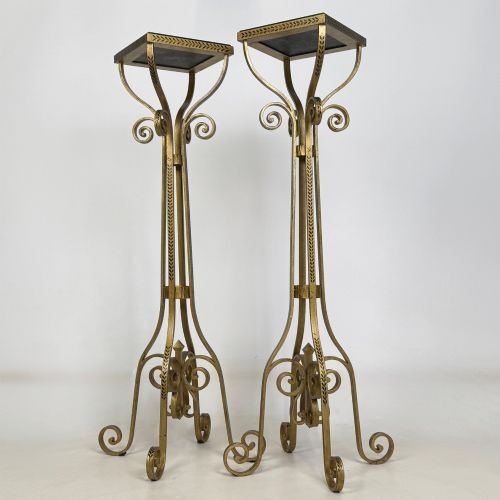
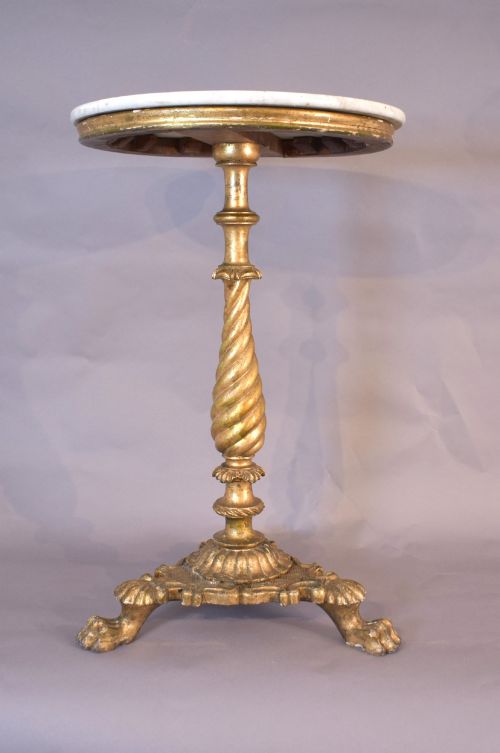

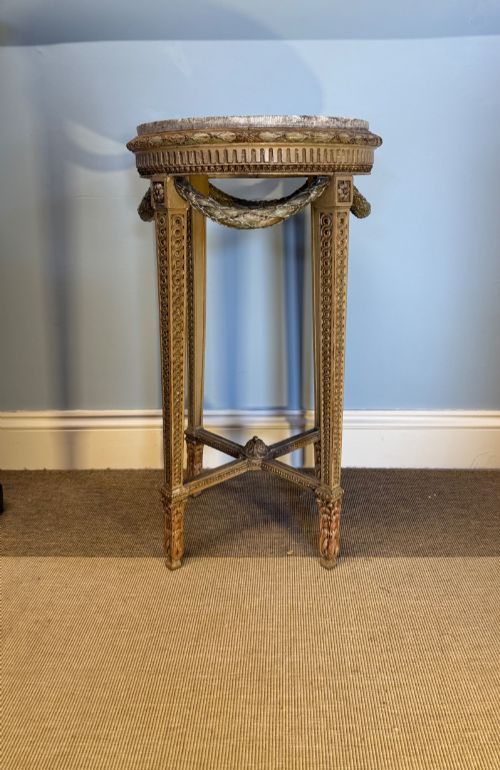
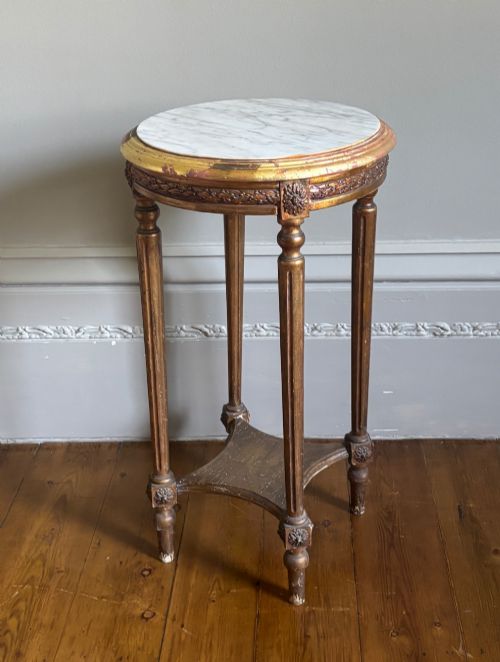
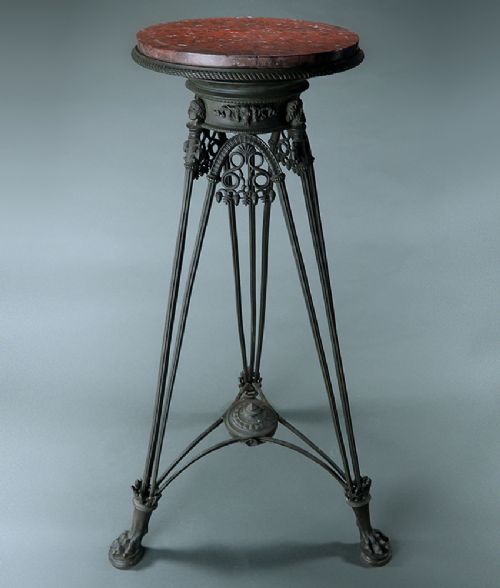
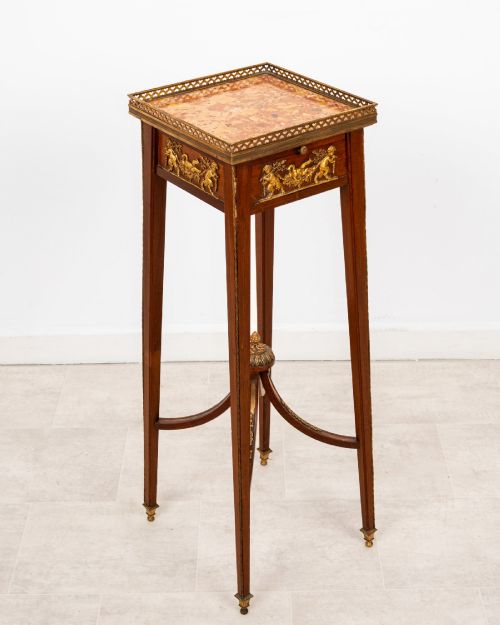

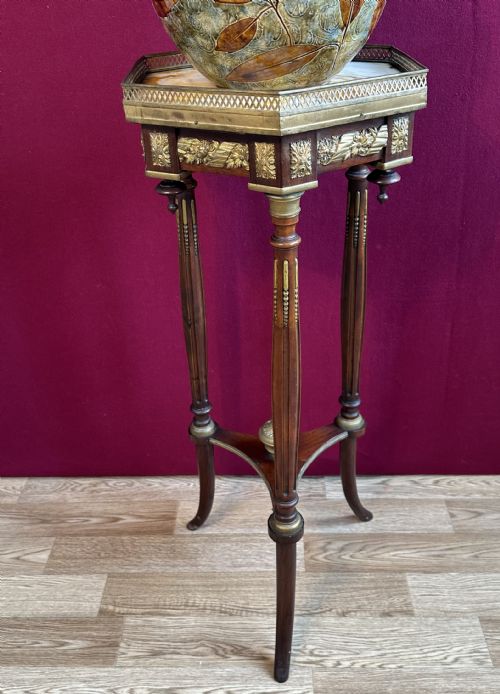


French Marble Top Stand
When choosing a french marble top stand, you select a functional piece of continental furniture that combines stone and timber for practical display.
French Marble Top Stand
A french marble top stand encompasses a variety of smaller tables, cabinets, and pedestals designed for display and practical use across domestic interiors.
The selections span nineteenth and early twentieth century periods, reflecting neoclassical, empire, and louis style revivals through forms like side tables, plant stands, and bedside cabinets.
Most examples originate from French workshops, utilising native and exotic timbers paired with fitted stone surfaces to create durable furniture for domestic settings.
Materials and Techniques
Construction relies upon traditional cabinet-making timbers such as mahogany, walnut, kingwood, and oak, often shaped into serpentine or circular outlines.
The characteristic stone top is inset into the wooden frame, accompanied by cast brass, ormolu mounts, or gilded wood carvings that define the decorative period style.
Faux bamboo framing appears on nineteenth-century bedside cabinets, showing how cabinet-makers playfully imitated exotic plant stems in solid timber.
Craftsmanship and Materials
Quality separates through the crispness of timber carving, the precision of marquetry, and the weight and detail of cast ormolu or brass mounts.
The selection of the marble slab, its thickness, colour variation, and edge moulding indicates the original grade and cost of the finished furniture piece.
François Linke·Victor Raulin
The French Marble Top Stand Glossary
- Guéridon
- A small round table on a central pillar or tripod base, frequently topped with marble. These pieces served varied domestic functions in nineteenth-century French interiors.
- Ormolu
- Gilded bronze mounts applied to furniture for decorative effect. The technique involves mercury gilding on cast brass or bronze.
- Torchere
- A tall stand or pedestal designed to support a lamp, vase, or bust. They often feature slender carved wooden columns and small stone tops.
- Galleried
- A tabletop surrounded by a raised edge or pierced brass rail. This feature prevents items from sliding off the surface.
French Marble Top Stand: Frequently Asked Questions
What rooms suit a french marble top stand?
These pieces fit well in bedrooms as bedside storage or in living spaces as lamp tables and plant supports. Their stone surfaces offer practical water resistance for everyday use.
Compact dimensions allow them to function effectively in hallways or corners where surface space is required without a heavy footprint.
How do I care for the marble top?
Maintenance requires simple wiping with a damp cloth and mild soap, avoiding acidic cleaning agents that etch polished stone. Regular dusting keeps the surface clear.
Applying a specialist stone wax periodically helps protect the polish from staining, particularly on tables used for drinks or plants.
How can I tell the period?
Dating relies on timber selection, construction methods, and stylistic details such as the presence of neoclassical revival motifs or art nouveau curves. Examining the cabinet joints provides clues to the manufacturing era.
Hardware styles and the thickness of the marble slab also help distinguish nineteenth-century examples from later twentieth-century reproductions.
Were these stands used for plants?
Many specific forms functioned as jardinières or plant stands, incorporating waterproof stone tops and sometimes metal liners to hold potted greenery. The robust nature of marble accommodated damp pots safely.
Other designs served as lamp tables or washstands, demonstrating the versatile application of stone surfaces across various domestic tasks.