




French Marble Fireplace
These pieces known as a french marble fireplace bring substantial nineteenth century architectural presence and classical weight to a room.
French Marble Fireplace
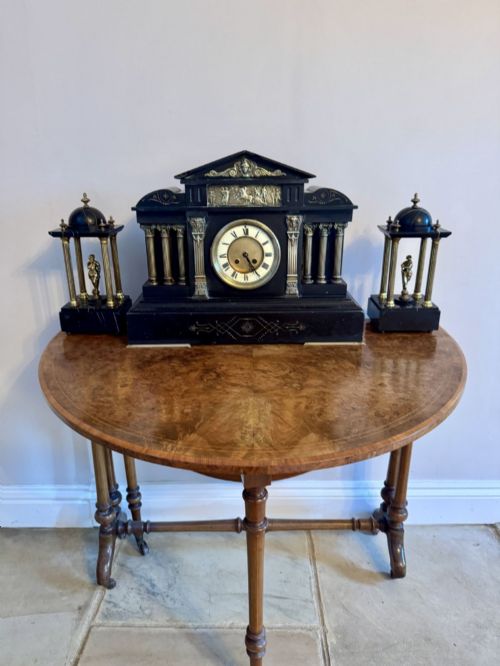
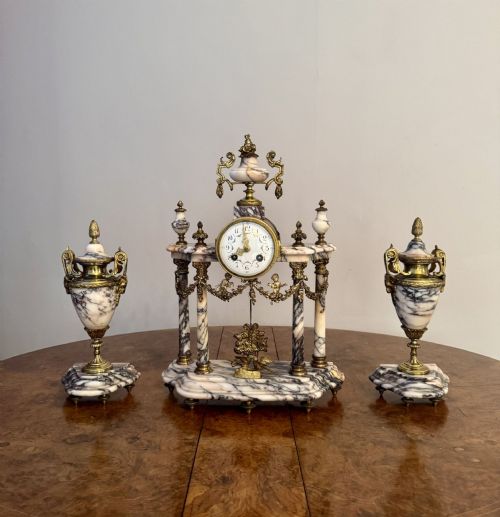
A french marble fireplace provides a traditional focal point for a room, incorporating carved stone surrounds and related mantel furniture. The items documented here span the nineteenth century, taking forms such as architectural fire surrounds and accompanying mantel clock garniture sets.
Makers often fashioned these works in prominent styles including Louis XVI, Empire, and Second Empire. Architectural pieces like the Breche Violet marble surround sit alongside decorative marble and bronze clock sets on this page.
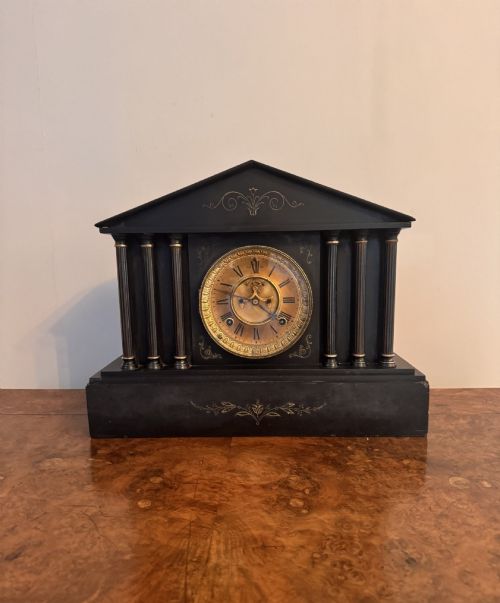
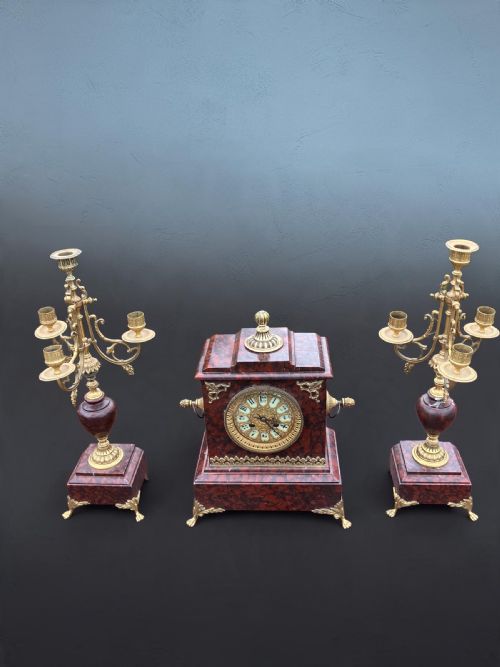
The materials range from white and red rouge marble to black slate, frequently mounted with ormolu, brass, and gilt bronze. Buyers encounter various nineteenth century interpretations, from ornate Victorian classical designs to clean Art Deco silhouettes.
How they were made
Craftsmen shaped solid blocks of marble and slate into architectural surrounds and clock housings using traditional masonry and turning techniques. These stone bodies received polished finishes to highlight natural veining.
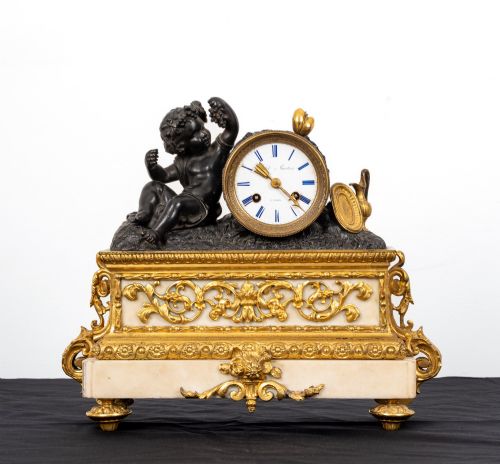
Foundries cast bronze, brass, and ormolu mounts to adorn the stone structures, employing mercury gilding or electroplating methods. Enamel dials and glass bezels completed the functional timepieces integrated into the larger decorative sets.
French Marble Fireplace Retail Price Guide 2026
Typical asking prices for french marble fireplace among the pieces listed under this phrase on Sellingantiques today, from the lower quarter to the upper quarter. They describe what is for sale here now, not the wider market.
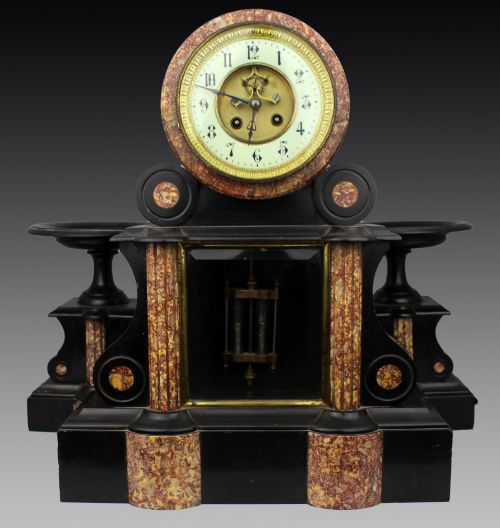
Many nineteenth century clock sets include visible pendulums swinging steadily behind glass, adding a subtle motion to the silent stone.
What varies in quality
The refinement of the stonework and the crispness of the bronze or ormolu mounts dictate the overall quality of a french marble fireplace ensemble. Finer examples display deeply undercut cast bronze details and meticulously fitted marble sections.
The integration between the clock movement and the surrounding marble case shows the maker's skill. Superior sets maintain proportional harmony across both the central mantel clock and its matching garnitures or candelabra.
Japy Freres·Siffel and Cartier·Deniere and Cailleaux·James Ritchie and Son·Vincenti
The French Marble Fireplace Glossary
- Garniture set
- A decorative grouping consisting of a central mantel clock accompanied by matching side pieces such as urns, vases, or candelabra. These matched sets create a balanced display on a mantelpiece.
- Ormolu
- Finely ground high-carat gold applied to a bronze base using a mercury amalgamation process, or later via electroplating. This technique gives metallic mounts a rich, durable golden finish.
- Black slate
- A dense, dark stone frequently utilised in nineteenth-century clockmaking to simulate or complement marble. It provides a heavy, monolithic base for contrasting gilt bronze mounts.
- Portico clock
- A distinct architectural clock style supported by four columns resembling a classical temple facade. These timepieces often feature a suspended pendulum swinging visibly within the central opening.
- Second Empire
- A French design period spanning the mid to late nineteenth century characterised by eclectic revivals of historical styles. Pieces from this era often combine heavy marble forms with exuberant gilt mounts.
French Marble Fireplace: Frequently Asked Questions
What is a garniture set?
A garniture set comprises a main mantel clock paired with matching decorative ornaments like urns or candelabra. These companion pieces balance the visual weight of a fireplace mantel.
Historically, makers designed these elements together to ensure uniform materials and stylistic harmony across the entire display.
How do I identify Louis XVI style?
Louis XVI style pieces display neoclassical restraint, featuring straight lines, symmetrical proportions, and classical architectural motifs. You will notice details like fluted columns, urns, and leaf garlands.
This aesthetic contrasts with the more asymmetrical and exuberant curves typical of earlier rococo designs.
Where were these pieces made?
Many of these items originated in French workshops and clockmaking centres during the nineteenth century. Makers in Paris and regional hubs produced both the stone surrounds and the intricate bronze clock movements.
Some British firms also retailed or imported these French components alongside domestic stonework.
How should I clean marble?
Clean marble surfaces gently using a soft cloth dampened with warm water and mild, pH-neutral soap. Avoid acidic cleaners, vinegar, or abrasive pads that can etch or dull the polished stone.
Dry the surface thoroughly afterwards to maintain the natural sheen of the material.