
French Marble Dresser
A french marble dresser brings together solid cabinet timbers and heavy stone slabs to serve as a robust surface for daily storage.
French Marble Dresser
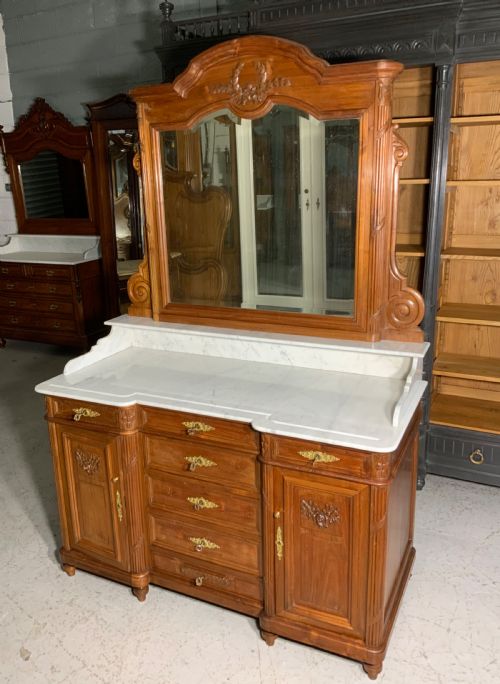
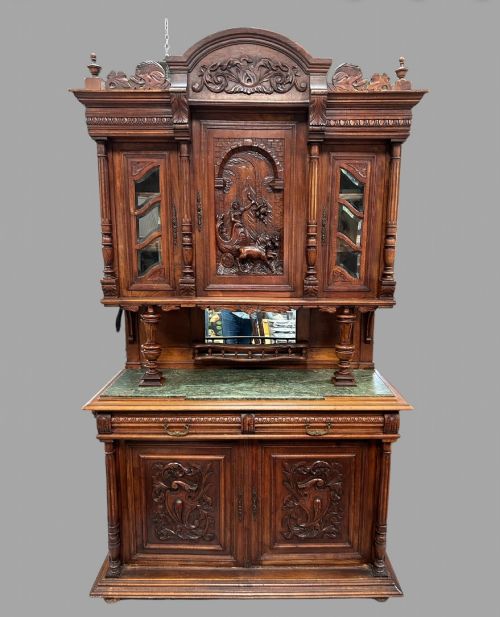
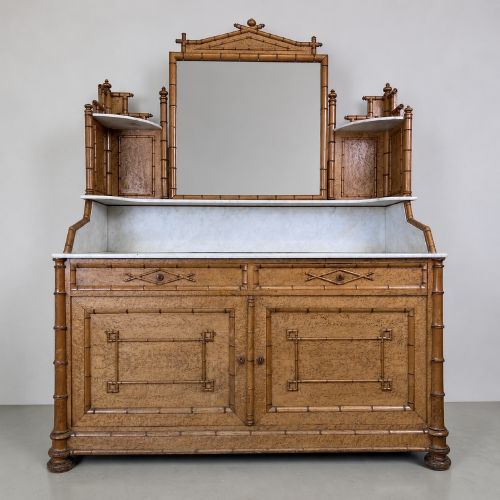
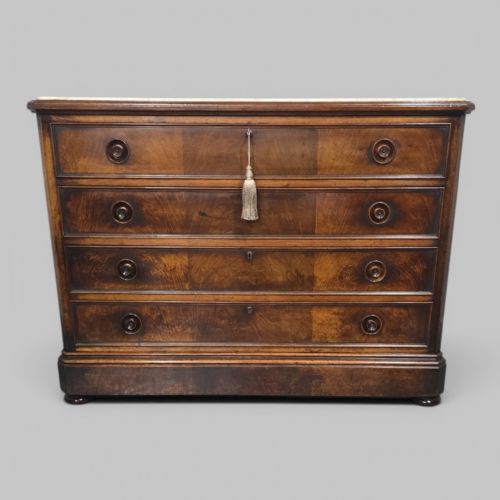
A french marble dresser encompasses commodes, chests of drawers, washstands, and sideboards originating from the eighteenth and nineteenth centuries.
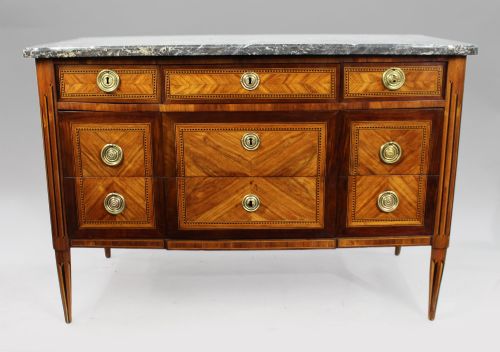
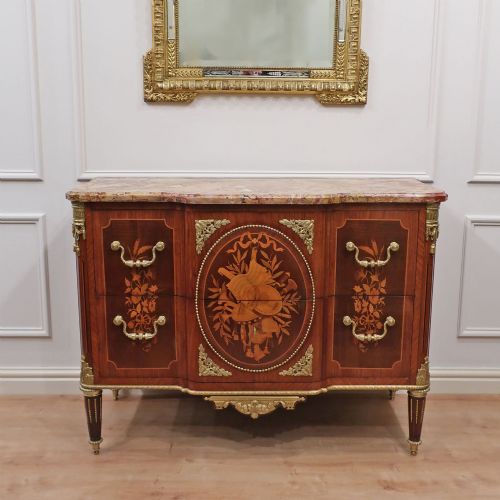
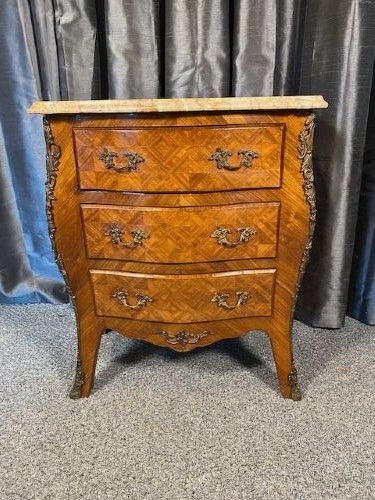
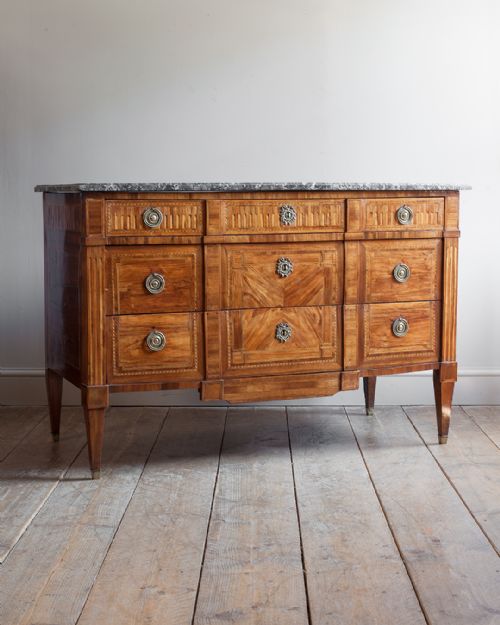
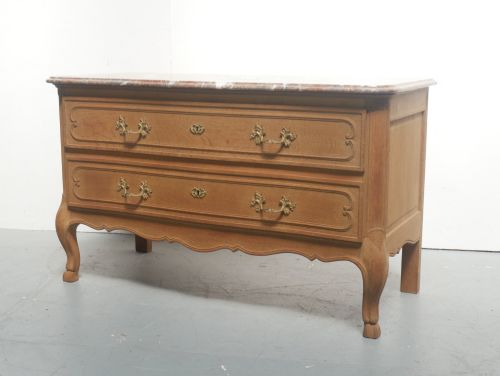
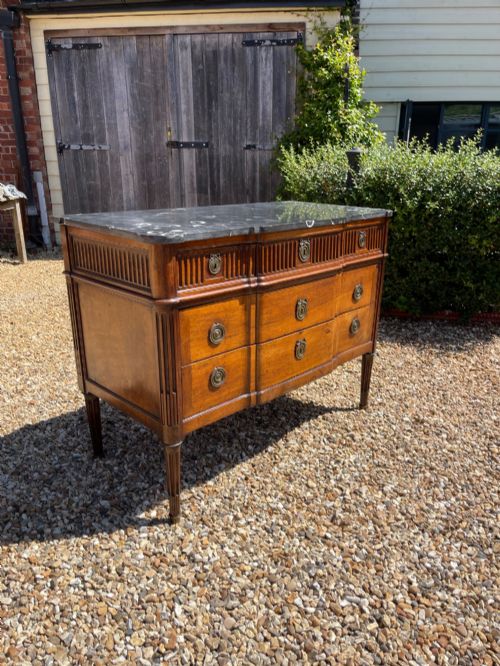
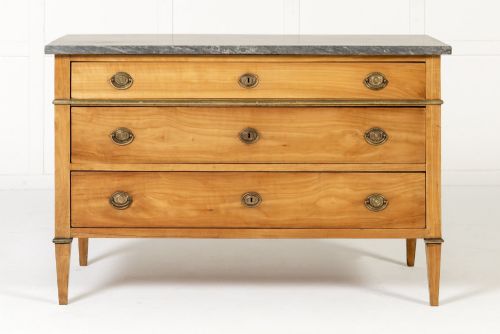
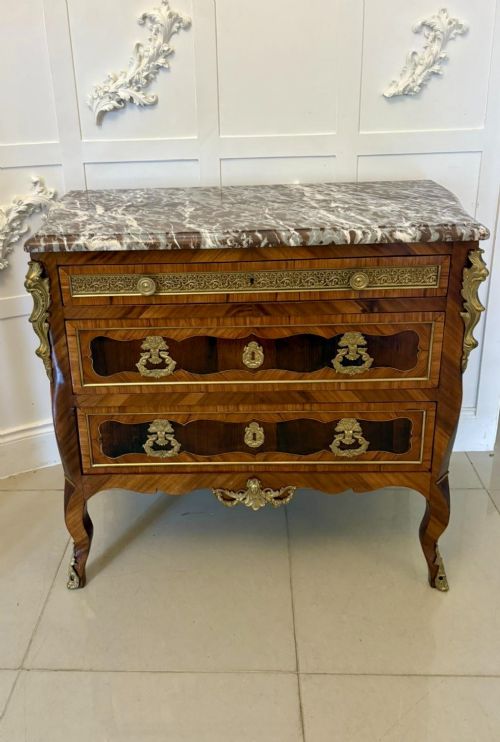
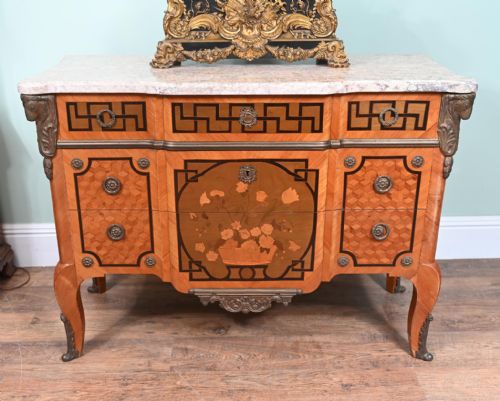
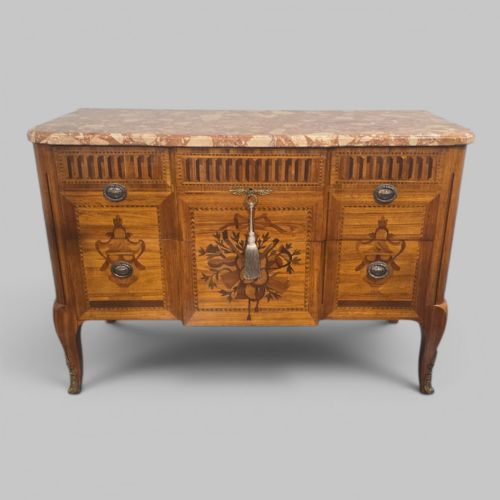
The version most commonly encountered on this page is the commode or chest of drawers fitted with a fitted stone slab top, often following Louis XV or Louis XVI design idioms.
Makers across various French provincial and metropolitan workshops adapted these storage forms in woods such as walnut, cherrywood, and mahogany.
Materials and Construction
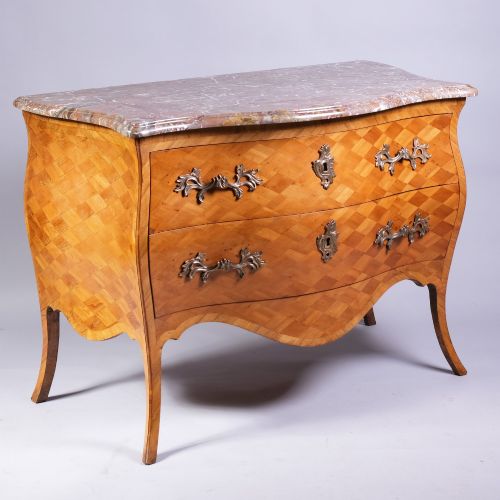
Cabinetmakers constructed the carcase using native or exotic timbers like oak, walnut, and mahogany, frequently applying veneers of kingwood, tulipwood, or parquetry patterns.
The substantial stone tops, occasionally in grey or white marble, sit directly upon the timber frame to provide a durable and cool horizontal surface.
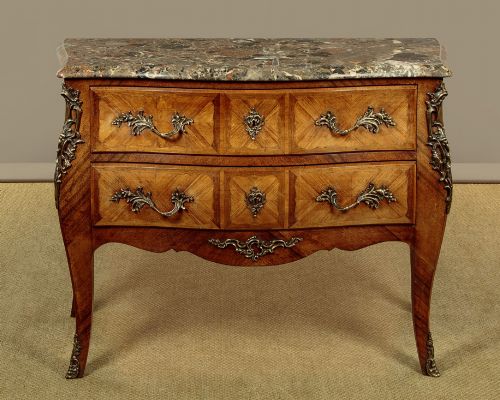
Cast bronze or ormolu mounts, along with brass handles and keyhole escutcheons, decorate the drawer fronts and corners on many examples.
Materials appearing across the inventory include solid oak, cherrywood, faux-bamboo, and various exotic veneers.
The Distinction in Execution
Superior execution shows in the precision of the parquetry or marquetry inlays and the snug fit of the stone top to the timber carcase.
Finer examples display hand-chiselled ormolu mounts that integrate cleanly with the contours of the wood rather than generic cast replacements.
Mon Krieger
The French Marble Dresser Glossary
- Commode
- A low chest of drawers, often with a decorative wooden top or a fitted marble slab, popular in French interiors since the eighteenth century.
- Ormolu
- Gilt bronze mounts applied to furniture for decoration, cast and hand-chiseled to highlight surface details.
- Parquetry
- Geometric wood inlay patterns arranged to form decorative designs across the surface of the carcase.
- Bombe
- A swollen, convex shape characteristic of certain eighteenth-century and revival furniture forms.
- Serpentine
- A front contour that curves inward centrally and outward at the ends, creating a gentle wave effect.
French Marble Dresser: Frequently Asked Questions
How do I care for the stone top?
Wipe the surface regularly with a damp cloth and mild soap, avoiding acidic cleaners that can etch the polished finish.
Keep heavy impacts away from the edges to prevent chipping the stone slab.
Were these pieces used in bedrooms?
Many served as bedside or dressing commodes for personal items, washware, and linens in private chambers.
Larger versions also functioned as sideboards or serving cabinets in dining spaces.
How do I spot a revival piece?
Nineteenth-century revival items often use machine-cut veneers and standardised hardware that differ from eighteenth-century hand-cut construction methods.
Inspect the secondary woods inside the drawers to help determine the manufacturing era.
Is the stone top original to the base?
Check if the edges of the stone match the exact profile of the wooden carcase and show consistent ageing with the rest of the piece.
Look for uniform seating marks and matching wear patterns where the slab rests on the timber frame.