




French Mantelpiece Statues
French mantelpiece statues bring classical elegance and narrative weight to a room, ranging from cast metal figures to polished marble bases.
French Mantelpiece Statues
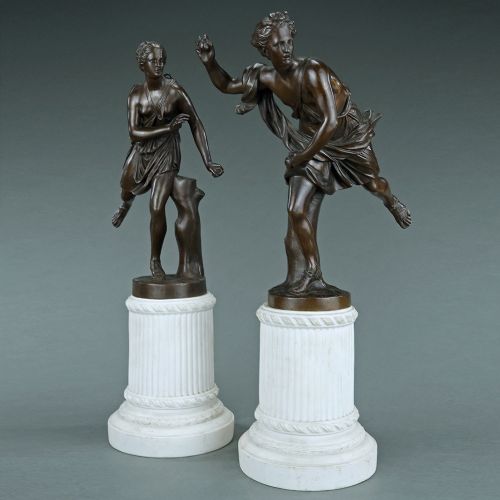
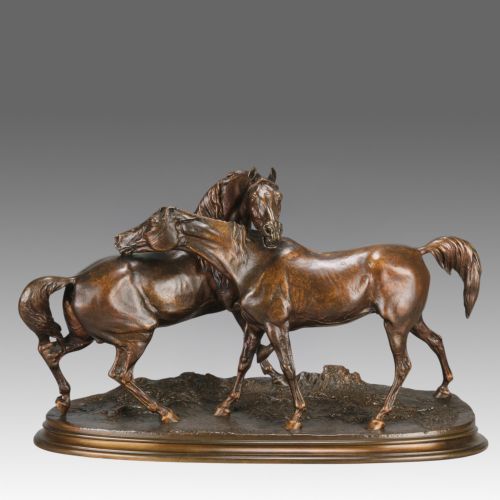
When searching for French mantelpiece statues, buyers encounter a diverse selection of sculptural works designed to sit atop a fireplace or sideboard. These decorative objects range from single figural bronzes and animalier studies to matched pairs of soldiers and allegorical groupings.
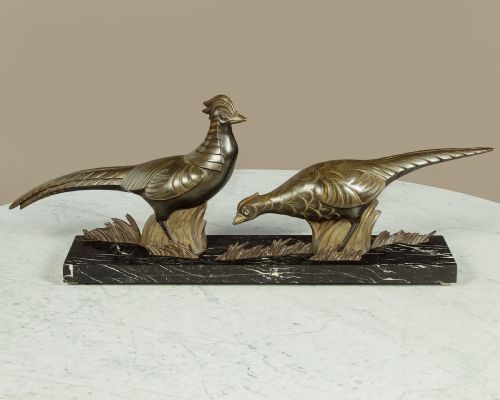
The pieces appearing on this page span the nineteenth century and the Art Deco period of the early twentieth century. Nineteenth-century examples often draw on classical mythology, Napoleon, or Renaissance revival themes, while later pieces favour stylised fauna and streamlined human forms.
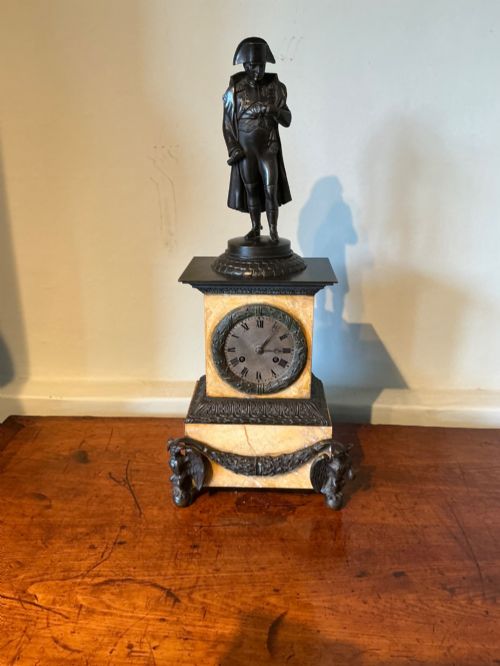
Most items on show are cast in bronze or spelter, frequently mounted on marble or onyx plinths to give them presence and stability. Buyers will also find mantel clocks incorporating sculptural figures, combining timekeeping with decorative metalwork.
Materials and methods of construction
Foundries produced these sculptures using metal casting techniques, predominantly working in bronze and spelter. Spelter offered an economical alternative to bronze, allowing makers to achieve intricate detail before applying patination or metallic finishes.
Makers set many of these figures on heavy bases made of marble, onyx, or wood, sometimes enhancing the metalwork with gold leaf. Candlesticks and figural groups incorporate multi-part construction, screwing or pinning the cast elements securely to their stone plinths.
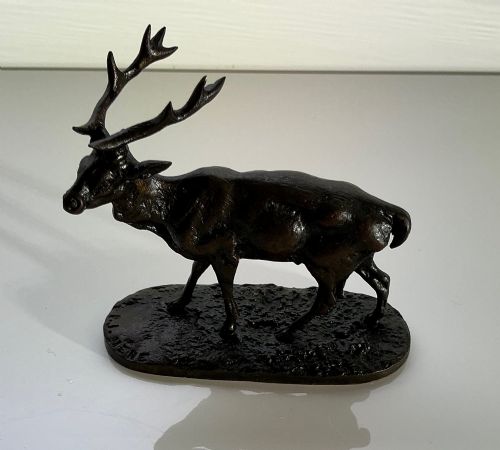
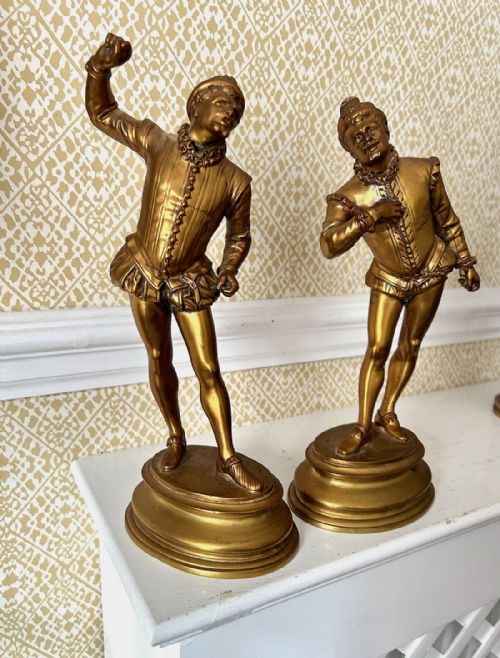
Stags, pheasants, and duelling musketeers share the mantelpiece with classical Greek heroes.
Assessing quality in period sculpture
The choice and finish of the mounting materials also indicate grade. Solid marble and onyx bases with precise mitred corners and rich natural veining denote a higher standard of manufacture than lightweight substitutes.
Barbedienne·P J Mêne·Sibylle May·Edouard Drouot·Charles Cumberworth
The French Mantelpiece Statues Glossary
- Animalier
- A nineteenth-century artistic movement focusing on the realistic depiction of animals, particularly horses, stags, and dogs in dynamic poses.
- Spelter
- A zinc-based alloy commonly used as a cost-effective substitute for bronze in decorative figures and mantel ornaments.
- Patination
- The surface colour or chemical finish applied to metal sculpture to simulate age or enhance the depth of the material.
- Bisque
- Unglazed porcelain that has been fired once, producing a matte, tactile white surface often seen in nineteenth-century figural pairs.
- Neoclassical
- A revival style drawing inspiration from the classical art and architecture of ancient Greece and Rome.
French Mantelpiece Statues: Frequently Asked Questions
Where should I place these statues?
These figures find a natural home on a mantelpiece, sideboard, or console table where their height and detail can be appreciated at close range. They work best against a plain wall that allows the silhouette and patination to stand out.
Ensure the placement balances the weight of the piece, particularly with heavier marble-based clock garnitures and large animalier bronzes that require a sturdy surface.
How do I clean bronze and spelter?
Dust these sculptures gently with a dry, soft microfiber cloth to prevent dirt from settling into the crevices of the casting. Avoid using water, commercial metal polishes, or chemical cleaners, as these can strip away the original patina.
Spelter figures are softer than bronze and require extra care to avoid scratching the surface finish during routine housekeeping.
How do I tell bronze from spelter?
Bronze is heavier, denser, and generally cooler to the touch than spelter, with a durable metallic structure that resists minor chipping. Spelter is a softer zinc alloy that may show grey or white metal beneath a worn surface finish.
Many spelter pieces were given a bronze-look coating to mimic the more expensive metal, so inspect areas of natural friction for signs of the base alloy.
What is an animalier sculpture?
Animalier sculptures depict animals in realistic or dramatic motion, capturing horses, stags, and dogs with anatomical precision. This genre gained immense popularity in nineteenth-century France through specialist foundries and modellers.
These pieces often portray wildlife or domestic animals in tense, energetic poses rather than static portraits.