

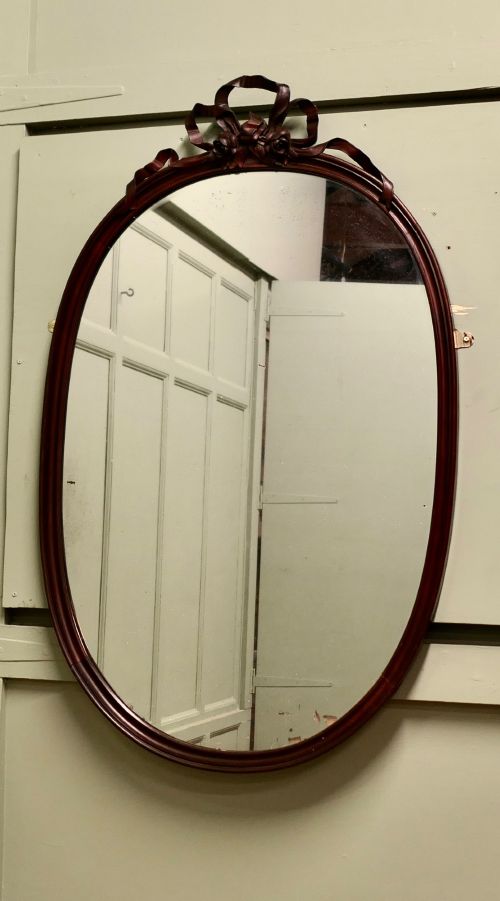
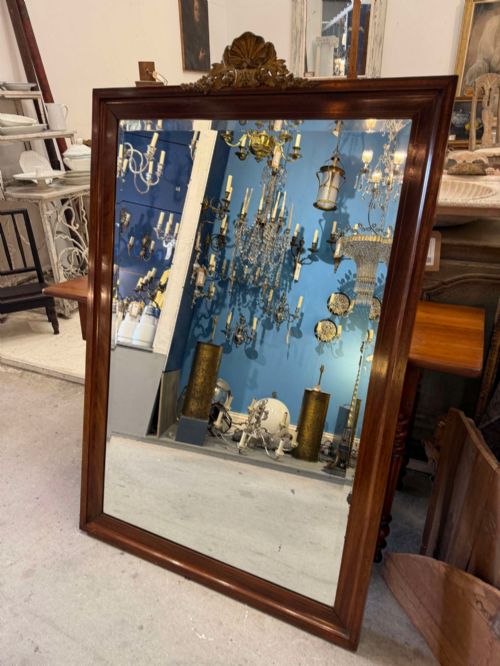
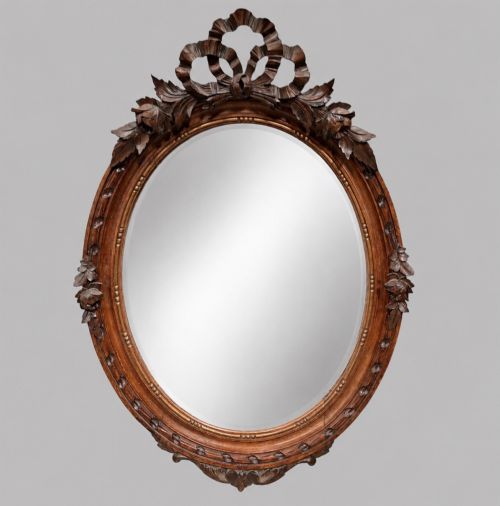


French Mahogany Wall Mirror
A french mahogany wall mirror brings warmth and depth to a room through dark timber and reflective glass.
French Mahogany Wall Mirror
A french mahogany wall mirror unites rich mahogany timber with reflective glass, often taking tall, oval, or rectangular forms designed to hang upon a wall. When you search for a french mahogany wall mirror, you encounter pieces that span the nineteenth century into the twentieth, drawing on classical and revival vocabularies.
The versions most commonly met on this page date from the later nineteenth century, particularly around eighteen ninety, adopting styles such as French Empire and Rococo Revival. These examples range from modest domestic dressing mirrors to monumental classical wall mirrors and tall pier mirrors.
Makers and designers working in these idioms frequently incorporated gilt bronze, ormolu, or gilt metal mounts to contrast against the dark wood. Alongside standard wall mirrors, the selection occasionally encompasses related forms such as console tables and dressing mirrors.
How they were made
The construction of a french mahogany wall mirror relies upon solid mahogany framing, frequently enhanced with figured veneers applied to a secondary wood base. Carved wood details bring relief to the borders, showing the hand of the cabinetmaker in scrolls, foliage, and classical motifs.
Metal ornamentation played a central role, utilising ormolu, gilt bronze, and gilt metal mounts fastened to the mahogany frame. These cast metal elements introduced gleaming metallic accents that catch the light alongside the polished mirror plate.
French Mahogany Wall Mirror Retail Price Guide 2026
Typical asking prices for french mahogany wall mirror among the pieces listed under this phrase on Sellingantiques today, from the lower quarter to the upper quarter. They describe what is for sale here now, not the wider market.
Listings feature pieces spanning the nineteenth and twentieth centuries, utilising materials including mahogany, giltwood, marble, and ormolu.
What varies in quality
The distinction between tiers of quality rests upon the choice of timber and the depth of the carving. Finely figured mahogany grain and crisply hand-carved wooden ornaments separate superior examples from plainer, more mechanical productions.
The integration and chasing of metal mounts determine much of the visual success of an ormolu-mounted piece. Finer mirrors display sharply cast ormolu and well-preserved mercury glass or early silvered plates that hold a soft, mottled reflection.
The French Mahogany Wall Mirror Glossary
- Ormolu
- Gilded bronze applied to furniture mounts and mirror frames. This technique involves coating bronze with a gold amalgam and heating it to leave a rich, golden finish.
- Pier mirror
- A tall mirror designed specifically to hang on the wall between two windows or above a pier table. These vertical glasses expand the apparent light within nineteenth-century interiors.
- Empire revival
- A nineteenth-century design movement looking back to the classical forms of the First French Empire. Pieces in this style utilise heavy mahogany and restrained classical mounts.
- Rococo revival
- A mid-nineteenth-century style celebrating asymmetrical scrollwork, naturalistic foliage, and flowing curves. Carved mahogany frames in this taste display lively, undulating profiles.
- Console table
- A wall table supported by brackets or legs, frequently paired beneath large wall mirrors in formal rooms. Though primarily a table, the form shares stylistic vocabulary with matching mirror frames.
French Mahogany Wall Mirror: Frequently Asked Questions
How do I date a french mahogany wall mirror?
Dating relies on combining the stylistic clues of the frame with construction methods visible on the reverse. Revival periods in the nineteenth century often lean on distinct classical or rococo motifs that help narrow the decade of manufacture.
Examination of the timber grain, backboards, and plate glass further assists in separating earlier nineteenth-century examples from later twentieth-century interpretations.
Where should I hang a french mahogany wall mirror?
These mirrors suit principal reception rooms, hallways, or above a fireplace mantel where their dark timber frame commands attention. Hanging them opposite a window maximises the reflection of natural light into the space.
Because many examples from the period are substantial in weight, secure wall fixings into masonry or studs are essential for safe placement.
What is the difference between Empire and Rococo styles?
Empire style draws on strict classical antiquity, featuring architectural symmetry, columns, and martial or imperial bronze mounts. It presents a solemn and grand visual presence.
In contrast, Rococo style embraces fluid asymmetry, C-scrolls, and organic leaf carving. The mahogany frames curve and twist with theatrical energy rather than rigid geometry.
How do I clean a mahogany frame and glass?
Dust the carved mahogany frame gently with a dry, soft cloth to prevent accumulation in the recesses of the wood. Avoid modern chemical polishes that can build up a greasy residue over historic finishes.
Clean the mirror plate sparingly with a mild glass cleaner applied to a cloth rather than sprayed directly, ensuring moisture does not seep behind the antique silvering.