





French Mahogany Seating
French mahogany seating brings together rich timber frames and classical restraint, offering chairs and settees that anchor a room with architectural presence.
French Mahogany Seating
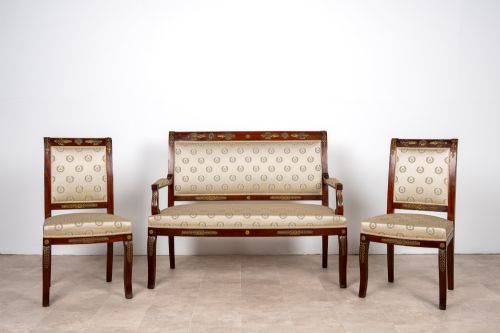
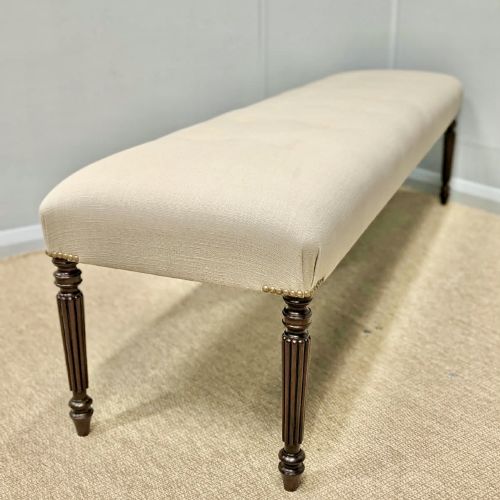
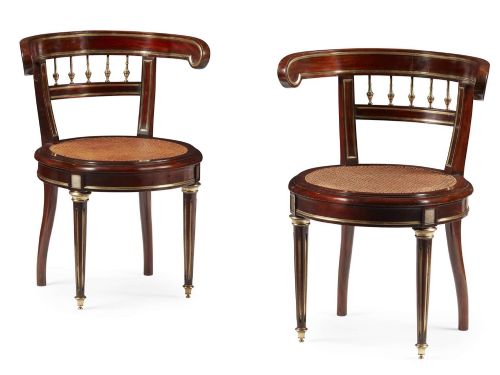
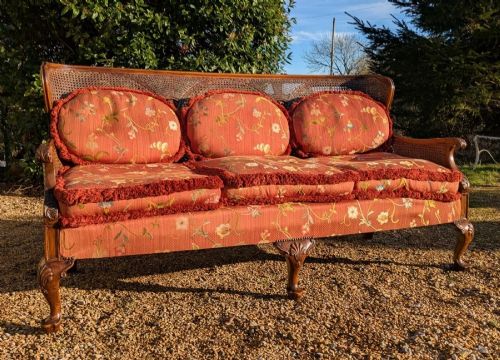
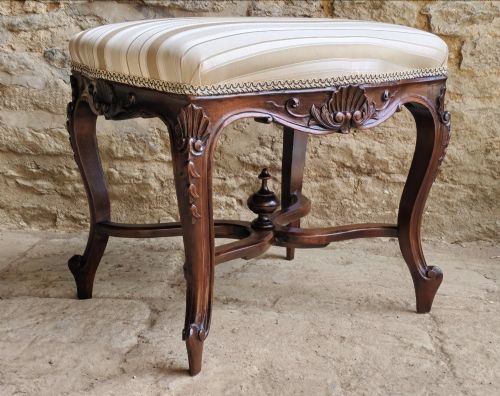
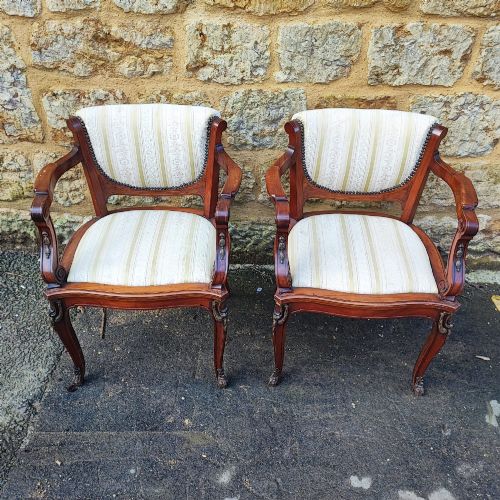
When searching for french mahogany seating, buyers encounter a robust mix of armchairs, settees, and stools spanning the nineteenth century. These forms draw heavily on classical idioms, balancing structural timber with comfortable upholstered surfaces intended for formal reception rooms and private salons.
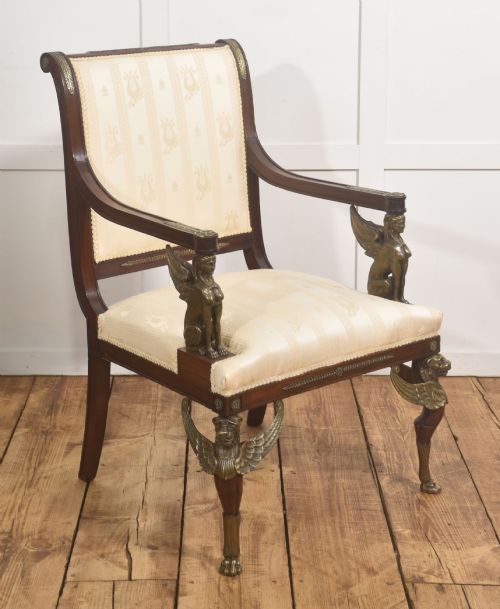
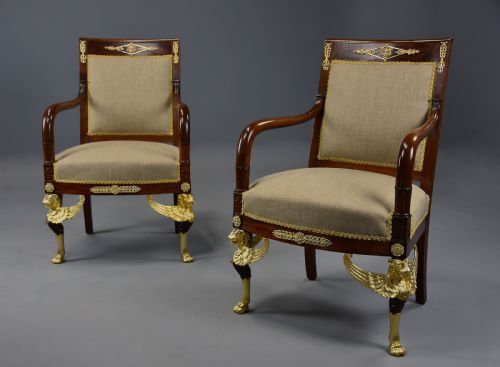
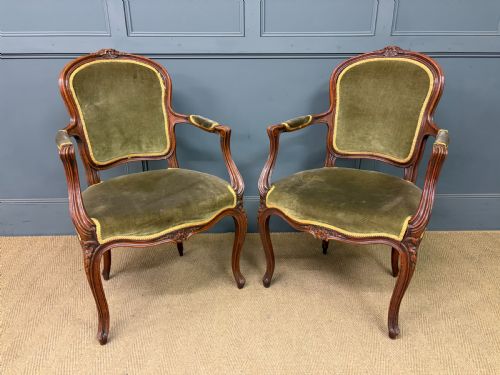
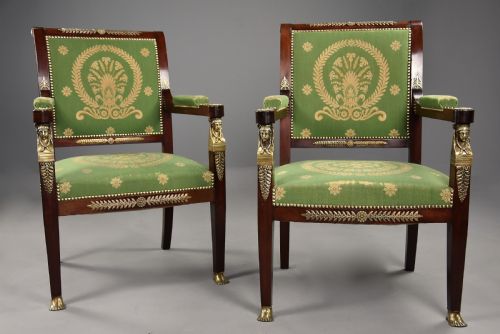
The selections appearing here lean towards distinct revivals and Empire aesthetics, featuring open armchairs such as fauteuils alongside bergères and window seats. Pieces frequently reflect nineteenth-century interpretations of earlier royal styles, including Louis XV curves and Empire symmetry.
Origins trace across decades of European cabinetmaking, connecting nineteenth-century workshops with robust Victorian interpretations. Buyers typically find matching pairs or single statement chairs suited for distinct interior schemes.
Materials and construction
Cabinetmakers constructed these frames using dense mahogany, selected for its deep grain and stability under carved ornamentation. Workshops frequently mounted cast or chased ormolu and brass directly onto the timber surfaces to accentuate structural lines.
Upholstery relies on traditional textiles such as velvet, damask, and woven fabrics layered over supportive springs and feather cushions. Carved details emerge directly from the solid mahogany chassis rather than applied composition.
French Mahogany Seating Retail Price Guide 2026
Typical asking prices for french mahogany seating among the pieces listed under this phrase on Sellingantiques today, from the lower quarter to the upper quarter. They describe what is for sale here now, not the wider market.
Piano stools in this selection feature revolving mechanisms designed so nineteenth-century musicians could adjust their height mid-performance.
Craftsmanship and distinction
Quality rests on the crispness of the timber carving and the integration of metal mounts. Superior pieces display finely chased ormolu and deep relief work on the mahogany frame, whereas simpler examples rely on plain timber profiles.
The integrity of the original frame construction dictates lasting value. Strong joinery and well-preserved secondary timbers elevate a chair above standard commercial output from the period.
Louis Majorelle
The French Mahogany Seating Glossary
- Fauteuil
- An open-framed armchair with upholstered back and seat, typically featuring exposed wooden armrests. These pieces originated in French formal rooms to accommodate wide court dress.
- Bergère
- An enclosed upholstered armchair featuring padded sides filled with upholstery or cane work. This form prioritises comfortable lounging over upright reception posture.
- Ormolu
- Gilded bronze mounts applied to furniture frames for decorative contrast. Artisans cast and chased these metal elements to catch the light against dark mahogany.
- Cabriole leg
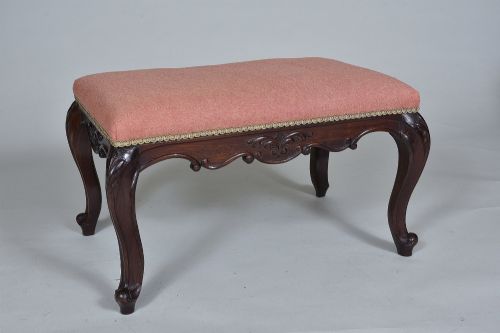
- A furniture leg that curves outward in a convex arc before tapering inward to a pad or scroll foot. The design mimics the natural joints of an animal.
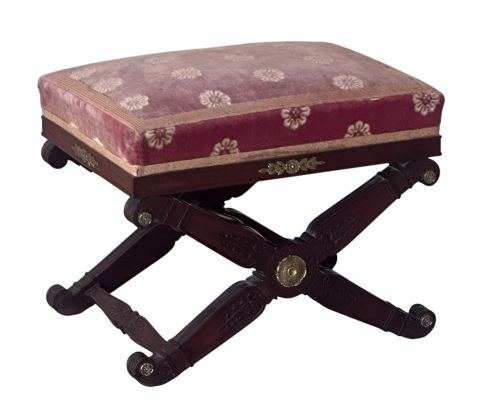
- X frame stool
- A seating form supported by intersecting diagonal stretchers forming an X shape. This ancient structural layout gained renewed popularity during nineteenth-century classical revivals.
French Mahogany Seating: Frequently Asked Questions
How do I identify an Empire style chair?
Empire pieces display strict symmetrical lines, architectural proportions, and classical motifs derived from Roman and Greek precedents. Makers often applied cast brass or ormolu mounts directly onto the dark mahogany surfaces to emphasise the military and neoclassical influence.
These chairs generally feature sabre legs or columnar supports, distinguishing them from the curved floral motifs typical of earlier Louis periods.
Can these antique chairs be used daily?
Most nineteenth-century frames possess robust mahogany construction capable of handling regular domestic use when the internal webbing and joints remain secure. Professional upholsterers can reinforce internal support structures without altering the external timber.
Placing them away from direct heat sources prevents the dense mahogany and applied mounts from drying out over time.
How do I date nineteenth century mahogany seats?
Dating relies on stylistic shifts between revival periods, such as the transition from rigid Empire symmetry in the early decades to ornate Rococo Revival curves around the mid-century. Examining the secondary timbers and the method of upholstery tacking also helps establish the era of production.
Makers' stamps, where present beneath the frame, offer definitive evidence of workshop origin.