



French Mahogany Desk Chair
A french mahogany desk chair brings architectural presence and rich timber tone to a study, offering the classic forms valued by collectors.
French Mahogany Desk Chair
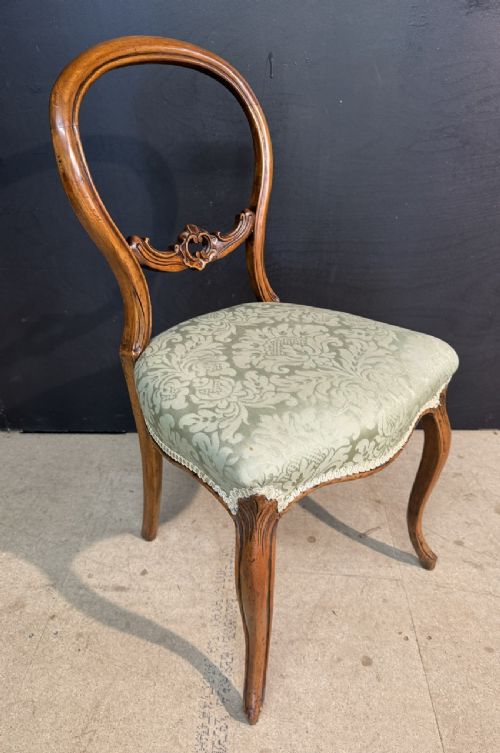
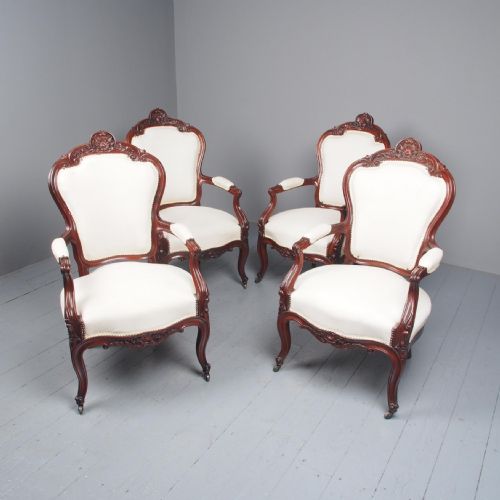
A french mahogany desk chair encompasses seating designed for writing tables and libraries, taking the form of armchairs, side chairs, and swivel variants shaped by continental cabinetmakers. Buyers browsing this selection encounter pieces spanning the eighteenth century through the twentieth century, with nineteenth-century revivals strongly represented.
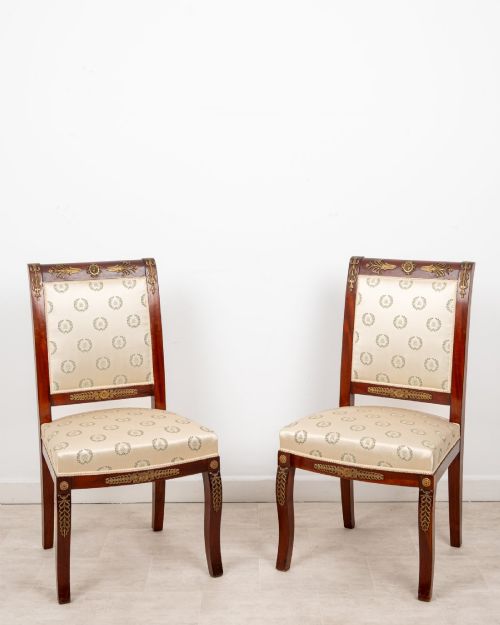
The aesthetic vocabulary draws heavily upon historical French movements, including Empire, Empire Revival, and Louis XV Revival, alongside Victorian interpretations and Georgian influences. These chairs serve primarily as functional desk seating or library armchairs, combining deep mahogany timbers with upholstered seats.
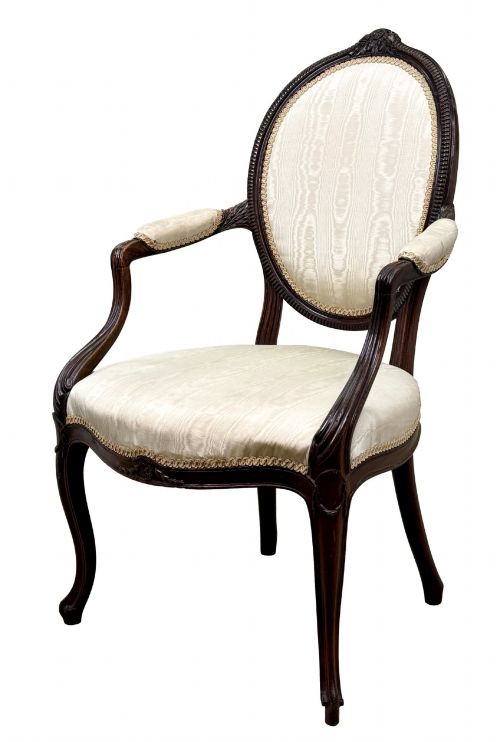
Origins range from continental workshops executing precise classical mounts to British interpretations of French forms, notably Hepplewhite salon chairs and Grand Regency seating. The most frequent encounters on this page involve nineteenth-century mahogany frames paired with brass, ormolu, or gilt bronze mounts.
Materials and construction
Makers utilised solid mahogany and mahogany veneers over secondary timbers, shaping curved cabriole legs and upright structural supports through traditional joinery. Timber selection prioritised deep grain patterns and rich natural colour, which was polished to a high finish.
Metal ornamentation played a defining role, incorporating cast ormolu, gilt bronze, and brass mounts fixed to the mahogany frames. Upholstery materials recorded in the archive and current listings include leather, damask, and woven fabric secured over sprung or padded seats.
Listings feature mahogany combined with leather, damask, brass, and ormolu across periods spanning the eighteenth through the twentieth century.
Markers of distinction
Quality rests in the crispness of the timber carving and the fidelity of the classical revival styling, where hand-chiselled ormolu mounts show superior definition compared to simpler cast brass fittings. The integration of structural joinery within complex forms such as cabriole legs distinguishes workshop execution.
The grade and authenticity of the secondary materials, from fine mahogany veneers to period leather and damask upholstery choices, separate standard seating from exceptional library armchairs.
Louis Majorelle
The French Mahogany Desk Chair Glossary
- Ormolu
- Gilded bronze or brass applied as a decorative mount onto furniture frames. This technique was widely utilised during the French Empire and its subsequent revivals.
- Cabriole leg
- A furniture leg that curves outward at the knee and tapers inward toward the foot, echoing animal limbs. This form appears frequently on eighteenth-century and revival seating.
- Fauteuil du bureau
- An upholstered French desk armchair with open arms, designed for writing and study. These chairs feature padded armrests for comfort during long periods of work.
- Damask
- A reversible figured fabric woven on a jacquard loom, frequently utilised for traditional upholstery. It displays patterns formed by contrasting warp and weft threads.
- Empire Revival
- A nineteenth-century design movement resurrecting the grand classical style of the First French Empire. Pieces from this period incorporate bold mahogany surfaces and martial or floral metal mounts.
French Mahogany Desk Chair: Frequently Asked Questions
What is a fauteuil du bureau?
A fauteuil du bureau is a traditional French desk armchair featuring open arms and an upholstered back and seat. These chairs were specifically constructed for writing tables and private libraries.
The form prioritises functional comfort while maintaining the formal decorative standards of French cabinetmaking, often incorporating mahogany and metal mounts.
How do I identify French Empire style?
French Empire furniture relies on bold architectural proportions, dark mahogany timbers, and classical metal mounts in ormolu or gilt bronze. The aesthetic draws inspiration from ancient Roman and Greek design.
Pieces from this period and its later nineteenth-century revivals project a formal, monumental character suitable for executive desks and grand libraries.
Are these chairs suitable for daily desk use?
Many of these pieces were originally constructed for writing and administrative work, making them well-suited for modern study spaces. Library armchairs and desk chairs provide supportive backrest angles.
Buyers should examine the physical dimensions and seat height of individual pieces to ensure compatibility with modern desk surfaces.
How do I distinguish eighteenth-century from revival pieces?
Eighteenth-century seating exhibits the hand-tooling marks and structural joinery specific to period workshop practices. Mahogany timbers from this era display distinct ageing and patination.
Revival pieces, produced around the nineteenth or twentieth century, often utilise machine-assisted elements while meticulously copying earlier French and Georgian forms.