


French Mahogany Chiffonier
These french mahogany chiffonier pieces combine refined timber and classical design, offering both practical storage and striking presence for a traditional interior.
French Mahogany Chiffonier
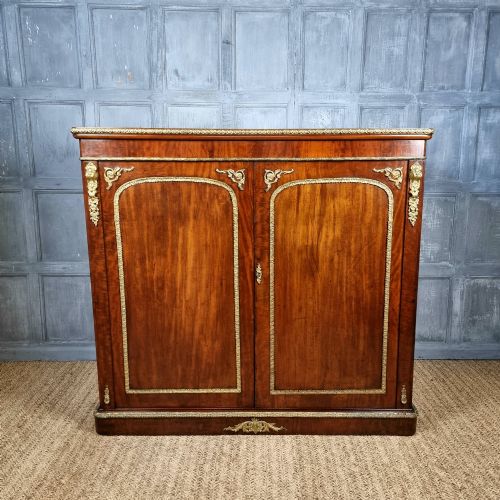
When you search for a french mahogany chiffonier, you encounter nineteenth-century storage pieces that bridge the gap between a side cabinet and a compact sideboard. Most examples date from the nineteenth century, including periods such as the Regency and Napoleon III, reflecting continental and English cabinet-making traditions.
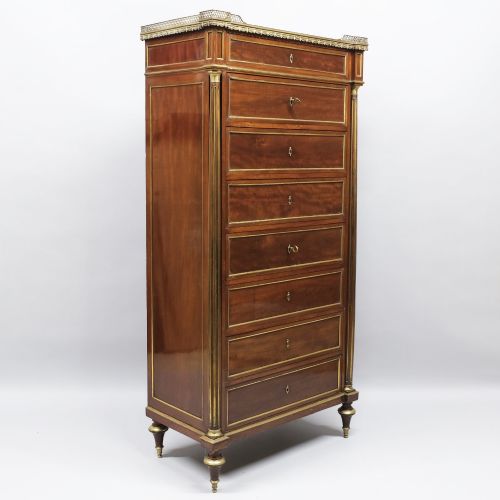
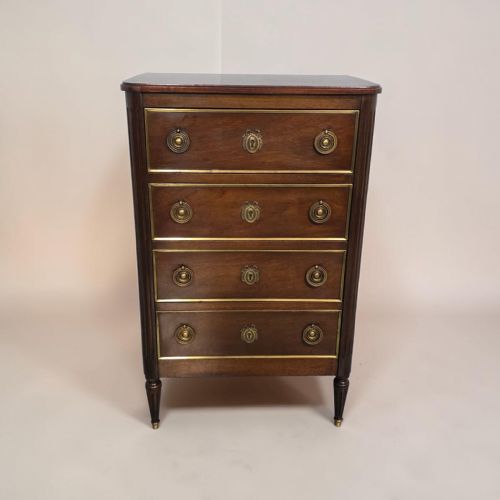
The forms vary from enclosed side cabinets and tall semainiers to marble-topped chests of drawers and sideboards. These items served primarily in dining rooms and salons to hold glassware, linens, or silverware while presenting a polished wooden facade to the room.
How they were made
Cabinet-makers built these pieces using solid mahogany and flame mahogany veneer over secondary timbers, often selecting figured veneers for drawer fronts and door panels to create rich grain patterns. Surfaces frequently incorporate white or dark marble tops that provide a durable and contrasting horizontal plane.
Metal mounts in brass and ormolu accent the structural lines, appearing alongside intricate marquetry inlay on select pieces. Traditional joinery methods secured the carcasses, while glass doors occasionally appeared on upper or enclosed sections.
What varies in quality
The standard of a french mahogany chiffonier depends heavily on the selection and matching of the mahogany veneers across the visible surfaces. Finer items display continuous grain patterns and careful book-matching, whereas simpler versions rely on plain timber.
The execution of the ormolu mounts and the integration of marble tops also distinguish finer work from standard production. Crisp casting on metal details and tightly fitted stone slabs indicate a higher grade of manufacture.
Gillows
The French Mahogany Chiffonier Glossary
- Chiffonier
- A tall, slender sideboard or multi-drawer cabinet designed for household storage. It evolved during the eighteenth and nineteenth centuries into various forms combining cupboards and drawers.
- Flame mahogany
- A veneer cut from timber where the grain creates a flickering, flame-like pattern. Cabinet-makers reserved this decorative material for prominent surfaces.
- Ormolu
- Gilt bronze mounts applied to furniture for decorative contrast. This technique was widely utilised during the French Empire and Napoleon III periods.
- Semainier
- A tall chest of seven drawers traditionally used to hold a week of undergarments or accessories. The name derives from the French word for week.
- Marquetry
- The art of applying pieces of veneer to a structure to form decorative designs or pictures. It adds pictorial depth to cabinet fronts and table tops.
French Mahogany Chiffonier: Frequently Asked Questions
What is a french mahogany chiffonier used for?
These pieces function primarily as side storage in dining spaces or living rooms. They hold tableware, linens, and household items behind enclosed doors or within drawers.
The flat top surface additionally serves to display lamps, decorative objects, or serving trays during gatherings.
How do I identify a French Empire chiffonier?
French Empire pieces rely on classical architectural proportions, dark mahogany surfaces, and restrained ormolu mounts. They often feature austere rectangular silhouettes with columns or pilasters framing the doors.
These designs date from the early nineteenth century and reflect the neoclassical tastes of the period.
Are marble tops original to these cabinets?
Many nineteenth-century French side cabinets and chiffoniers were manufactured with fitted marble tops to provide a durable and luxurious surface. White and grey veined marble varieties appear frequently on pieces from this era.
Such tops were integrated into the design to withstand daily use while complementing the polished timber.
How should I care for mahogany and veneer?
Protect the wood by keeping the piece away from direct heat sources and strong sunlight, which can dry out and fade the timber. Dust regularly with a soft, dry cloth rather than applying heavy liquid polishes.
Maintaining a stable room humidity prevents the veneer from lifting or cracking over time.