






French Mahogany Bedside Tables
French mahogany bedside tables bring practical French elegance to a bedroom, combining rich timber with marble or brass details for daily use.
French Mahogany Bedside Tables
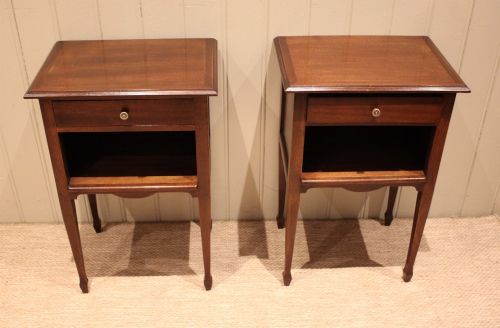
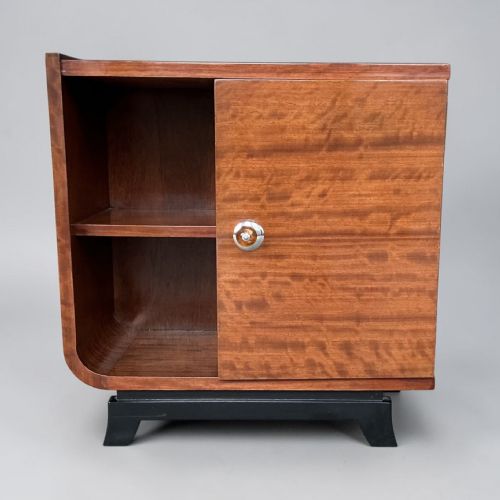
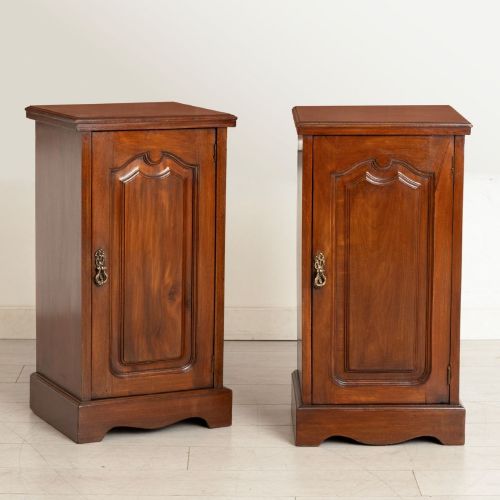
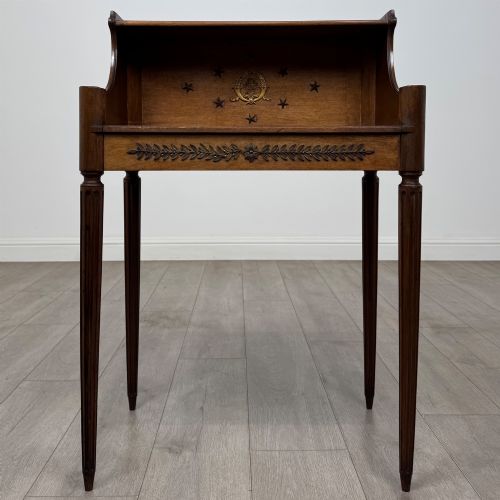
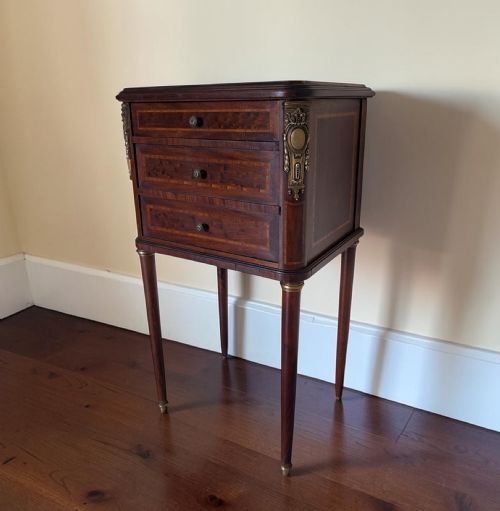
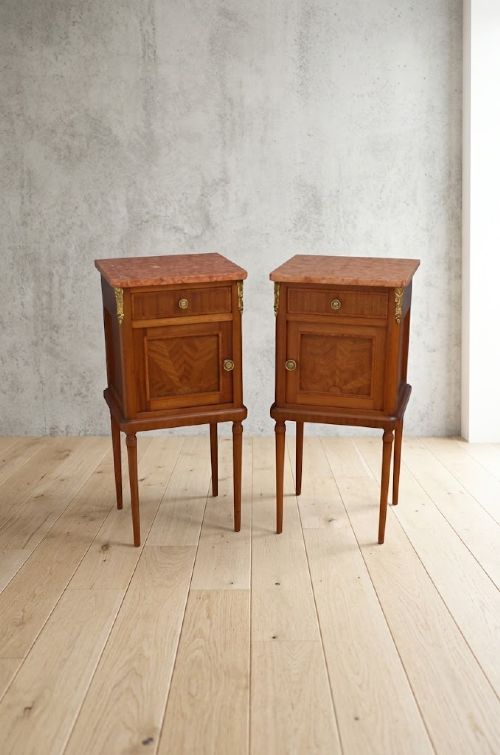
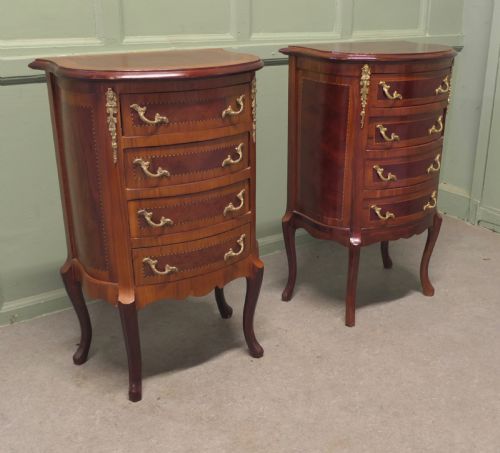
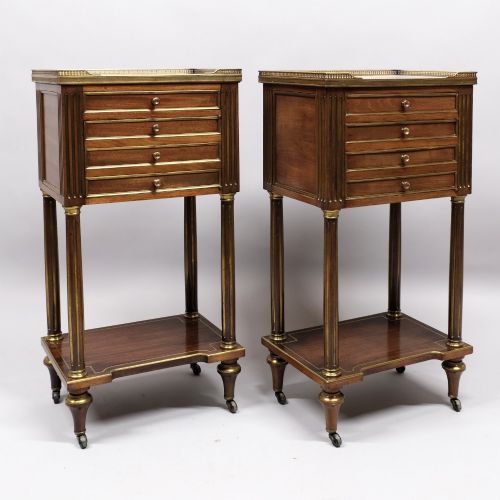
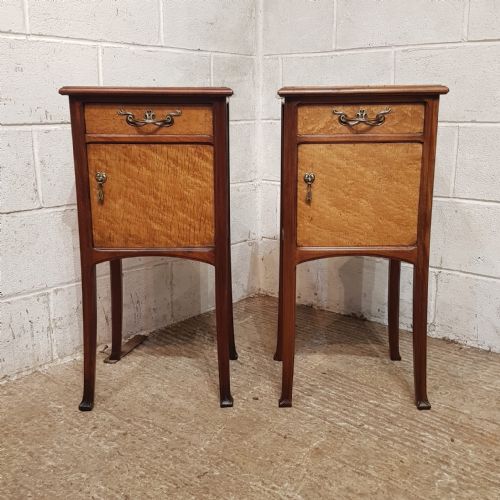
French mahogany bedside tables appear in various forms, including enclosed cabinets, open side tables, and small chests of drawers often styled as petit commodes. A buyer searching for french mahogany bedside tables frequently encounters matched pairs dating from the nineteenth and early twentieth centuries, spanning periods from the French Empire and Louis XVI revival to Art Nouveau and Art Deco.
Makers designed these pieces for the bedside, incorporating single doors, tambour shutters, or stacked drawers to keep nighttime belongings concealed. Many examples sit on slender legs or take cylindrical pedestal forms, reflecting the changing tastes of French provincial and chateau interiors across several decades.
Materials and Construction
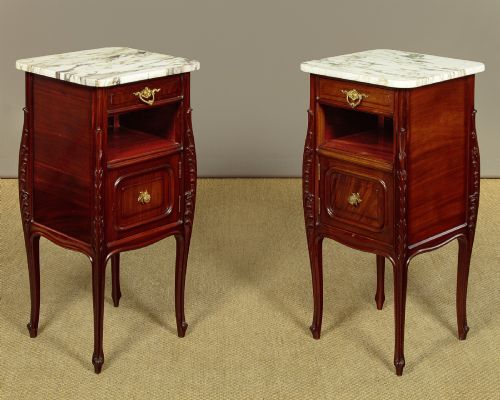
Cabinetmakers built these pieces using solid mahogany and flame mahogany veneers over secondary timbers, often pairing the dark wood with contrasting elements like burr walnut or rosewood. Tops frequently consist of inset marble, which provided a durable, wipe-clean surface for lamps and water jugs in the bedroom.
Metal mounts in brass, ormolu, and gilt metal add structural accents and decorative borders, alongside brass galleries that ring the edges of marble or wooden tops to keep items from sliding off.
French Mahogany Bedside Tables Retail Price Guide 2026
Typical asking prices for french mahogany bedside tables among the pieces listed under this phrase on Sellingantiques today, from the lower quarter to the upper quarter. They describe what is for sale here now, not the wider market.
Kidney-shaped bedside tables curve neatly around the sleeper, proving that nineteenth-century French designers understood the value of avoiding bruised shins in the dark.
Assessing Craftsmanship
Quality rests upon the selection of timber veneers and the precision of the joinery, particularly in curved fronts like the bow front and kidney bean shapes. Superior examples display carefully matched grain patterns across doors and drawer fronts, maintaining tight joints in the carcase over decades of use.
The refinement of the metalwork also separates standard production from finer pieces, where cast ormolu mounts and pierced brass galleries show crisp detailing and secure fixing to the mahogany structure.
The French Mahogany Bedside Tables Glossary
- Ormolu
- Gilt-bronze ornaments mounted onto furniture frames. This technique was widely utilised during the French Empire and revival periods for decorative feet, handles, and corner mounts.
- Petit commode
- A small chest of drawers styled like a miniature commode. These pieces often serve as bedside cabinets with marble tops and multiple drawer tiers.
- Tambour
- A flexible shutter made of narrow vertical strips of wood glued to a canvas backing. It slides in tracks to close off a cabinet opening without swinging doors.
- French gallery
- A raised metal rim fitted around the top of a table or cabinet. It prevents objects from falling and adds a decorative metallic border to marble or wood surfaces.
French Mahogany Bedside Tables: Frequently Asked Questions
What is a French bedside cabinet?
A French bedside cabinet is a small enclosed piece of bedroom furniture designed to hold night-time essentials out of sight behind a door or within drawers.
These pieces typically combine mahogany timber with a marble top and metal mounts, reflecting the stylistic trends of nineteenth and early twentieth-century French design.
How do I spot a matched pair?
Matched pairs of bedside tables share identical dimensions, timber grain patterns, hardware, and decorative motifs such as brass galleries or marble colouration.
Some sets are symmetrical, with doors or drawers opening in opposite directions to sit correctly on either side of a bed.
How do I clean mahogany?
Maintenance involves dusting with a soft, dry cloth and occasionally applying traditional beeswax to nourish the timber and preserve the polish.
Harsh chemical cleaners and excessive moisture should be kept away from both the wood finish and any attached marble or brass elements.