





French Mahogany Bedside Cabinets
French mahogany bedside cabinets bring practical surface space and architectural presence to a bedroom through rich timber figures and classic revival proportions.
French Mahogany Bedside Cabinets
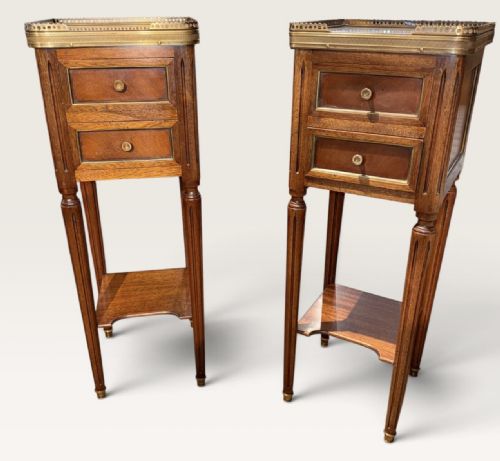
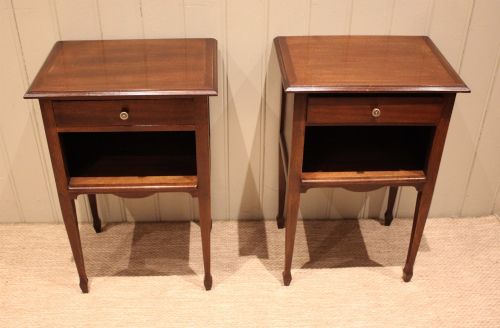
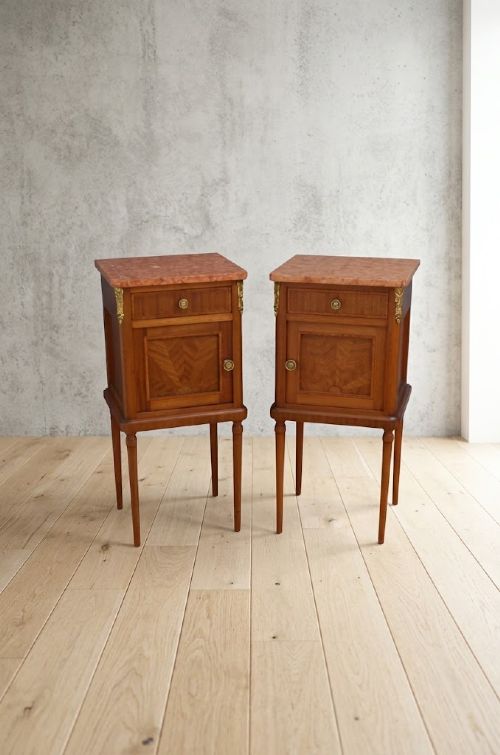
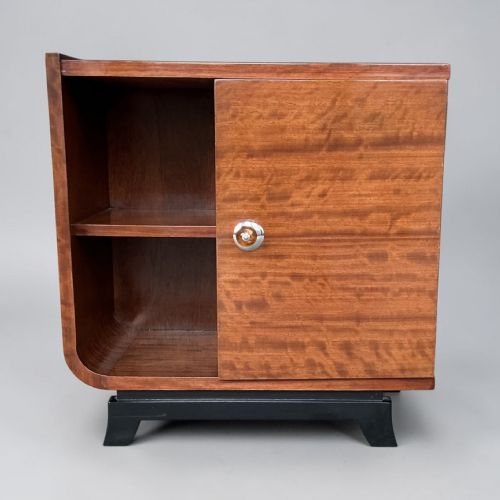
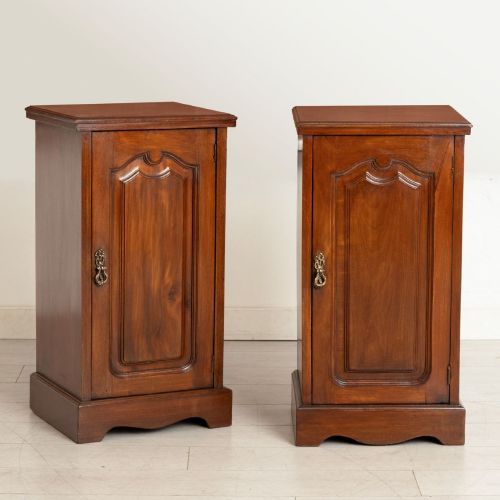
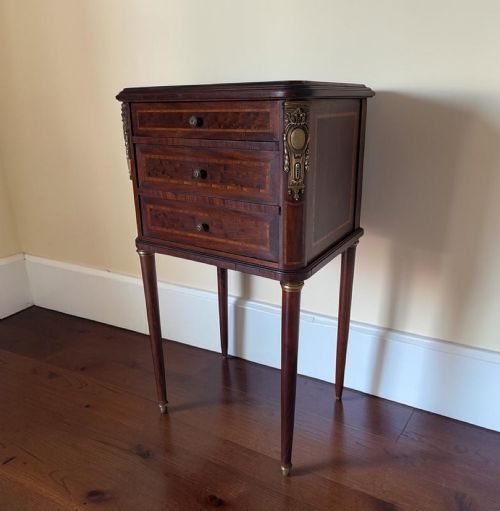
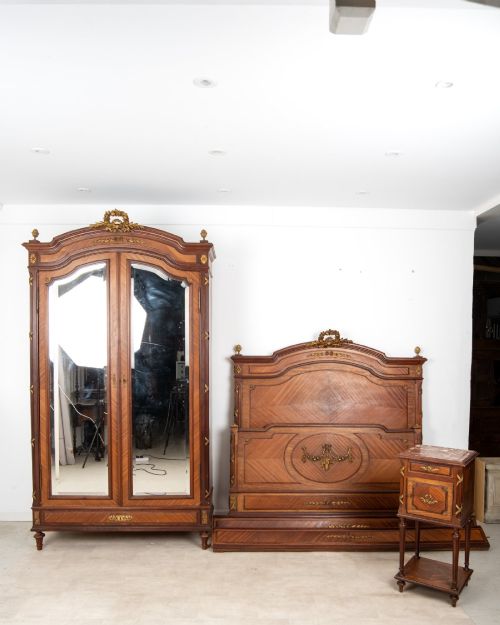
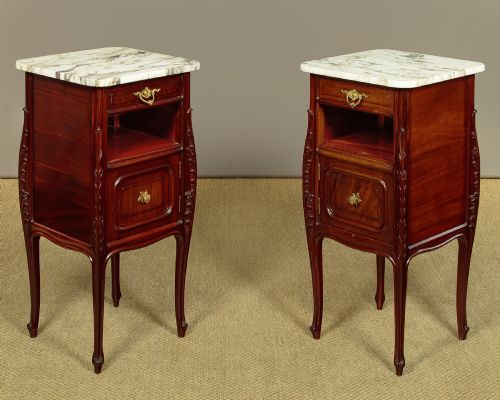
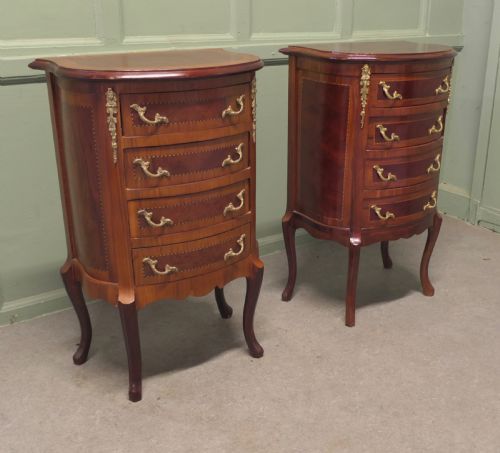
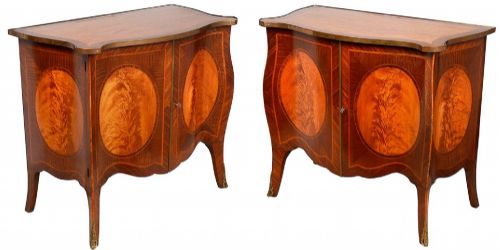
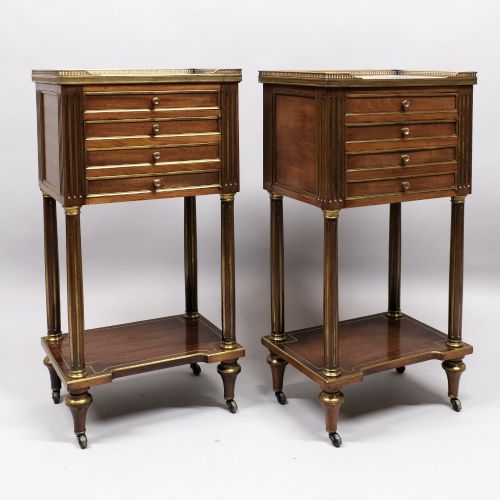
French mahogany bedside cabinets take the form of enclosed cupboards, open lamp tables, and marble-topped nightstands designed for nineteenth and early twentieth-century bedrooms. The pieces appearing here span the nineteenth century through the 1930s, encompassing single cabinets, matched pairs, and components of larger bedroom suites.
The prevailing styles reflect French revival movements, notably Louis XV and Louis XVI alongside Empire and Art Deco iterations. Buyers frequently encounter pieces featuring characteristic marble slabs and brass mounts that anchor the design within traditional continental aesthetics.
How they were made
Construction relies primarily on solid mahogany and mahogany veneers applied over secondary timbers, often selected for pronounced grain patterns such as flame mahogany and burr walnut. Cabinetmakers utilised precise joinery to build enclosed carcases, cylindrical bodies, and bow-fronted drawers.
Surface detailing integrates contrasting materials including inset marble tops in white or green tones, alongside cast brass and ormolu mounts. Gilt metal trims, tambour doors, and glass elements complete the physical assembly of these bedroom pieces.
French Mahogany Bedside Cabinets Retail Price Guide 2026
Typical asking prices for french mahogany bedside cabinets among the pieces listed under this phrase on Sellingantiques today, from the lower quarter to the upper quarter. They describe what is for sale here now, not the wider market.
Some nineteenth-century cabinets include discreet pull-out candle shelves designed for late-night reading before electric lighting arrived.
What varies in quality
The standard of execution rests on the depth of the mahogany timber figure and the crispness of the applied bronze, ormolu, or brass mounts. Superior examples demonstrate thoughtful grain matching across drawer fronts and doors, whereas simpler iterations rely on plain mahogany veneers.
Hardware integration and marble selection further differentiate the execution, with heavier cast mounts and thick, well-veined stone tops marking out the finer workshops. The structural integrity of delicate elements like tambour doors and curved carcases dictates the overall success of the piece.
The French Mahogany Bedside Cabinets Glossary
- Ormolu
- Gilded bronze mounts applied to furniture for decorative enrichment. These brass and gilt metal elements define French Empire and revival aesthetics.
- Tambour
- A flexible sliding shutter formed from narrow strips of wood glued to canvas. This technique conceals compartments in cylindrical or curved bedside cabinets.
- Commode
- A low chest of drawers or cabinet with legs. In French bedroom furniture, this term often describes larger bedside or side storage pieces.
- Flame mahogany
- A veneer figure produced from wood taken from the fork of the mahogany tree. It yields a distinctive flame-like pattern across cabinet doors and drawer fronts.
French Mahogany Bedside Cabinets: Frequently Asked Questions
Are these cabinets sold as pairs?
Many listings present matching pairs intended for placement on either side of a bed. Single cabinets also appear frequently for standalone use.
Buyers seeking symmetry should inspect titles for specific pair designations.
What is a marble top nightstand?
A nightstand featuring an inset slab of marble designed to provide a durable, wipe-clean surface for lamps and water jugs. These stone tops typically appear in white or green variations.
They protect the underlying mahogany timber from moisture and daily wear.
How do I identify Louis XV style?
Louis XV revival pieces display characteristic curved lines, cabriole legs, and asymmetrical gilt bronze mounts. This style emerged during the nineteenth century, reinterpreting eighteenth-century court aesthetics.
Surfaces often feature softer contours compared to the strict symmetry of Empire designs.
What periods do these pieces cover?
The selection spans from the early nineteenth century through the 1930s, capturing Victorian craftsmanship alongside Edwardian and Art Deco movements. Most examples date from the nineteenth century and the interwar decades.
Construction details and revival styles help indicate the specific era of manufacture.