






French Low Stool
These French low stool designs bring tactile warmth and continental charm to a room, offering versatile seating or resting surfaces built to endure.
French Low Stool
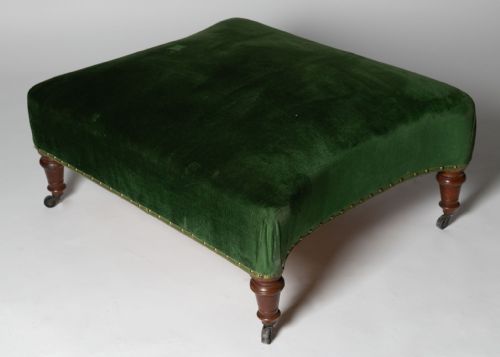
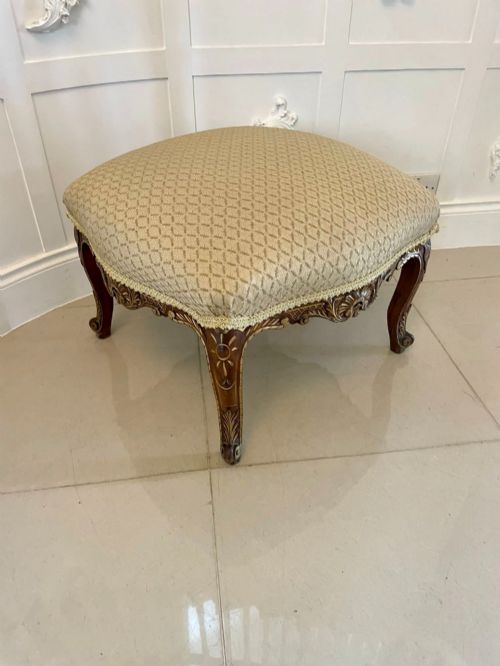
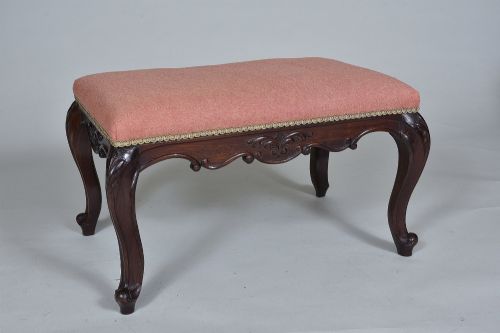
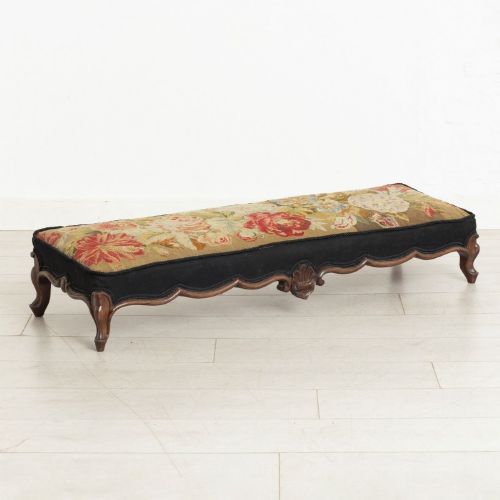
A french low stool provides a compact seating option or resting place, frequently appearing in forms ranging from rustic milking variants to elaborate giltwood salon pieces. Buyers seeking this phrase encounter nineteenth-century walnut and mahogany examples alongside twentieth-century painted editions.
The selection encompasses Victorian revivals, Louis XV styles, and rustic country pieces. These items serve easily as footstools, fireside seats, or low coffee tables within contemporary interiors.
How they were made
Craftsmen shaped these frames from solid timbers such as walnut, mahogany, and carved wood, frequently applying giltwood, parcel gilt, or original paint finishes. Joinery typically relied on traditional techniques suited to supporting weight on cabriole or straight legs.
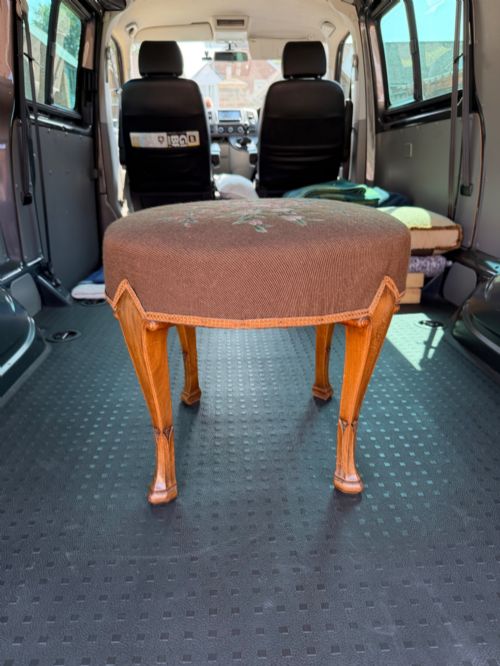
Upholstery utilised durable textiles, including antique tapestry and original fabric, secured over padded foundations. Brass elements occasionally feature as decorative accents on the wooden frames.
French Low Stool Retail Price Guide 2026
Typical asking prices for french low stool among the pieces listed under this phrase on Sellingantiques today, from the lower quarter to the upper quarter. They describe what is for sale here now, not the wider market.
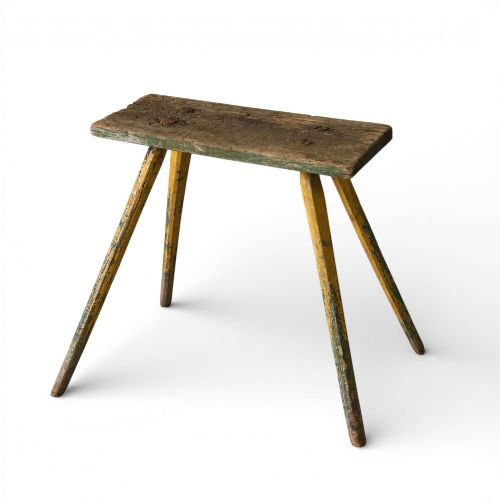
Several humble milking stools have traded the farmyard for the salon, retaining splashes of original paint after more than a century.
What varies in quality
The refinement of the hand carving separates standard utility pieces from grand salon seating. Crisp detailing on walnut and giltwood surfaces indicates superior workshop execution.
Survival of original paint, gilding, and early upholstery preserves the historical integrity of an individual piece. Substantial timber frames with well-proportioned cabriole legs demonstrate greater structural ambition.
The French Low Stool Glossary
- Cabriole leg
- A furniture leg featuring a double curve, typically arching outward and then tapering downward to a pad or scroll foot. This form derives from animal limbs and frequently characterises revival furniture.
- Giltwood
- Timber coated with a thin layer of gold leaf or powder. It provides a luminous surface finish common on decorative salon seating.
- Prie-Dieu
- A devotional chair designed for prayer, featuring a low seat and an upper shelf for kneeling or resting elbows. These items share similar proportions with low stools.
- Tapestry
- A heavy textile woven with pictorial designs. It appears frequently as original upholstery on nineteenth-century footstools and poufs.
French Low Stool: Frequently Asked Questions
How do I use a low stool?
These pieces function practically as footrests before armchairs or as fireside seating in living spaces. Their compact height also suits placement beneath windows or beside low tables.
In modern rooms, larger examples easily double as informal coffee tables or bedside resting spots for books and textiles.
Are these stools comfortable?
Many examples retain their original padded upholstery and traditional textile coverings, providing a firm surface for resting feet. Pieces designed for salons offer cushioned support suited to short periods of sitting.
Those built for rustic or utilitarian use, such as milking stools, feature solid wooden tops without padding.
How do I identify the period?
Dating relies on observing timber choices, decorative motifs, and structural hardware. Nineteenth-century examples often display walnut or mahogany frames with carved cabriole legs.
Revival styles mirror earlier monarchical aesthetics, such as Louis XV or Régence, while twentieth-century pieces lean towards simpler painted finishes or rustic constructions.
Where should I place a gilt stool?
Giltwood and painted finishes benefit from placement in drawing rooms or bedrooms where their reflective surfaces catch natural light. Pairing them with contrasting fabrics enhances their decorative impact.
Keep them away from direct heat sources to protect the underlying wooden structure and delicate surface gilding.