

French Louis XVI Lighting
French Louis XVI lighting brings classical symmetry and gilt bronze warmth to an interior through wall lights, chandeliers, and candelabra.
French Louis XVI Lighting
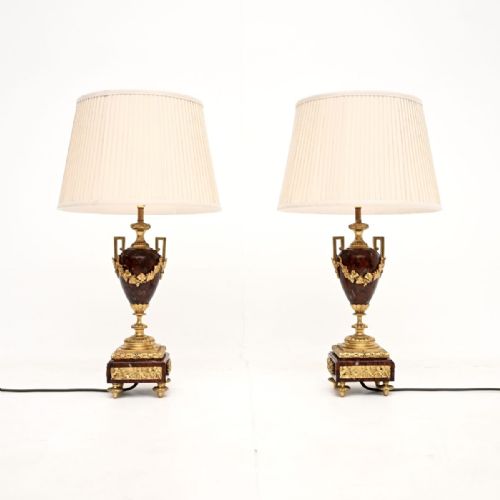
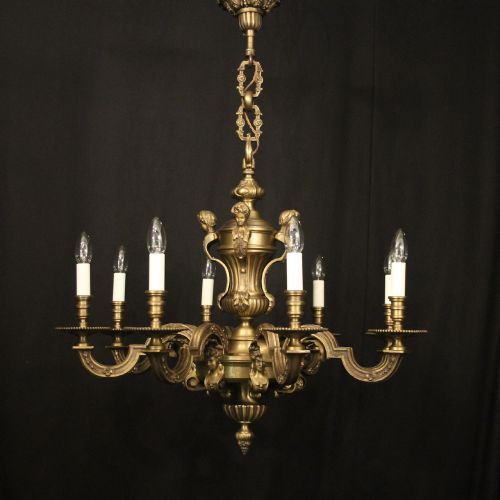
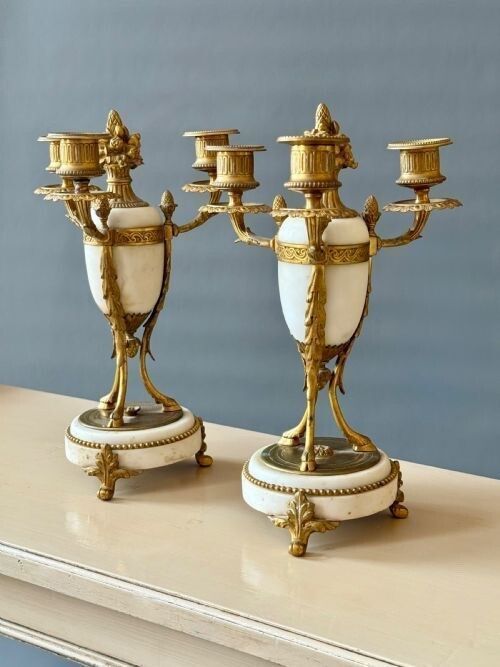
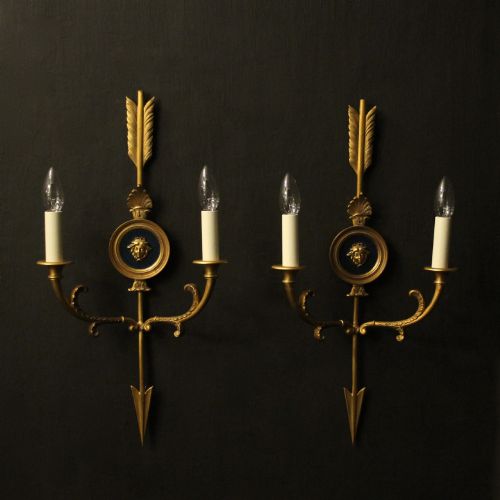
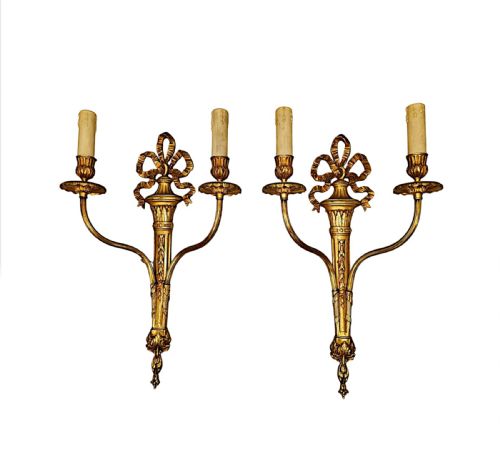
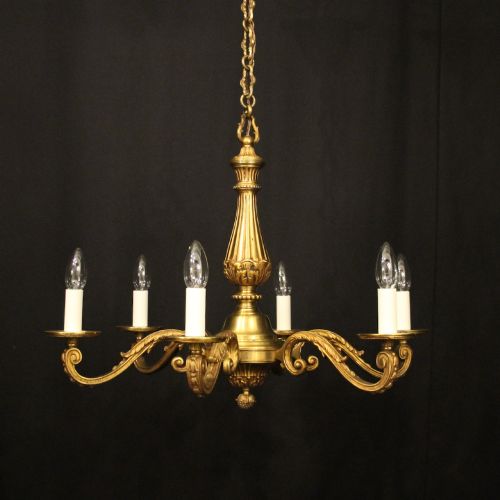
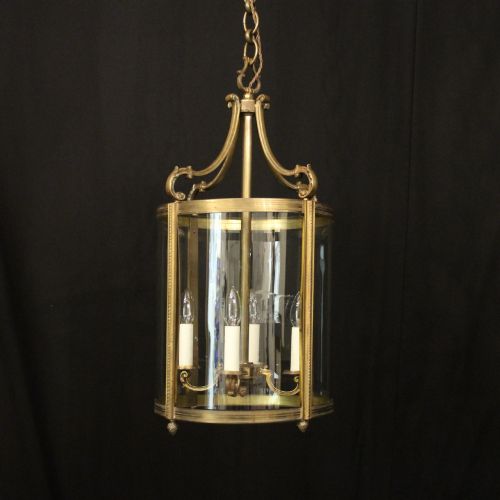
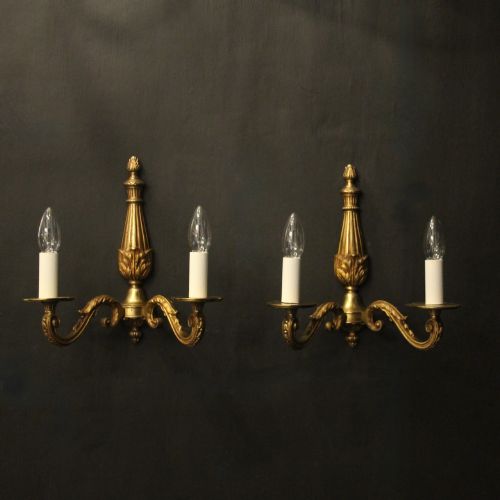
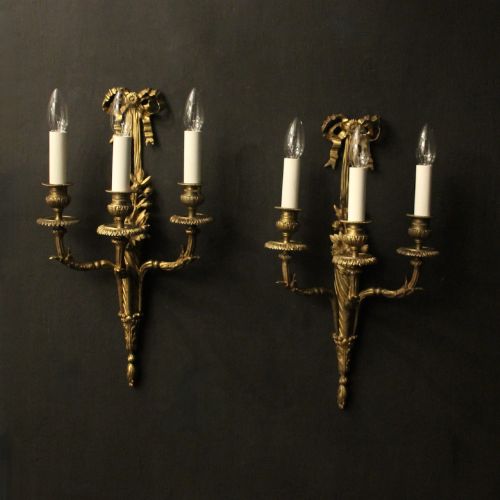
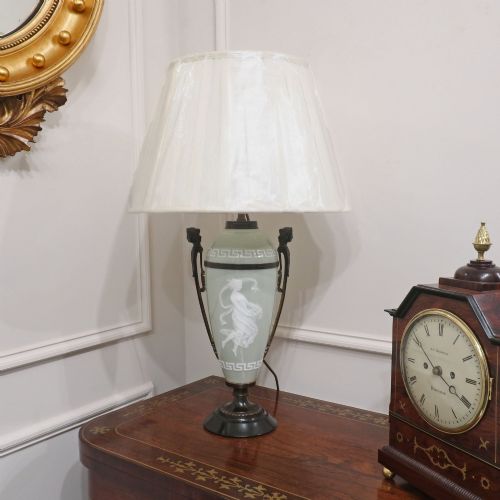
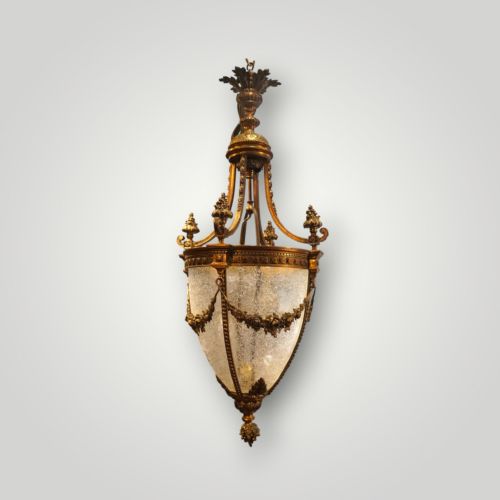
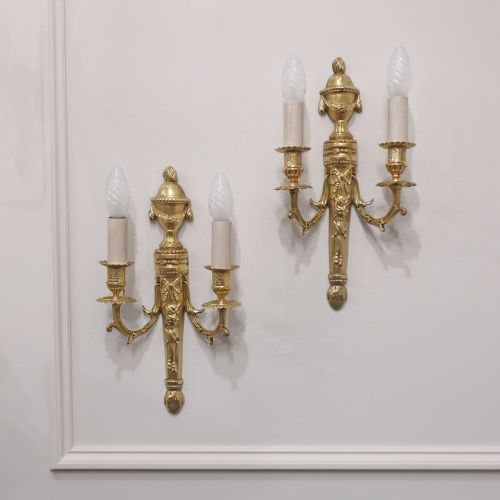
French Louis XVI lighting encompasses wall lights, sconces, chandeliers, and candelabra designed in the neoclassical vocabulary of the late eighteenth century and later revivals. Buyers seeking this aesthetic encounter numerous nineteenth-century gilt bronze wall lights and lanterns alongside table lamps mounted with marble and porcelain.
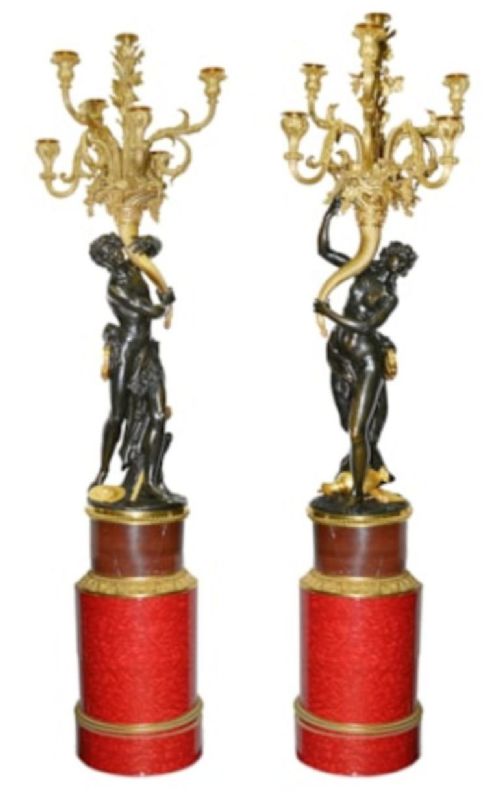
The selection ranges from twin-arm wall sconces and hall lanterns to large multi-light chandeliers and caryatid candlesticks. Pieces manifest both authentic eighteenth-century craftsmanship and nineteenth-century revival interpretations adhering strictly to neoclassical proportions.
How they were made
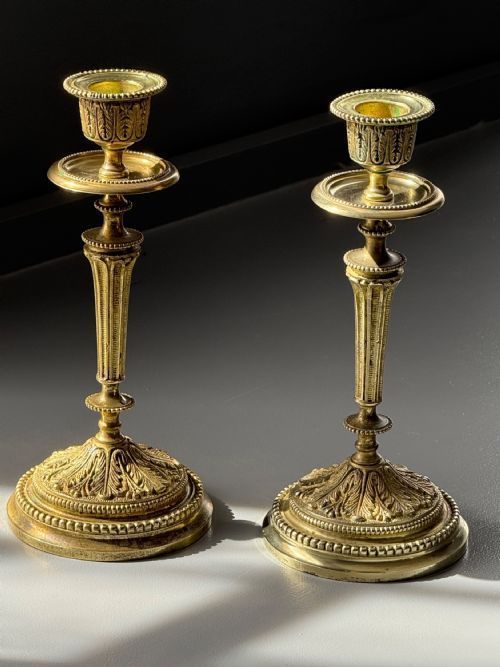
Craftsmen utilised cast bronze and brass, applying fire-gilding to create the characteristic ormolu surface finish found on many wall lights and candelabra. Artisans combined metalwork with white marble, rouge marble, fluorspar, and glass components to build structured frames.
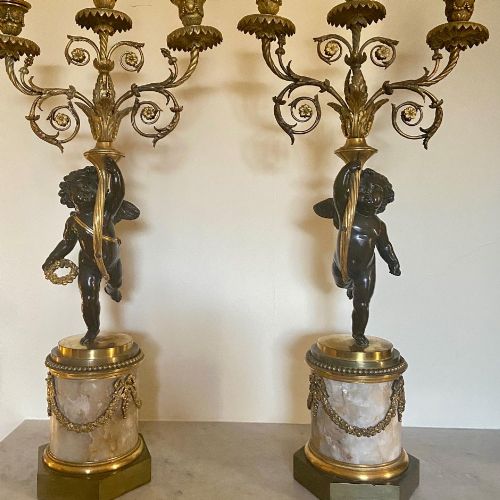
Foundry work relied on detailed chasing and patination of bronze elements, often incorporating decorative motifs such as ribbons, putti, and ram's head masks.
Bronze putti and cherubs peer out from wall lights, holding up candles while seemingly ignoring the passing centuries.
What varies in quality
The sharpness of the metal chasing and the depth of the gilding separate standard production from superior work. Crisp detailing in cast motifs like ribbons and figures indicates skilled workshop output.
The integration of materials such as marble bases and cut glass panels defines the structural integrity of a piece. Heavier gauge metal and precise assembly distinguish finer wall lights and chandeliers.
Francois Redmond·Dugourc·Casier·Henri Vian·Maison Baguès
The French Louis XVI Lighting Glossary
- Ormolu
- Gilded bronze produced by applying a mercury and gold amalgam to a bronze object and heating it. This technique gives the metal a rich, durable golden surface.
- Candelabra
- Branched lighting fixtures designed to hold multiple candles. They often feature classical figures or elaborate neoclassical scrollwork.
- Girandole
- A branched wall-mounted light fixture holding candles, frequently incorporating a mirror backplate. The reflective surface helps amplify ambient room illumination.
- Cassolette
- A decorative vessel that functions as a burner or vase, frequently adapted into lamp bases with ormolu mounts. These pieces combine decorative stone bodies with metal ornamentation.
- Pate sur pate
- A ceramic decorating technique where wet white porcelain relief is applied to a coloured clay body. It creates a layered cameo effect on porcelain lamps.
French Louis XVI Lighting: Frequently Asked Questions
How do I date these lights?
Dating relies on examining the casting techniques, metal patination, and mounting methods used on each fixture. Eighteenth-century originals show specific hand-chasing characteristics that differ from nineteenth-century revival pieces.
Material choices like rouge marble or specific porcelain inserts also help establish whether an item belongs to the original neoclassical era or a later nineteenth-century period style.
Were these electrified later?
Many wall lights, lanterns, and chandeliers originating from the nineteenth and early twentieth centuries have been converted for modern electrical wiring. This adaptation allows historical fixtures to function safely in contemporary interiors.
Original candleholders and oil-burning components are frequently retrofitted with internal wiring channels while preserving the exterior gilt bronze structure.
Where should I hang wall sconces?
Wall sconces suit hallways, flanking mirrors, or framing architectural focal points within a room. Their symmetrical twin-arm or triple-arm layouts provide balanced illumination.
Placement height depends on ceiling proportions and surrounding furniture, ensuring the gilt bronze and glass elements integrate naturally with the wall space.
What is neoclassical style?
Neoclassical style draws inspiration from the art and architecture of classical antiquity, emphasising symmetry, proportion, and restrained ornamentation. In lighting, this translates to straight lines, urn motifs, and crisp foliate patterns.
This aesthetic reacted against the earlier asymmetric curves of the rococo period by returning to classical Greek and Roman decorative themes.