
French Louis XV Armchair
A French Louis XV armchair brings sculptural woodwork and generous proportions to a room, offering both historic elegance and comfortable seating.
French Louis XV Armchair
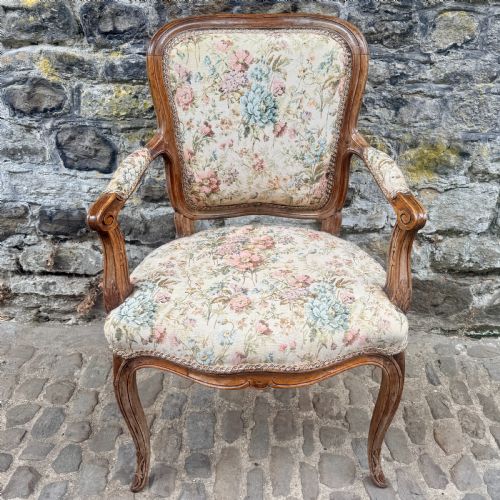
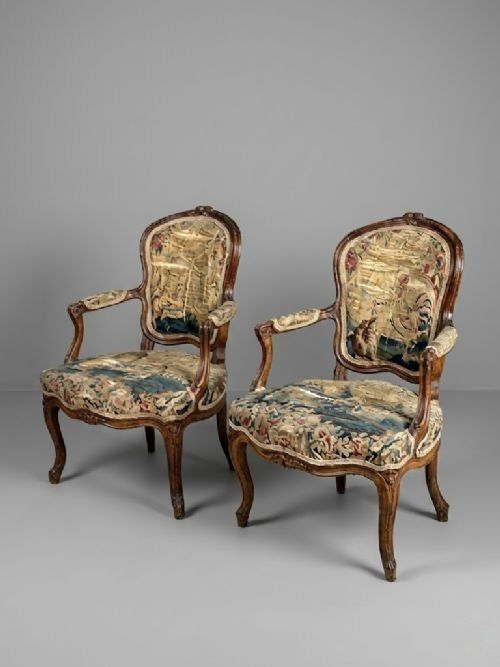
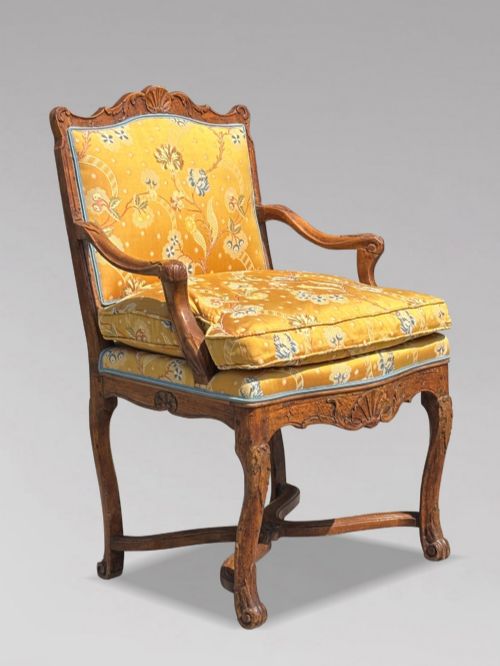
A french louis xv armchair typically exhibits the curving lines and asymmetric floral carving characteristic of the eighteenth century, alongside later nineteenth-century revival iterations.
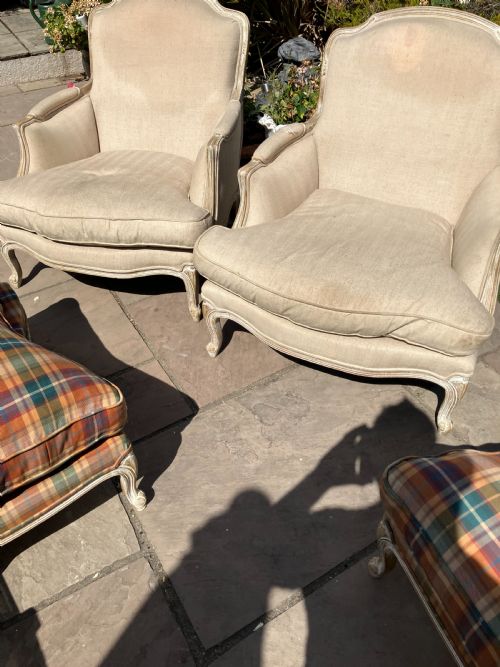
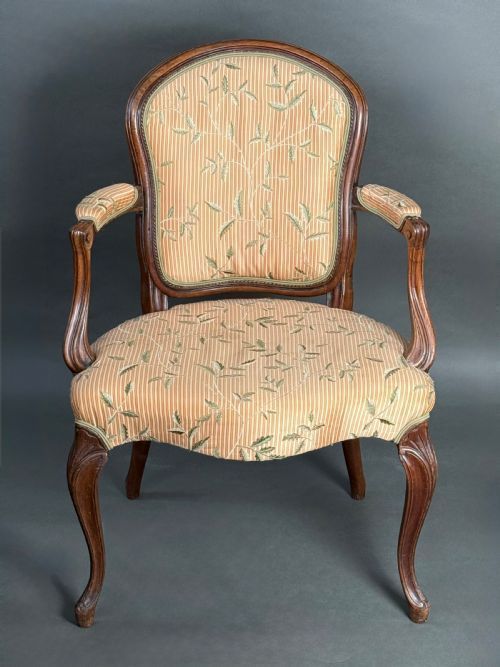
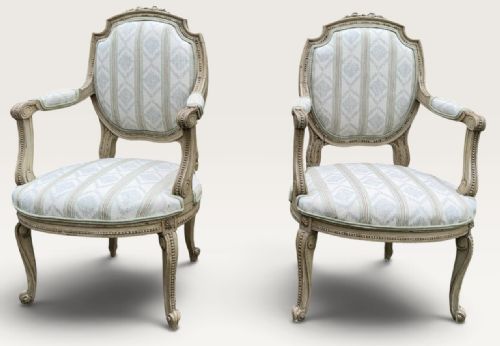
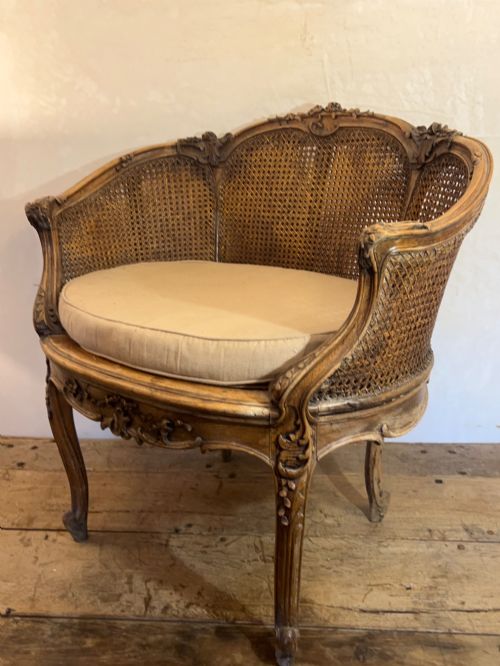
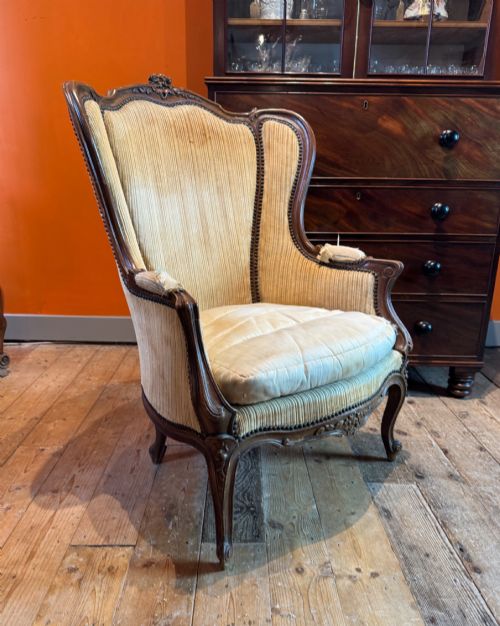
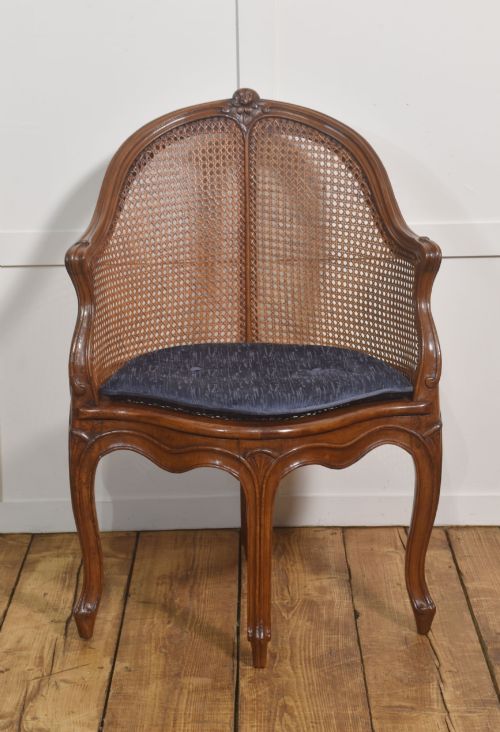
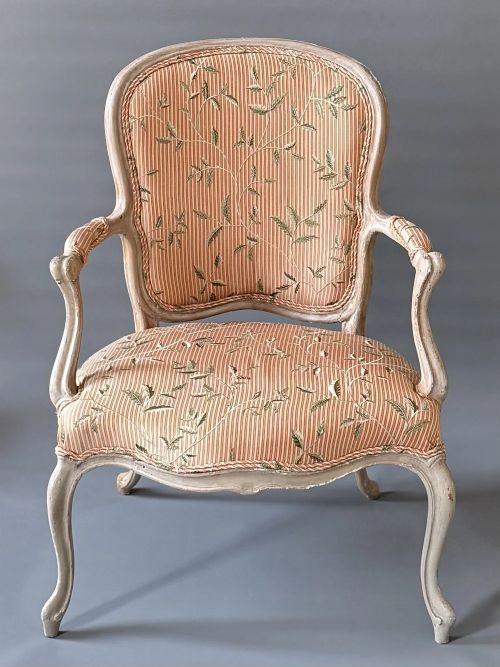
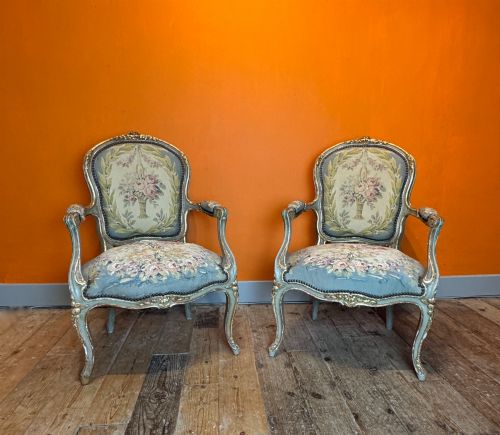
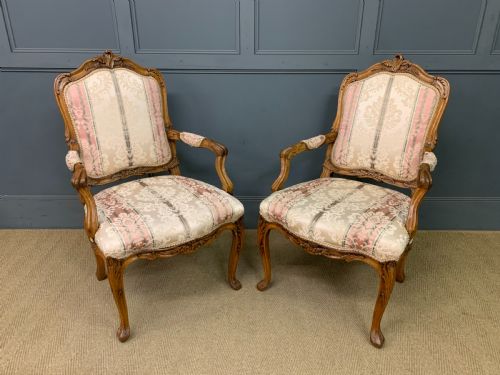
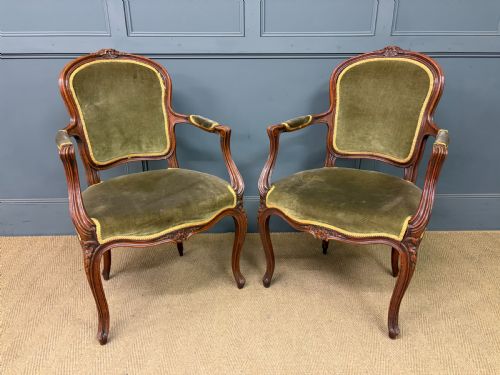
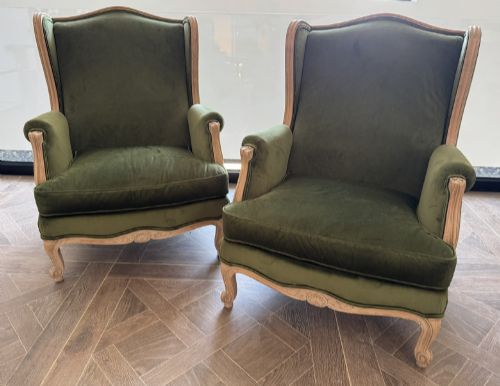
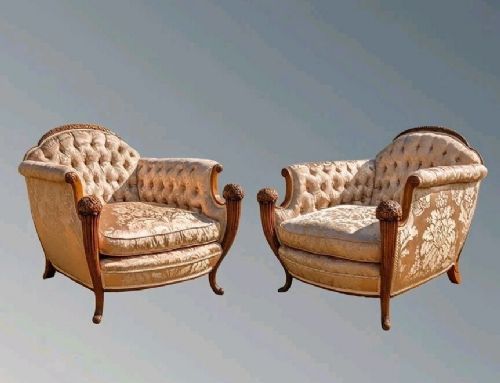
The form appears in several distinct guises on this page, ranging from open-armed fauteuils and enclosed bergères to low fireside chairs and occasional salon suites.
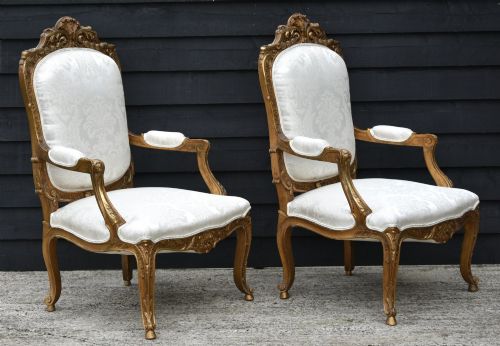
Makers working across the nineteenth and early twentieth centuries frequently returned to these rococo prototypes, producing walnut and giltwood examples that echo the eighteenth-century originals.
Materials and construction
Frames are predominantly shaped from solid walnut, beech, or mahogany, often finished with original paint, parcel gilding, or rich giltwood surfaces.
Upholstery methods rely on traditional stuffing supported by webbing, paired with textiles such as silk, velvet, damask, tapestry, or cane panels.
Listings feature walnut, beech, and mahogany frames upholstered in silk, velvet, tapestry, and needlework.
Distinguishing quality
Depth and crispness of hand-carved ornamentation separate standard revival pieces from finer workshops, where scrolls and foliage retain sharp definition.
The integrity of the timber frame and the retention of original surface treatments, such as historic paint or genuine gilding, heavily influence desirability.
Blaise Maucuy·Colefax and Fowler
The French Louis XV Armchair Glossary
- Fauteuil
- An open-arm armchair with upholstered back and seat, typically featuring exposed wooden armrests and carved frame rails.
- Bergère
- An enclosed armchair featuring upholstered sides filled with fabric or cane work, often accompanied by a loose seat cushion.
- Cabriole leg
- A furniture leg that curves outward in a convex arc before tapering inward in a concave sweep toward the foot, typical of the rococo style.
- Giltwood
- Timber coated with a thin layer of gold leaf applied over a prepared gesso ground, creating a bright reflective surface.
- Rococo revival
- A nineteenth-century design movement that resurrected the flamboyant, nature-inspired motifs of the mid-eighteenth-century French court.
French Louis XV Armchair: Frequently Asked Questions
How do I spot an eighteenth-century original?
Original eighteenth-century pieces reveal construction traits like hand-cut joinery, pegged mortises, and timber shrinkage appropriate to age. Secondary woods used internally also offer clues to the period of manufacture.
Surface finishes on early examples show genuine patination accumulated over generations of use. Revival pieces made in the nineteenth century often display machine tooling or heavier structural proportions.
Can these armchairs be used in modern interiors?
These chairs function effectively as accent pieces in contemporary spaces, contrasting cleanly against minimalist architecture. Their curved silhouettes soften rigid modern room layouts.
Many examples are found with newly applied silk, velvet, or linen upholstery that bridges historic frames with current interior palettes. Pairing antique seating with modern tables creates visual depth.
How should I care for antique gilded frames?
Giltwood surfaces require gentle dusting with a soft, dry cloth to prevent abrasion of the delicate gold leaf layer. Avoid chemical cleaners or moisture, which can dissolve the underlying gesso.
Keeping chairs away from direct sunlight and steady heat sources protects the timber substrate from drying and cracking. Stable indoor humidity preserves both the wood and the integrity of the antique gilding.