




French Kingwood Sideboard
A french kingwood sideboard brings opulent 18th and 19th-century cabinetmaking into a room through rich veneers and fine mounts.
French Kingwood Sideboard
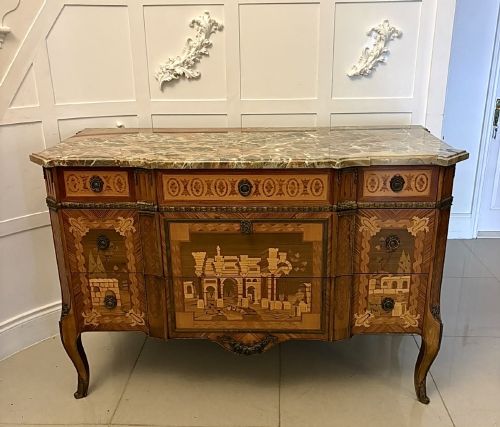
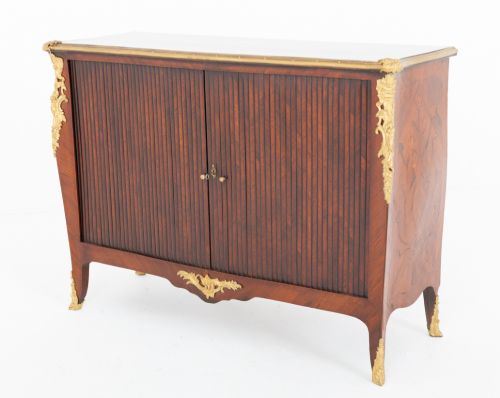
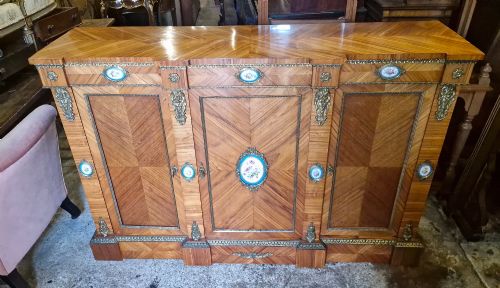
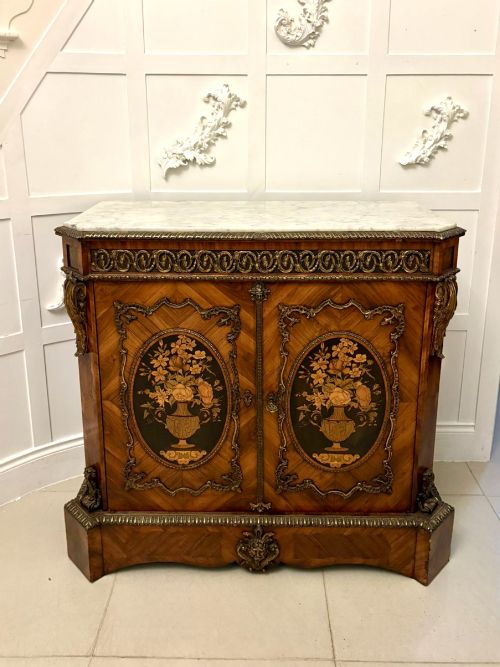
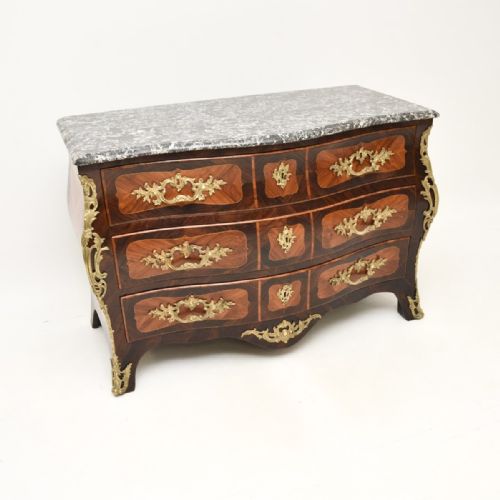
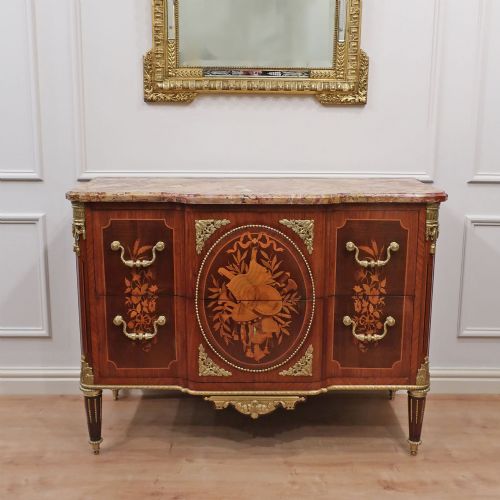
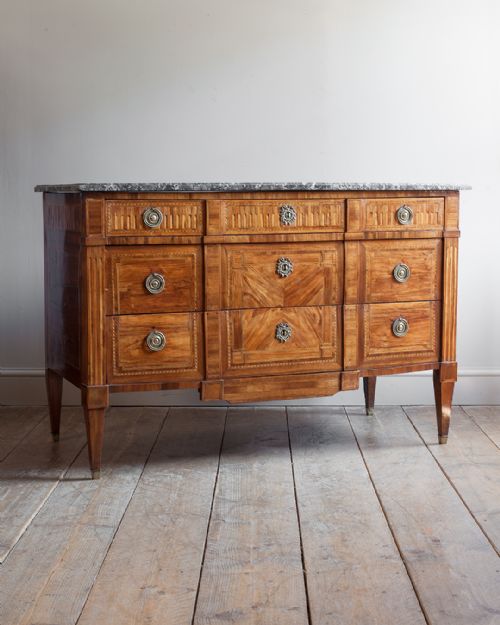
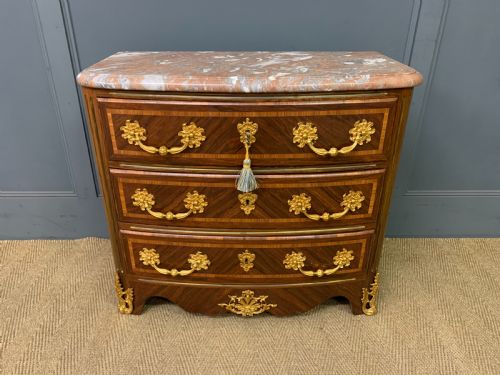
When you search for a french kingwood sideboard, you encounter a refined group of antique case pieces including commodes, side cabinets, credenzas, and chests of drawers. These items originate predominantly from the 18th and 19th centuries, spanning periods of distinct revivalism such as Louis XV and Louis XVI styles.
The most common formats on this page are marble-topped commodes and side cabinets featuring foundational kingwood construction. Pieces range from formal transitional styles with subtle mounts to exuberant rococo bombée shapes with extensive marquetry and parquetry.
These items served historically to display decorative objects while providing substantial enclosed storage in grand reception rooms and parlours. Today, they function as focal points in sophisticated interiors, anchoring a space with tangible historical presence.
Materials and Construction
Cabinetmakers constructed these pieces utilising dense native and exotic timbers, centring upon kingwood as the primary decorative veneer. Secondary woods provide structural stability inside the carcase, while thick slabs of marble form smooth, heavy tops.
Metal ornamentation played an essential structural and aesthetic role, incorporating cast and chased ormolu, gilt bronze, and brass mounts. Artisans arranged delicate marquetry and geometric parquetry patterns across the drawer fronts and side panels to demonstrate technical mastery.
French Kingwood Sideboard Retail Price Guide 2026
Typical asking prices for french kingwood sideboard among the pieces listed under this phrase on Sellingantiques today, from the lower quarter to the upper quarter. They describe what is for sale here now, not the wider market.
Several commodes hide their age behind meticulously matched veneer curls that mirror each other like butterfly wings.
Assessing Quality and Execution
Quality reveals itself in the crispness of the gilt bronze or ormolu mounts and the precision of the underlying marquetry cuts. Finer examples display meticulous hand-chasing on the metalwork and seamless grain alignment across complex curved surfaces like bombée fronts.
The choice and thickness of the marble top also dictate grade, with superior pieces featuring moulded edges and harmoniously coloured stone fitted precisely to the timber carcase. Interior construction details, such as dovetailed drawer boxes and original locks, separate standard production items from exhibition pieces.
Jacques Bircklé·Paul Sormani·Mercier Frères·Germain Landrin
The French Kingwood Sideboard Glossary
- Kingwood
- A dense, richly figured timber native to Brazil, prized for its dark purple-brown heartwood with golden streaks. Cabinetmakers sliced it into thin veneers for decorative geometric and floral patterns.
- Ormolu
- Gilded bronze mounts applied to furniture to protect corners and accentuate the contours of the design. The process involves coating bronze with a mercury and gold amalgam before heating.
- Marquetry
- The art of applying small pieces of veneer to a structure to form decorative pictures or designs. Artisans cut various woods together to ensure tight joints.
- Bombe
- A swelling, outward-curved contour characteristic of Louis XV case furniture. This undulating shape requires advanced woodworking skill to veneer successfully.
- Parquetry
- Geometric wood-mosaic work used for flooring and furniture surfaces. Triangular or diamond veneers create a repeating pattern across tabletops and drawer fronts.
French Kingwood Sideboard: Frequently Asked Questions
What is a french kingwood sideboard?
A french kingwood sideboard encompasses antique storage units like commodes, credenzas, and side cabinets built from kingwood veneer. These pieces date largely from the 18th and 19th centuries.
They often feature marble tops, ormolu mounts, and intricate marquetry in Louis XV or Louis XVI styles.
How do I identify Louis XV style?
Louis XV style furniture relies on asymmetrical designs, curved lines, and floral motifs. Pieces often feature bombée fronts and cabriole legs.
Ormolu mounts on these items typically highlight naturalistic scrolls and foliage rather than rigid geometry.
How should I care for marble tops?
Marble tops require gentle cleaning with mild, pH-neutral soap and warm water to protect the polished surface. Avoid acidic cleaners, vinegar, or citrus.
Using coasters and placemats prevents staining and etching from moisture or alcohol.
Where do I place a credenza?
A credenza suits dining rooms, hallways, or living spaces as a statement storage piece. Its finished top accommodates lamps, art, or decorative objects.
Ensure adequate floor space to allow the doors or drawers to open fully without obstruction.