
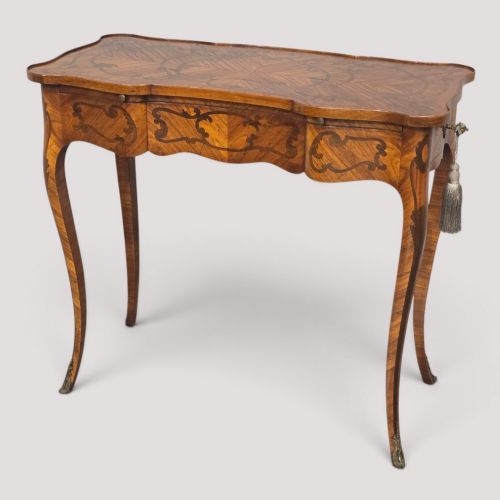
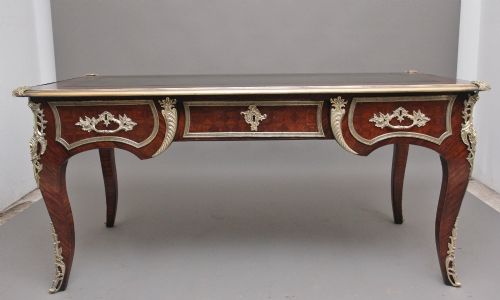
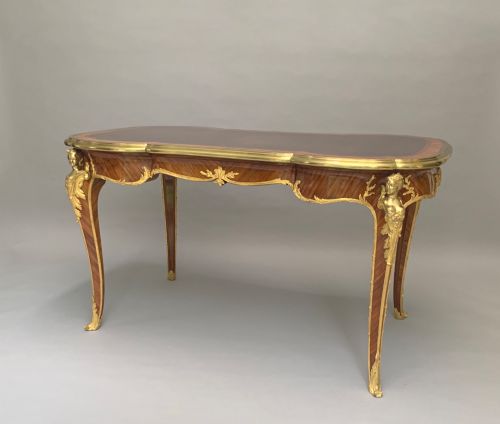
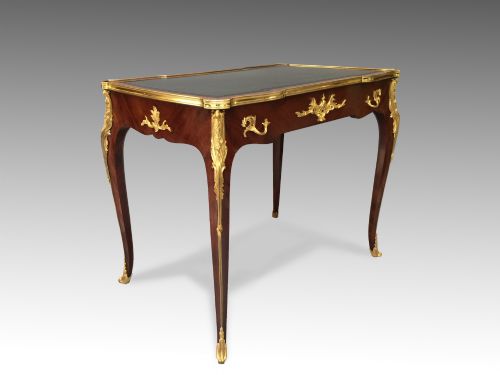
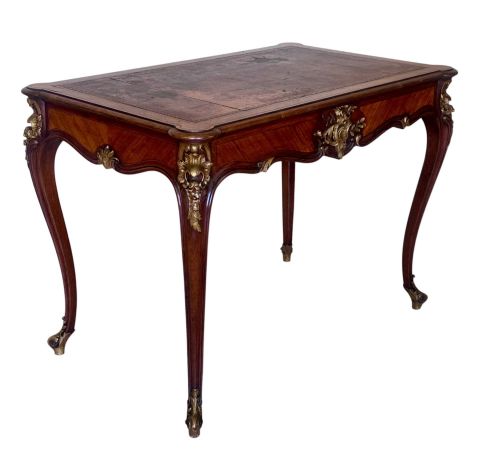
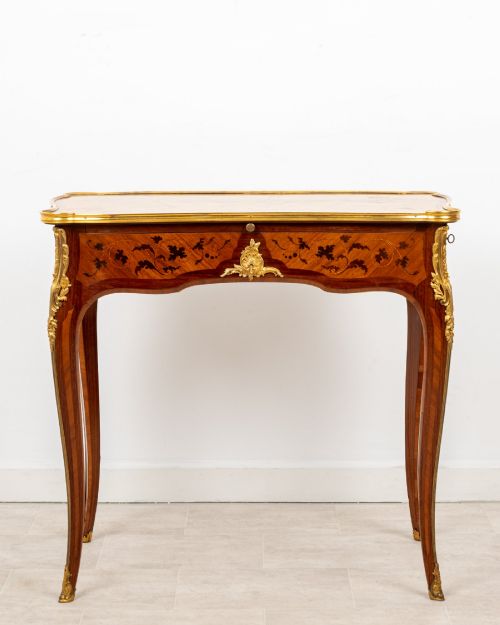
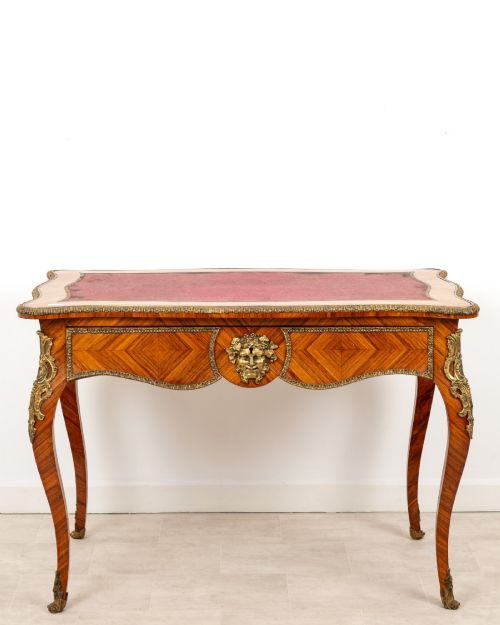
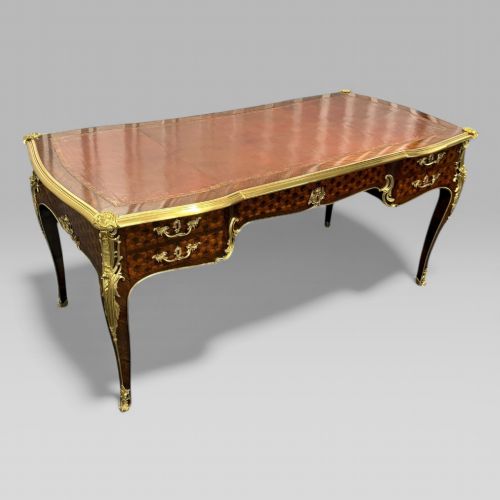
French Kingwood Bureau Plat
A french kingwood bureau plat brings a sophisticated, freestanding writing surface to a room, combining rich timber veneers with expressive patinated metal mounts.
French Kingwood Bureau Plat
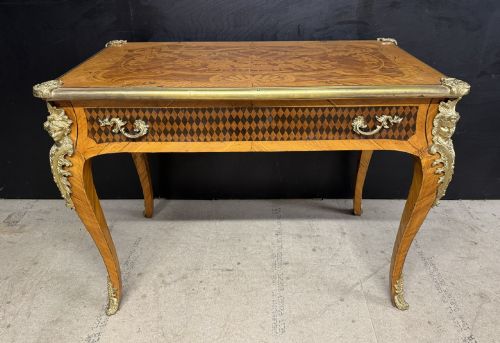
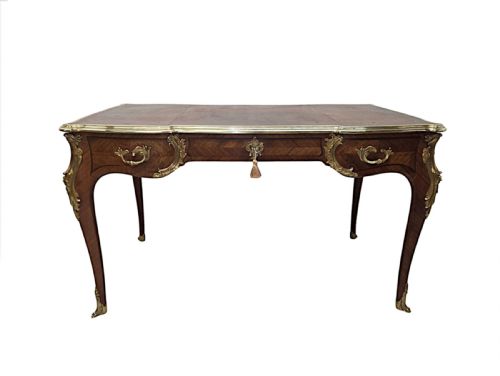
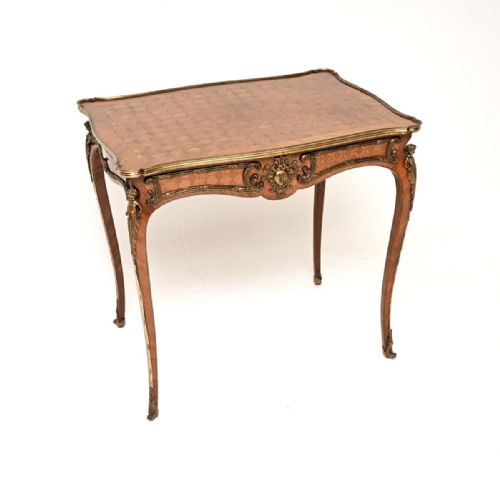
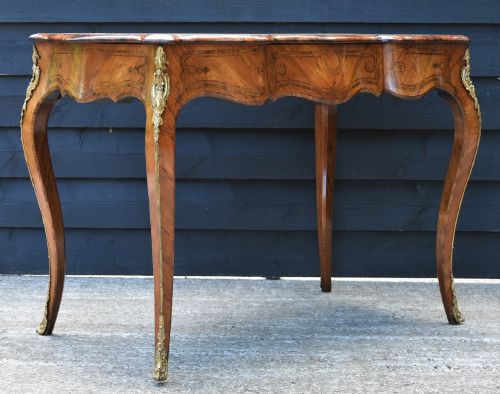
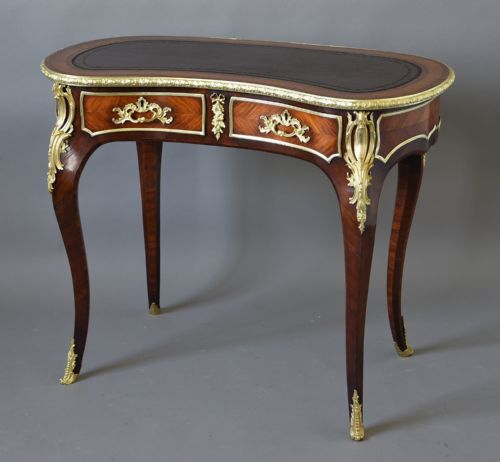
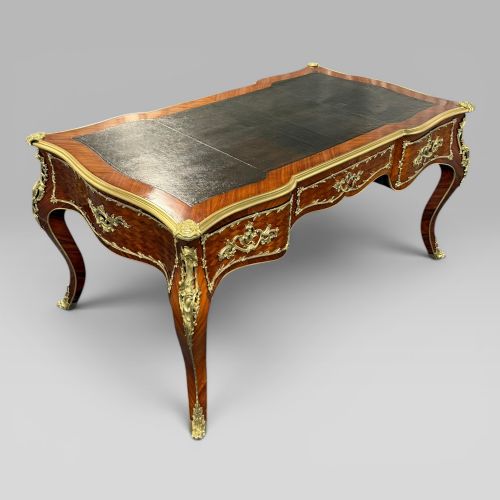
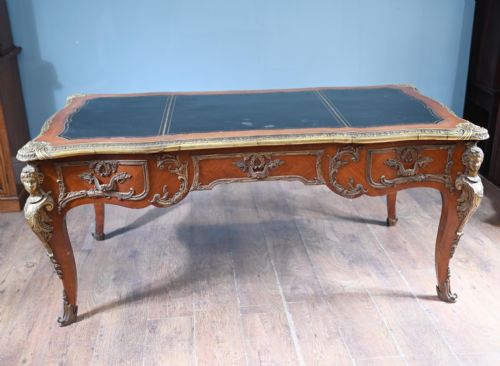
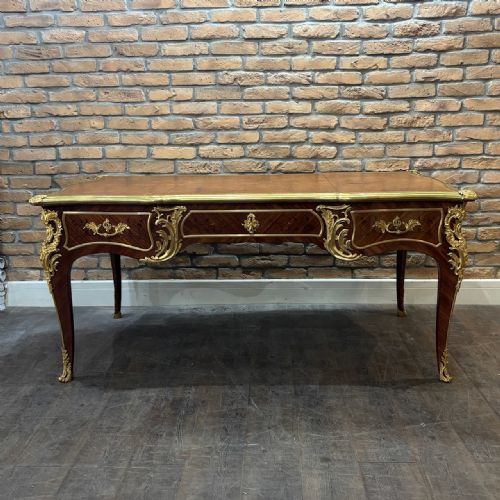
A french kingwood bureau plat is a flat-topped writing table designed to stand away from the wall as a centrepiece in the room. The form typically displays the curving cabriole legs and asymmetric flourishes associated with the Louis XV revival and rococo styles.
Surviving examples encountered here span the nineteenth and early twentieth centuries, though earlier roots extend back into the eighteenth century. Makers working during the nineteenth-century revivals adapted these forms with varied proportions, ranging from compact ladies writing desks to large freestanding partners desks.
Assessing quality and execution
The distinction between tiers rests upon the crispness of the bronze chasing and the complexity of the wood marquetry. Master workshops invested heavily in heavy, finely detailed ormolu mounts that fit flush against the carcass without gaps.
Structural integrity also separates standard production from exceptional cabinet work, seen in the smooth operation of drawers and the precision of the parquetry geometry across curved surfaces.
Listings feature pieces spanning the eighteenth century through the 1930s, dominated by nineteenth-century revival interpretations.
Francois Linke·Edwards and Roberts·Durand·CH. Jeanselme and Co
The French Kingwood Bureau Plat Glossary
- Bureau plat
- A flat-topped writing table, usually freestanding with multiple drawers in the frieze. This form developed in France during the eighteenth century and saw major revivals later.
- Kingwood
- A dense, heavily figured Brazilian timber displaying dark violet and brown striping. Cabinet makers prized it for high-end decorative veneers.
- Ormolu
- Gilded bronze applied to furniture as decorative mounts and protective hardware. The technique involves coating bronze with a gold amalgam and firing.
- Parquetry
- Geometric wood inlay forming repetitive patterns such as cubes, diamonds, or chequers. Artisans arrange contrasting timber grains to catch the light.
- Marquetry
- Pictorial or floral veneer work assembled from various tinted woods. Craftsmen cut intricate motifs to decorate desk tops and drawer fronts.
French Kingwood Bureau Plat: Frequently Asked Questions
What is a bureau plat used for?
These tables served as writing desks and administrative surfaces for correspondence in studies and grand salons. Their finished backs allowed them to sit in the middle of a room rather than against a wall.
Today, they function well as executive desks or statement console tables in large residential interiors.
How do I tell nineteenth century pieces from original eighteenth century ones?
Nineteenth-century revival pieces often display mechanical sawn veneer marks and standardised hardware fixings. Cabinet makers of the later period deliberately copied earlier Louis styles while utilising contemporary construction methods.
Examining the secondary timbers inside the drawer linings and the wear patterns on the bronze mounts helps clarify the actual period of manufacture.
How do I care for the leather top?
The inset leather writing surface benefits from gentle dusting and occasional applications of neutral leather balm to prevent drying and cracking. Avoid using harsh chemical cleaners on the gilt tooling around the edges.
Direct sunlight can fade both the leather insert and the surrounding kingwood veneer over extended periods.
Are these desks suitable for daily use?
The sturdy timber construction and durable leather writing surfaces make them practical for modern administrative tasks or laptop use. Care should be taken with liquids and heavy impacts to protect the delicate veneer and gilt mounts.
Most models include working frieze drawers that provide storage for stationery and small items.