


French Iron Garden Tables
French iron garden tables bring enduring outdoor utility and classical European style to terraces, courtyards, and conservatories.
French Iron Garden Tables
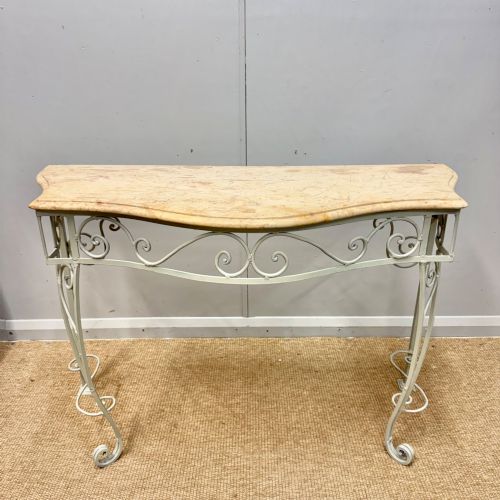
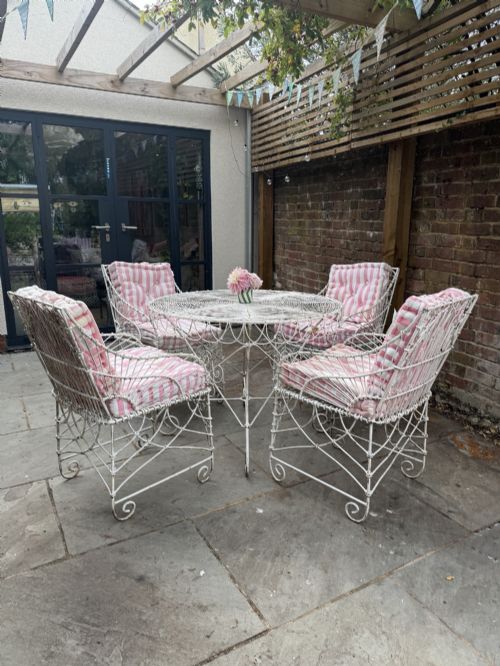
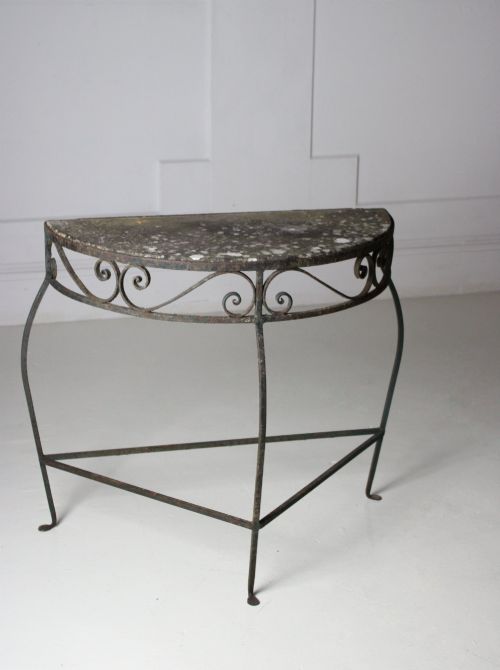
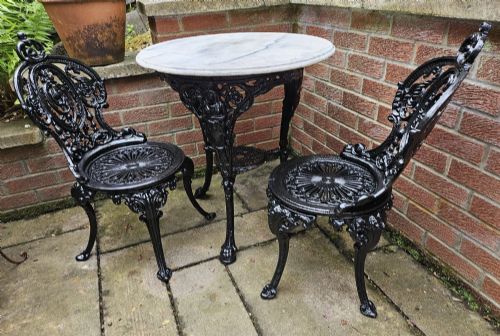
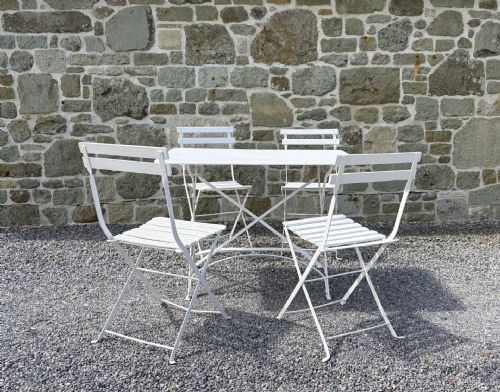
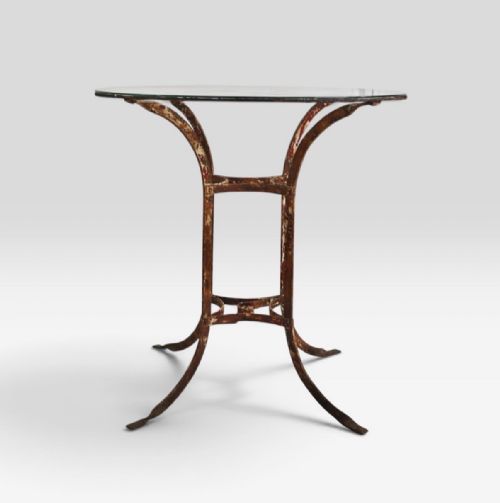
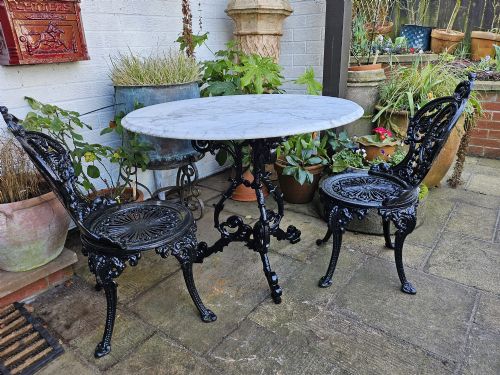
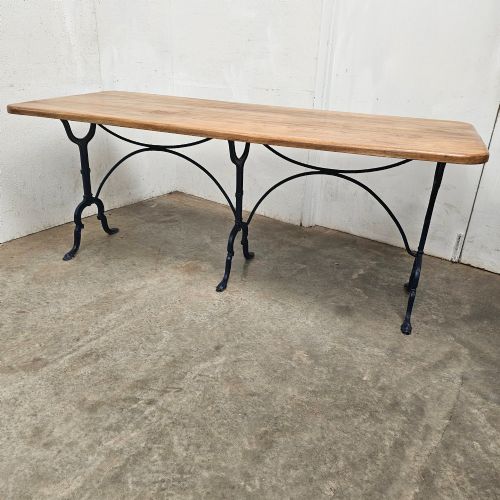
When you search for french iron garden tables, you encounter robust outdoor furniture designed primarily for domestic gardens, pavement cafes, and country estates. These pieces frequently appear in forms such as round bistro tables, console tables, and complete dining sets.
The selections span the nineteenth century through the interwar decades, encompassing regional styles like French Country, French Provincial, and French Bistro. Circular cafe tables paired with marble tops represent the most common configuration within this category.
Makers utilised durable metals alongside timber and stone to create resilient furniture suited to year-round exterior exposure. The resulting objects bridge practical utility and decorative metalwork traditions.
Indicators of Quality
Quality within these tables rests upon the refinement of the ironwork and the integrity of the fitted top. Finer examples display crisp casting details, balanced proportions, and substantial stone tops fitted securely to stable metal bases.
The presence of early layered paint finishes and maker-specific strap work or wirework details elevates a piece beyond standard utilitarian production. Heavier gauge iron and original unblemished marble slabs distinguish superior examples from simpler utilitarian tables.
Listings feature items spanning the 1880s through the 1940s, with cast iron and marble remaining the most prevalent material combination.
The French Iron Garden Tables Glossary
- Bistro table
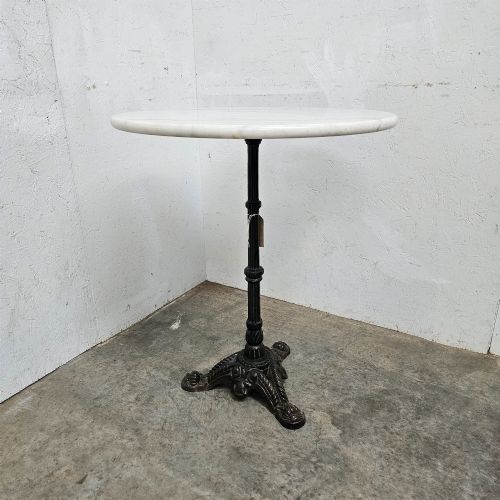
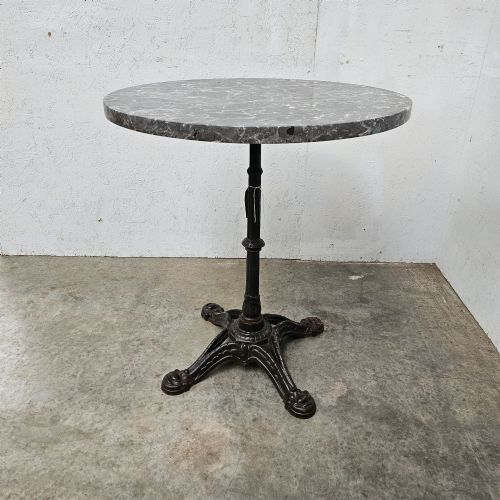
- A small café or garden table, traditionally round and designed for compact seating arrangements. These pieces were standard furniture in French hospitality settings.
- Console table
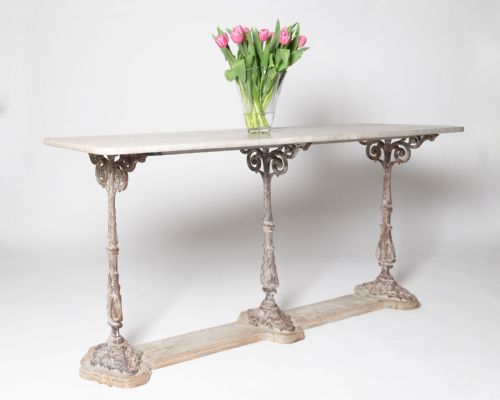
- A table designed to stand against a wall, frequently featuring a rectangular marble top supported by an ornate cast iron base. They often served in conservatories and hallways.
- Gueridon
- A small round table supported by a single central pillar or column. This French form frequently incorporates heavy cast iron pedestal bases.
- Strap work
- Ornamental metalwork formed from flat strips of iron interwoven or riveted together. It provides structural strength while creating distinct geometric patterns.
- Wirework
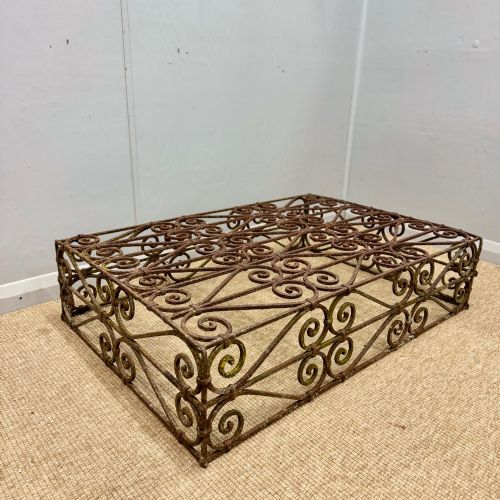
- A technique utilising shaped metal wire to construct lightweight open-frame furniture and plant stands. Victorian examples display intricate scrolling designs.
French Iron Garden Tables: Frequently Asked Questions
Are these tables suitable for outdoor use?
These pieces were built explicitly for exterior placement on terraces, patios, and gardens. Their iron and stone construction withstands seasonal weather changes.
Protecting vulnerable wooden tops and managing winter storage helps preserve the original painted or patinated metal surfaces.
How do I identify the period of a table?
Dating relies upon examining casting techniques, fastener types, and stylistic indicators such as Victorian scrollwork or Art Deco lines. Earlier nineteenth-century examples often feature heavier hand-wrought elements and solid cast bases.
Twentieth-century pieces frequently introduce folding mechanisms and lighter tubular or steel framework.
How should I clean a marble top?
Marble surfaces require gentle cleaning with mild soap and warm water to avoid etching the stone. Acidic substances can permanently damage polished marble finishes.
Applying a protective stone sealer periodically helps guard against moisture and staining in outdoor settings.
What is arras furniture?
Arras furniture refers to metal garden furniture produced in the French town of Arras, known for distinctive crossed stretcher bars and curved iron strapping. These marked pieces are particularly sought after by collectors.
Authentic examples exhibit specific construction stamps and robust riveted joints typical of this regional French manufacturing.