

French Inlay Writing Desk
A French inlay writing desk brings nineteenth-century Continental elegance to a study, combining fine timber surfaces with elaborate decorative detail.
French Inlay Writing Desk
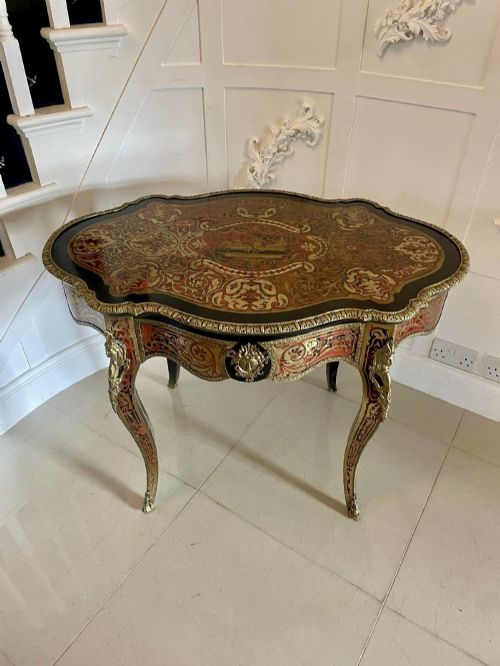
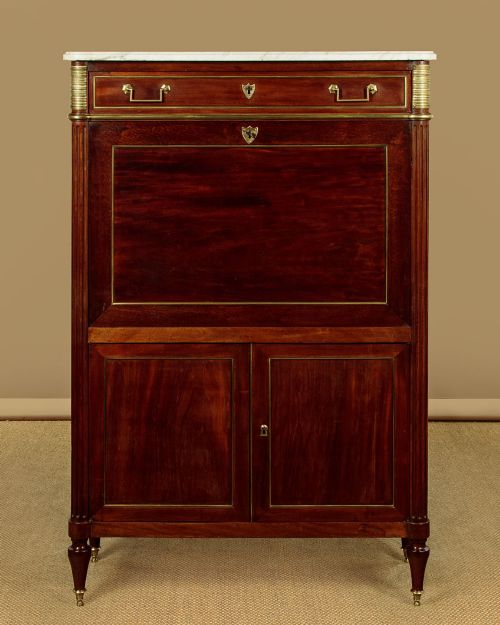
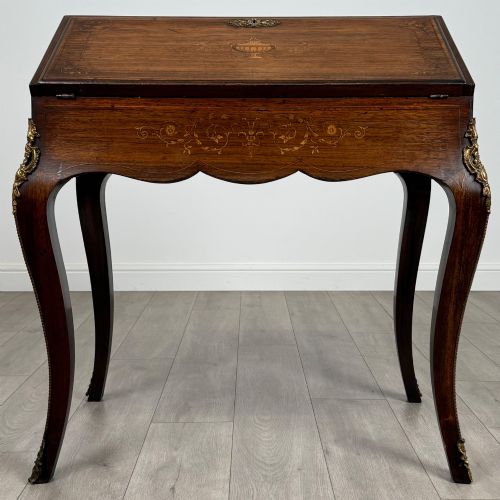
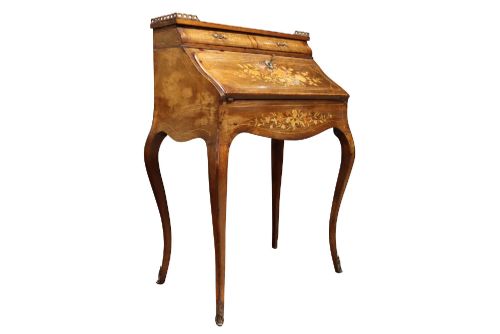
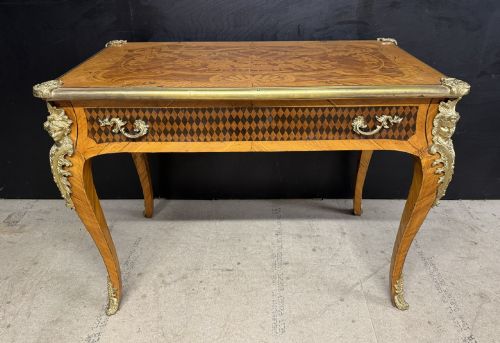
When you search for a french inlay writing desk, you encounter nineteenth-century pieces spanning the Victorian era through the Napoleon III period and into the early twentieth century. The selection ranges from compact bureau de dame and bonheur-du-jour forms to grander freestanding bureau plat tables designed to sit centrally in a room.
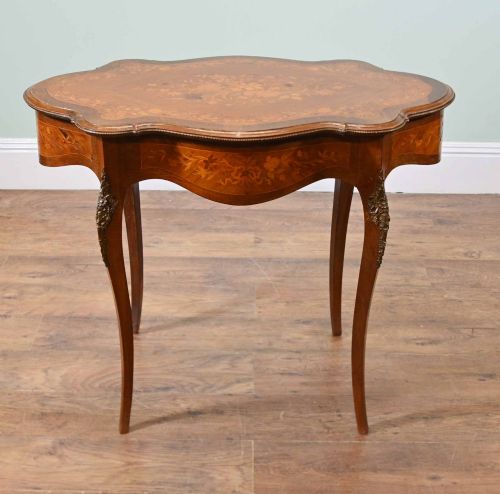
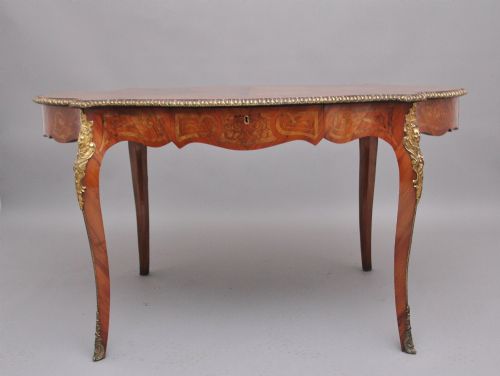
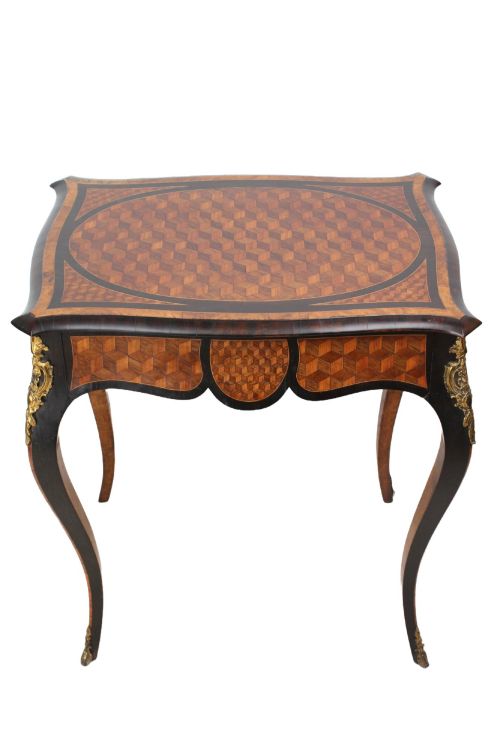
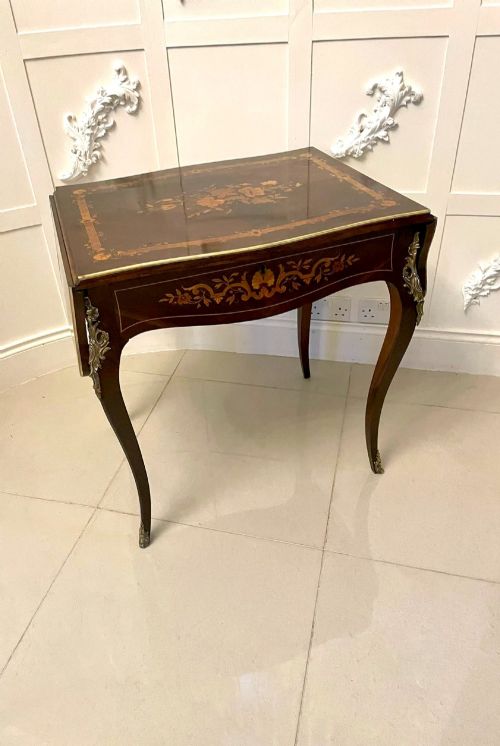
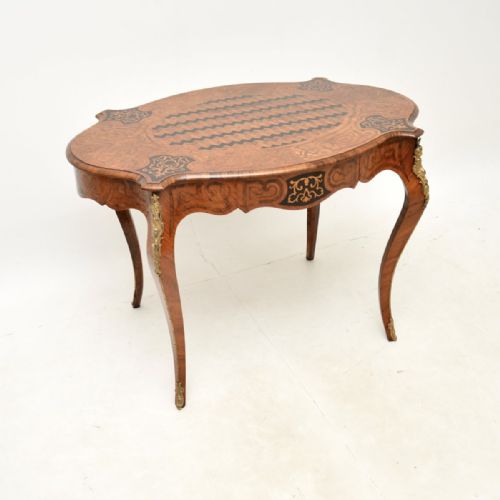
The prevailing aesthetic draws heavily on Louis XV and Louis XVI revivals, featuring serpentine outlines, cabriole legs, and elaborate parquetry or marquetry patterns. Many examples integrate leather writing surfaces alongside compartments and drawers suited to correspondence.
Materials and Technique
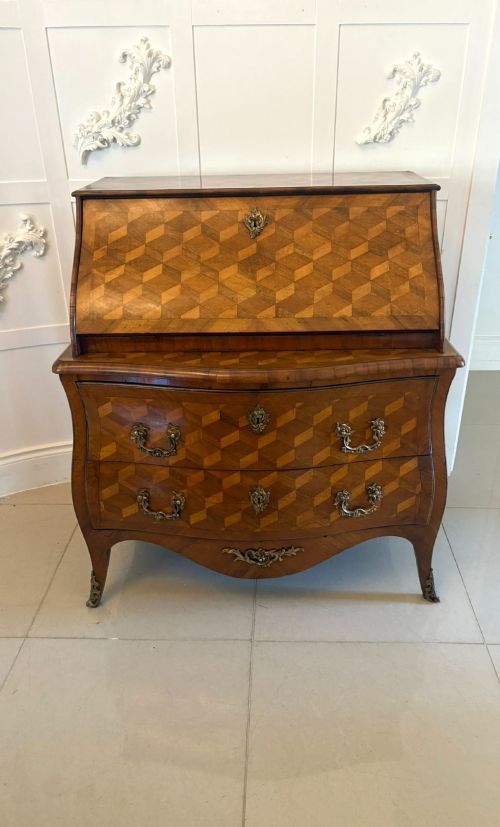
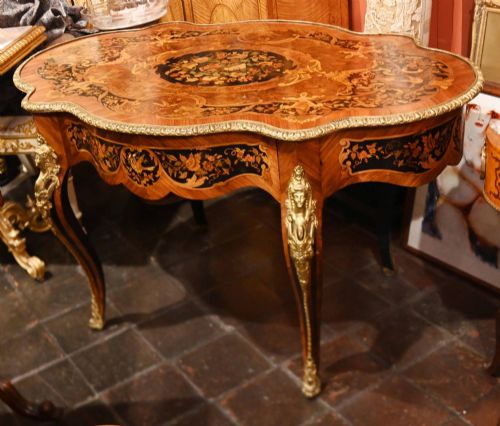
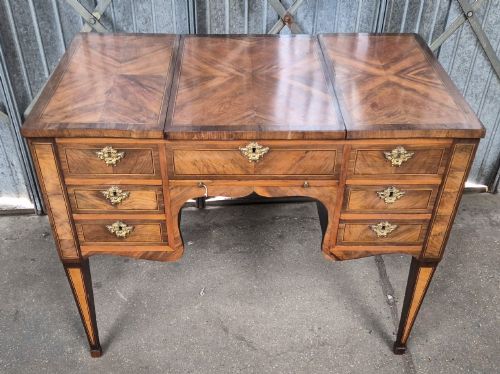
The construction relies on choice hardwoods including kingwood, walnut, rosewood, burr walnut, and satinwood, which provide rich grain patterns for intricate surface work. Artisans applied precise parquetry and marquetry to create geometric designs or floral pictorial scenes across the writing surfaces and drawers.
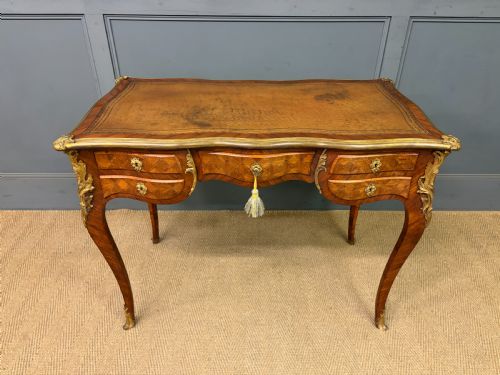
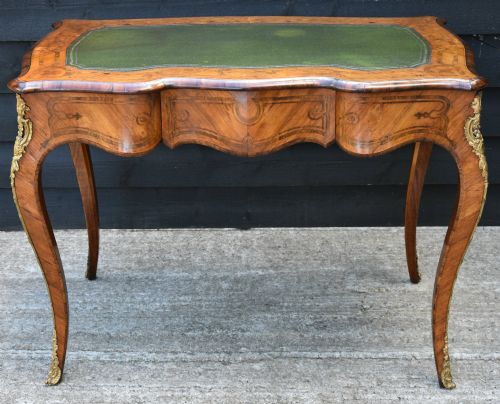
Metal enrichment forms a key component of the construction, utilising cast or chased ormolu mounts, gilt bronze details, and brass inlay to accentuate the curves and corners of the furniture. Leather inserts often provide the central writing area, framed by polished timber borders.
Listings feature walnut, kingwood, rosewood, and satinwood alongside brass, ormolu, and glass components.
Craftsmanship and Execution
The division between standard production and exceptional work rests on the precision of the timber matching and the intricacy of the inlay. Superior pieces exhibit seamless alignment in their parquetry and delicate, varied wood tones that create genuine depth in the marquetry patterns.
The quality of the metal mounts distinguishes finer workshops, where heavy ormolu and gilt bronze display crisp chiselling rather than soft, cast definition. Structural integrity, from drawer dovetailing to the stability of serpentine legs, dictates the long-term standing of each piece.
JAS Shoolbred·Maison Krieger·Millet
The French Inlay Writing Desk Glossary
- Marquetry
- Decorative veneer work arranged in pictorial or floral patterns using various tinted woods. It transforms a flat desktop into a detailed canvas.
- Parquetry
- Geometric wood inlay forming repeating patterns such as cubes or chequers. This technique emphasises the natural grain and colour contrast of the timber.
- Ormolu
- Gilt bronze mounts applied to furniture edges and corners for decorative effect. The term derives from the French for milled or ground gold.
- Bureau Plat
- A freestanding writing table fitted with drawers across the frieze, unattached to a wall. These desks often feature leather-lined tops and elaborate bronze mounts.
- Bonheur-du-Jour
- A light lady's writing desk featuring a small cabinet or set of shelves superstructure above the main writing surface. It became popular during the eighteenth century and saw revivals in the nineteenth.
French Inlay Writing Desk: Frequently Asked Questions
How do I identify a bureau plat?
A bureau plat is a flat-topped, freestanding desk with drawers beneath the writing surface, designed to be viewed from all sides in the middle of a room.
These desks frequently display leather writing panels and detailed bronze or brass mounts along the frieze and legs.
What is a bonheur-du-jour?
A bonheur-du-jour is a small, elegant writing desk featuring a tiered superstructure with small drawers or compartments above the main table surface.
Originating in France, these desks were primarily designed for correspondence and light administrative tasks in private sitting rooms.
How do I care for leather desk tops?
Leather writing surfaces require gentle cleaning with a slightly damp cloth followed by occasional specialised leather cream to maintain flexibility.
Avoid using harsh chemical polishes or excessive moisture near the gilt tooling and surrounding wood veneer.
What distinguishes marquetry from parquetry?
Marquetry utilises varied wood veneers to create pictorial or curving floral compositions across the furniture surface.
Parquetry constructs strict geometric and repeating patterns, such as cubes or triangles, using contrasting timber grains.