



French Horology Brass Clock
These pieces of french horology brass clock bring mechanical precision and ornamental presence into a room, uniting heavy brass frames with intricate escapements.
French Horology Brass Clock
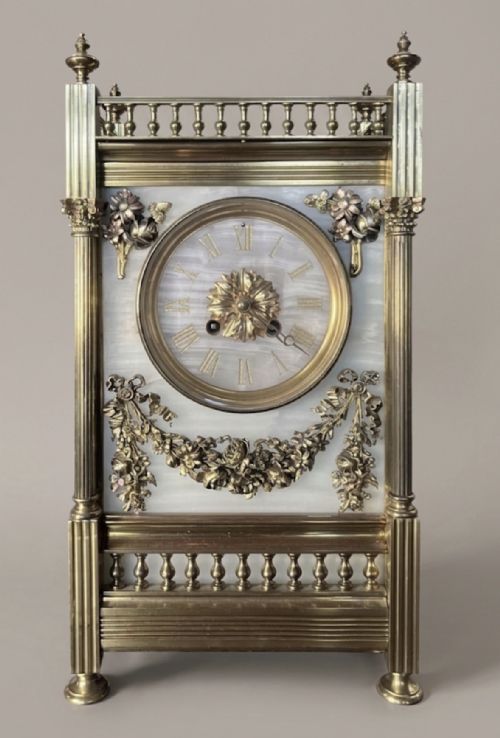
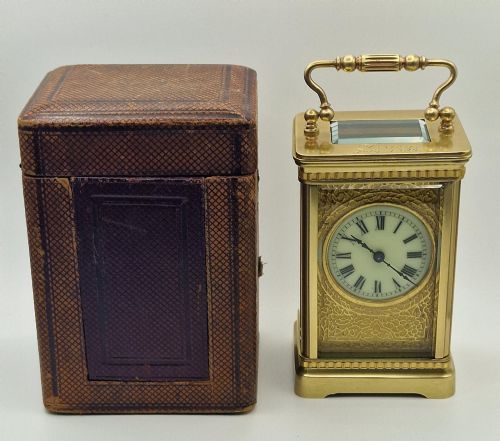
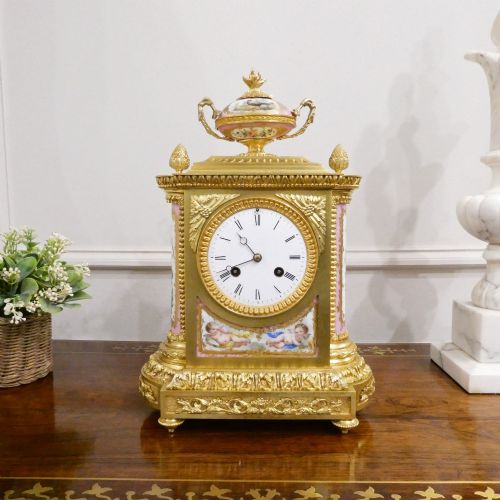
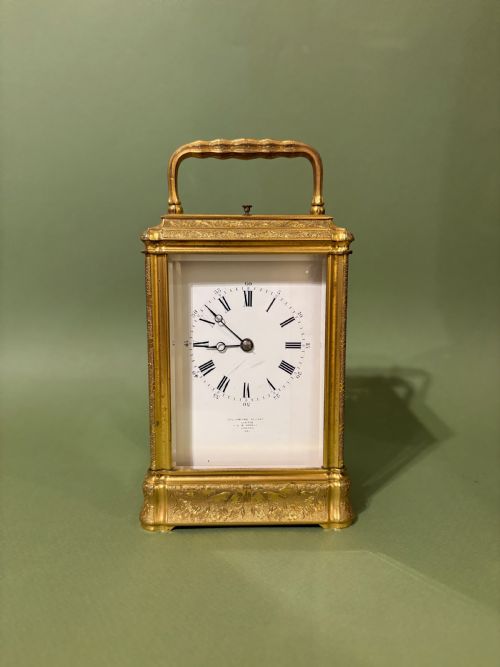
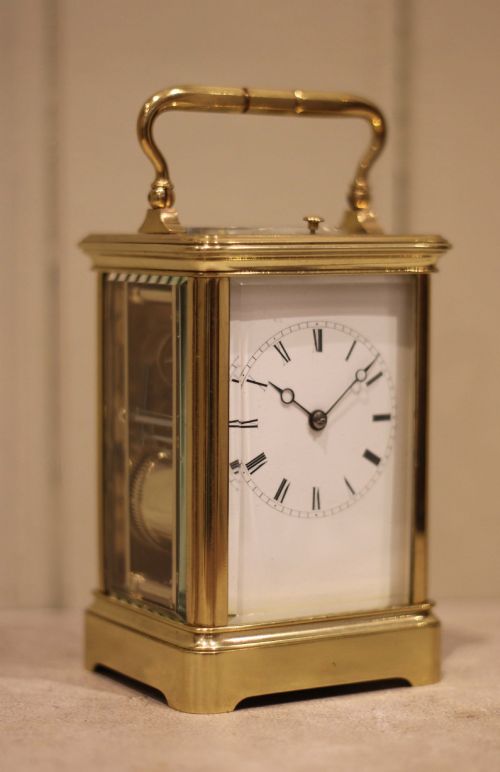
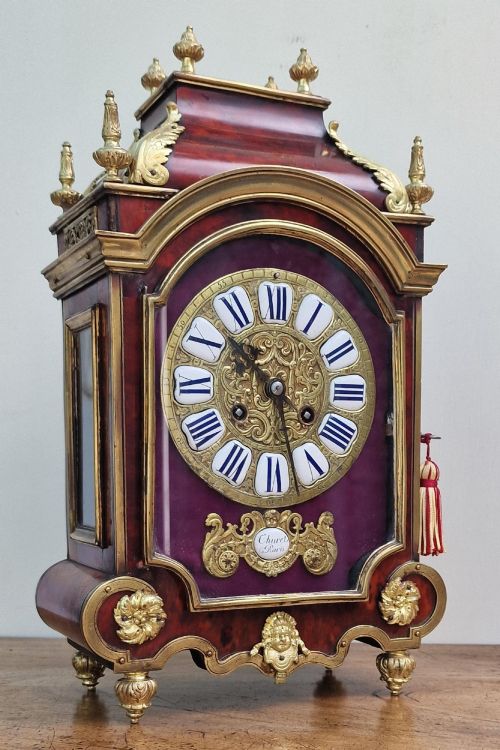
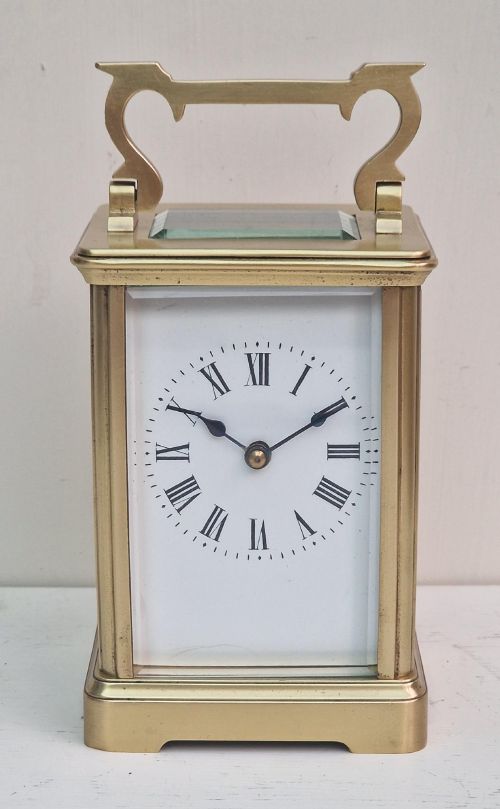
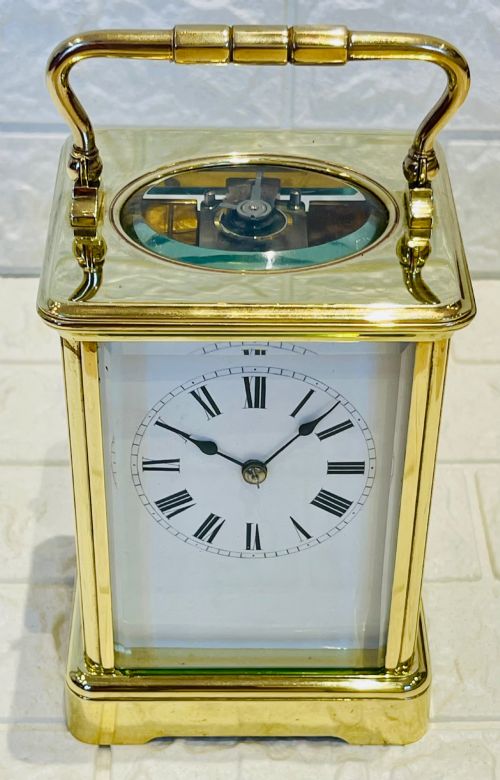
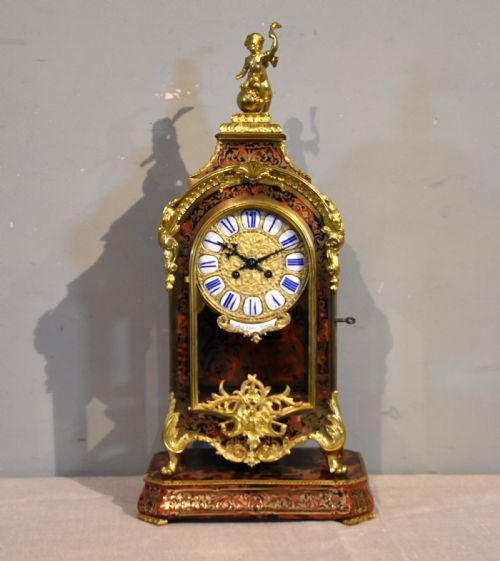
A french horology brass clock encompasses portable carriage timepieces and substantial mantel pieces originating across the nineteenth century, including Victorian interpretations. The carriage clock form appears most frequently on this page, housed in brass frames with glass panels that expose the movement within. Mantel pieces also feature prominently, drawing on Louis XVI Revival, Louis XIV, and Second Empire aesthetics.
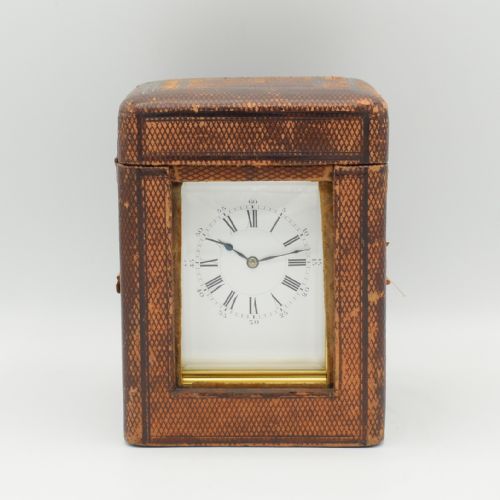
The objects span decades from eighteen fifty to nineteen hundred, showing the evolution of domestic timekeeping from simple daily movements to complex repeating and chiming mechanisms. Makers and retailers such as Henri Jacot, Drocourt, and C. Detouche mark many of the finest surviving examples. Buyers encounter both plain travelling clocks in original leather cases and heavily decorated gilt bronze or ormolu pieces designed for stationary display.
Regional adaptations and specific markets influenced production, resulting in specialised variations like sweep seconds models made for export. Miniature versions with alarm functions demonstrate the versatility of nineteenth-century French workshops. Whether presented as a gorge case carriage clock or a four glass mantel piece, each object relies on heavy brass casting and visible mechanical components.
Materials and Construction
Makers constructed these clocks using heavy brass for the structural frames, often finishing decorative surfaces with gilt bronze or ormolu. Glass panels fitted into the sides and top of carriage clocks allow light to reach the escapement, while enamel dials provide clear legibility for roman numerals.
The internal mechanics rely on brass wheel trains and steel arbors, driven by mainsprings housed in barrels. High-grade examples incorporate platform escapements with bimetallic balance wheels to maintain accuracy despite temperature changes, reflecting advanced nineteenth-century horological technique.
Listings incorporate nineteenth-century periods alongside materials like tortoiseshell, porcelain, and gilt bronze.
Distinctions in Quality
The calibre of a movement dictates the overall standard, separating simple timepieces from those with striking, chiming, and repeating complications. The weight and thickness of the brass casting, along with the crispness of hand-chiselled ormolu mounts, distinguish standard production from superior workshop output.
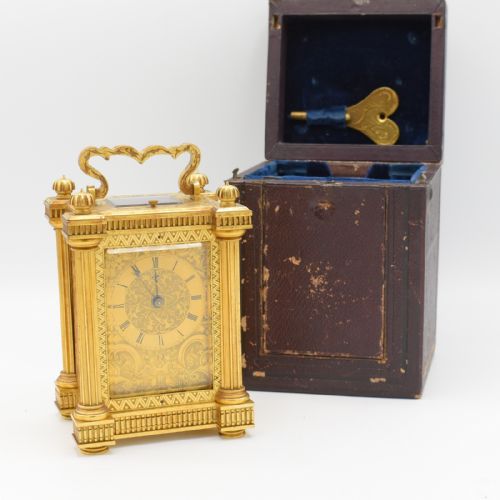
Originality of components, including the platform escapement and winding key, preserves the historical integrity of the piece. The presence of matching numbers across the movement and case, alongside signed dials by makers like Henri Jacot or Drocourt, elevates the standing of an individual clock.
Henri Jacot·Drocourt·C. Detouche·Jean-Baptiste Delettrez·Antoine Redier
The French Horology Brass Clock Glossary
- Gorge case
- A distinct carriage clock case style featuring stepped mouldings to the top and bottom pillar mounts. This robust housing became standard for finer nineteenth-century portable timepieces.
- Platform escapement
- The small, self-contained assembly mounted on the top plate that regulates the speed of the clock. High-quality versions feature bimetallic compensation curbs.
- Repeater
- A mechanism that strikes the hours and quarters upon demand when a plunger or pendant is pressed. This complication required sophisticated gear trains within a compact brass housing.
- Ormolu
- Finely ground high-carat gold mercury-gilded onto a bronze base metal. It provides a durable, rich golden finish characteristic of French mantel pieces.
- Striking
- A mechanical function that audibly marks the passage of hours or half-hours on a bell or gong. Most nineteenth-century carriage clocks include this feature alongside the primary time-keeping train.
French Horology Brass Clock: Frequently Asked Questions
How do I wind a carriage clock?
Use the appropriate key on the arbors located on the backplate, turning gently until resistance is met. Avoid over-winding to protect the mainspring.
Ensure you turn the key in the correct direction indicated by small directional arrows near the winding squares.
What is a repeating carriage clock?
A repeating carriage clock sounds the last elapsed hour and quarter-hour when you depress a lever on top of the case. This allowed owners to check the time in darkness.
The mechanism operates independently of the main going train using a separate rack and snail configuration.
How should I clean the brass case?
Dust the exterior regularly with a soft, dry microfibre cloth to prevent the accumulation of grime on the gilt surfaces. Avoid chemical polishes that strip thin ormolu layers.
Professional conservators should handle deep cleaning of tarnished brass or delicate glass panels.
Why does my clock run fast or slow?
Changes in temperature and the natural ageing of the mainspring affect the rate of oscillation in the platform escapement. Regulate the movement using the small index pointer visible on the balance bridge.
Move the regulator lever incrementally towards the faster or slower indicator as required over several days.