




French Gueridon Stand
A french gueridon stand brings circular elegance to a room, functioning as a lamp table, plant pedestal or compact centrepiece.
French Gueridon Stand
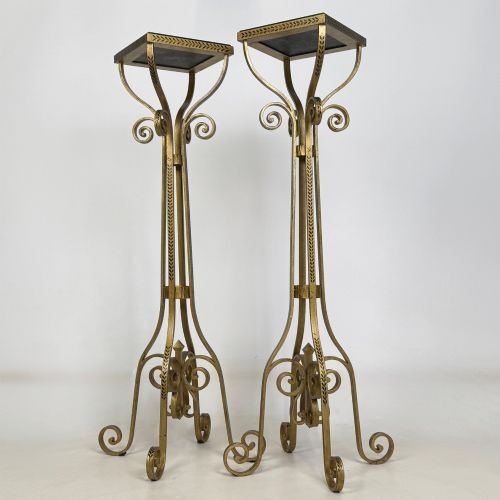
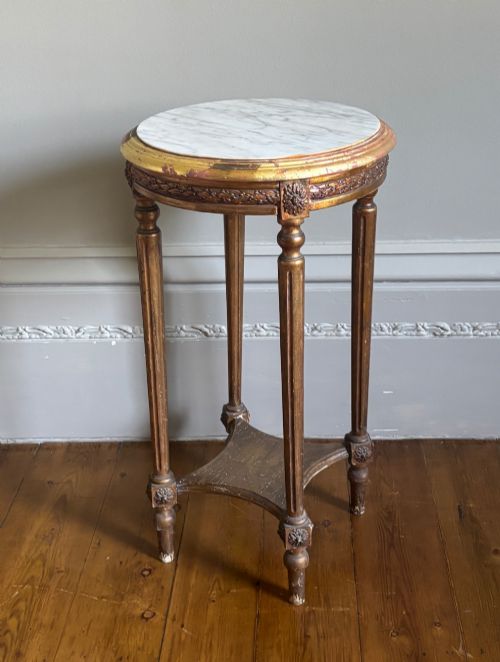
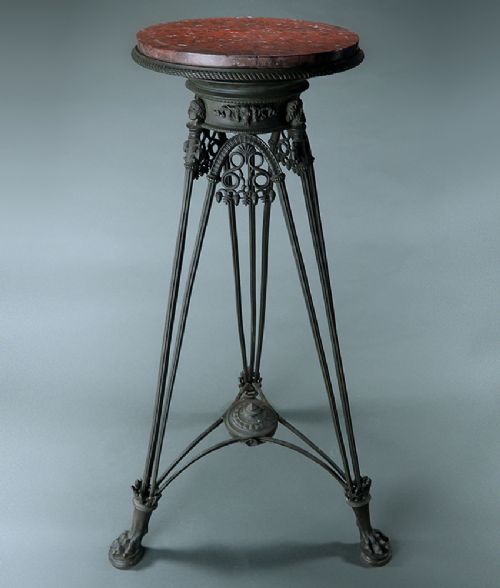
A french gueridon stand takes many forms across the nineteenth and twentieth centuries, appearing as side tables, occasional tables, plant stands and torcheres.
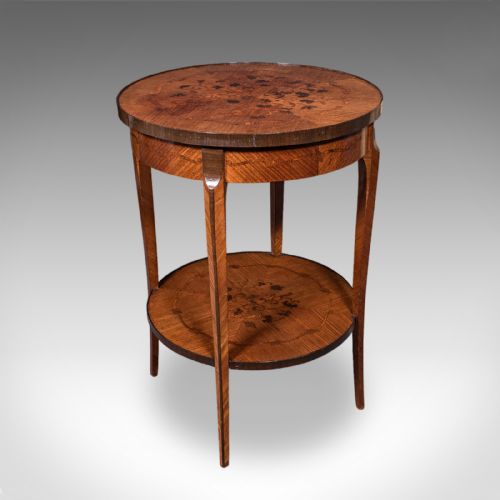
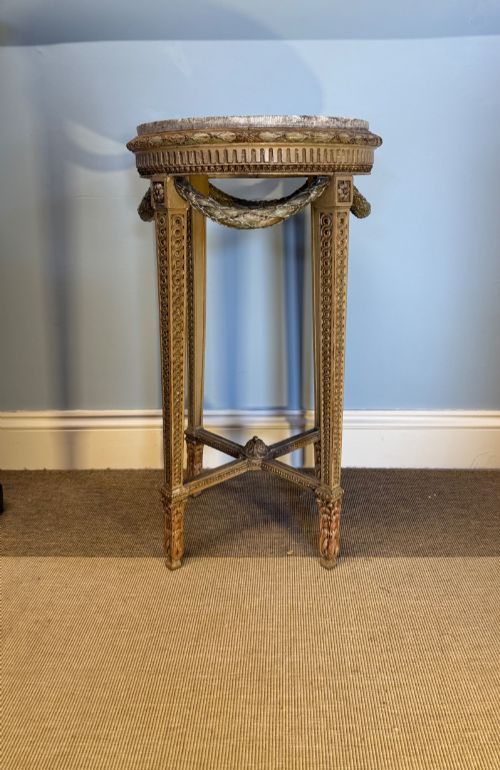
The version most commonly met on this page combines a circular stone or wood top with slender supports, reflecting French Neoclassical, Louis XV and Louis XVI design vocabulary.
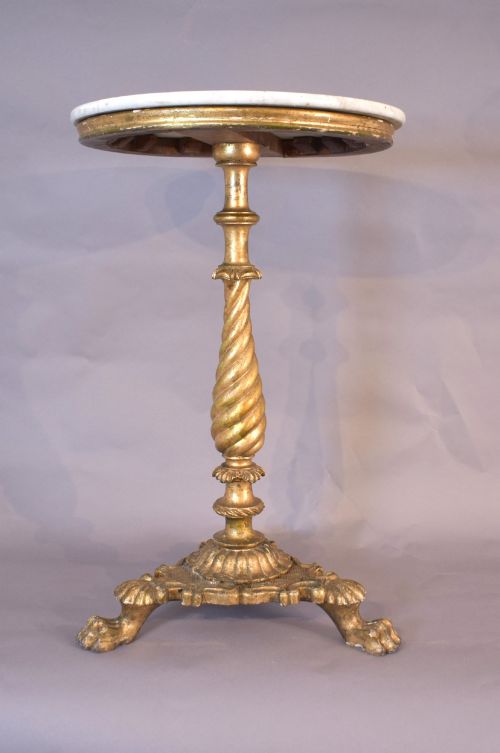
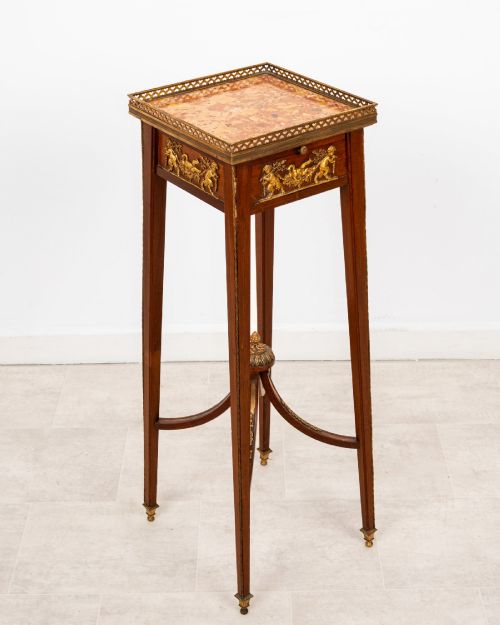
Makers frequently turned to styles of the French Empire or Edwardian periods, producing tripod bases, galleried edges and multi-tiered surfaces for domestic display.
Quality and Execution
The standard of a french gueridon stand rests upon the crispness of its cast ormolu mounts and the precision of its timber parquetry.
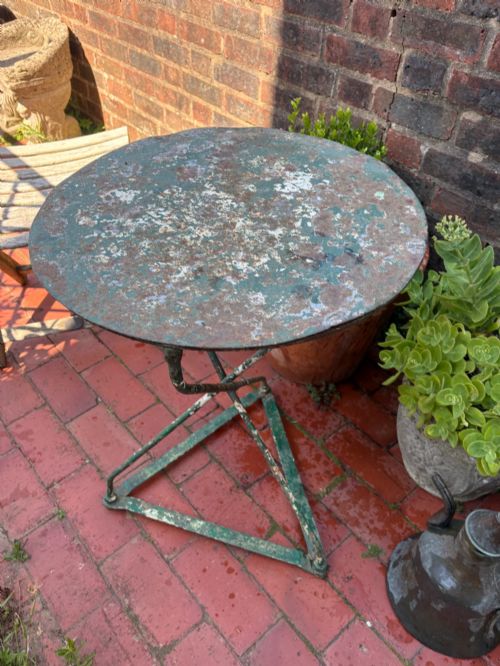
Superior examples demonstrate refined hand-carving on giltwood or mahogany frames, whereas simpler pieces rely on painted pine or cast iron structures.
Listings feature woods such as mahogany, walnut, kingwood and ebony, paired with marble and onyx tops.
Michel Dufet·Weisweiler
The French Gueridon Stand Glossary
- Gueridon
- A small circular table or stand, originating in seventeenth-century France and typically supported by a central column or tripod legs.
- Ormolu
- Gilded bronze mounts applied to furniture, decorative highlights cast and chased by hand.
- Parquetry
- Geometric patterns of inlaid wood veneer arranged across a table surface.
- Galleries
- A raised edge or miniature railing running around the perimeter of a tabletop to prevent items from sliding off.
- Torchere
- A tall, slender stand designed specifically to hold a light or a decorative urn.
French Gueridon Stand: Frequently Asked Questions
What is a french gueridon stand used for?
These pieces function primarily as small display surfaces, holding table lamps, plants, ceramics or books.
Their compact circular footprints allow them to fit easily beside seating or in corners where larger furniture cannot go.
How do I identify a Louis XV style stand?
Louis XV style pieces typically exhibit curved cabriole legs, asymmetrical floral or foliage ornament and rococo influences.
They favour flowing organic lines over the strict symmetry found in earlier Neoclassical designs.
Are marble tops original to these tables?
Many nineteenth-century examples were designed specifically to carry heavy marble or onyx slabs inset into rebated wooden frames.
Inspect the underside of the top to see how the stone rests within its surrounding moulding or gallery.
How should I care for a giltwood surface?
Giltwood finishes require gentle dusting with a soft, dry brush and must be kept away from direct sunlight and moisture.
Avoid applying liquid polishes or modern cleaning agents, which can dissolve the delicate gold leaf layers.