





French Gold Madonna Charm
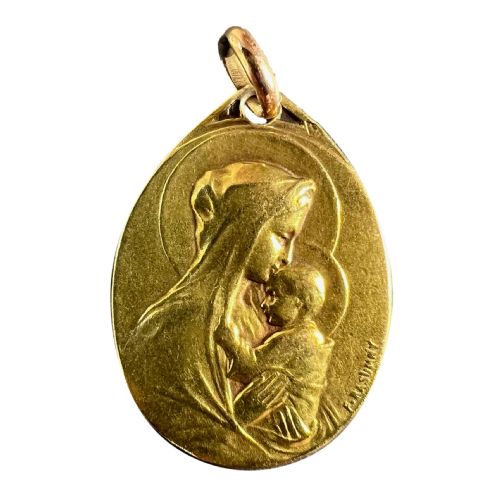
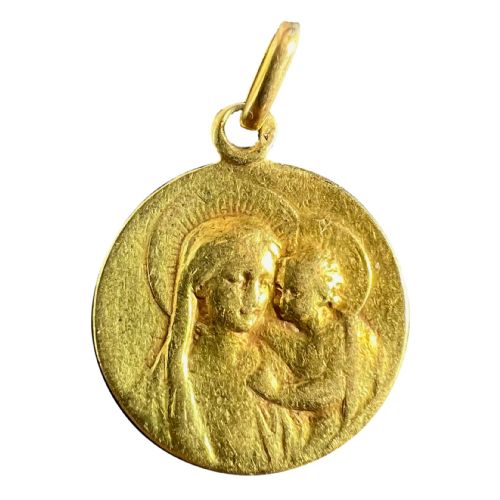
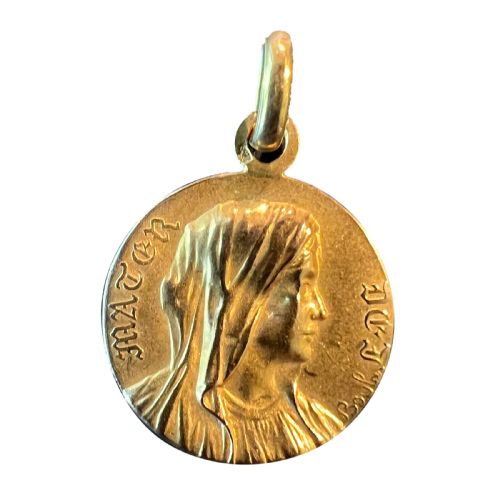
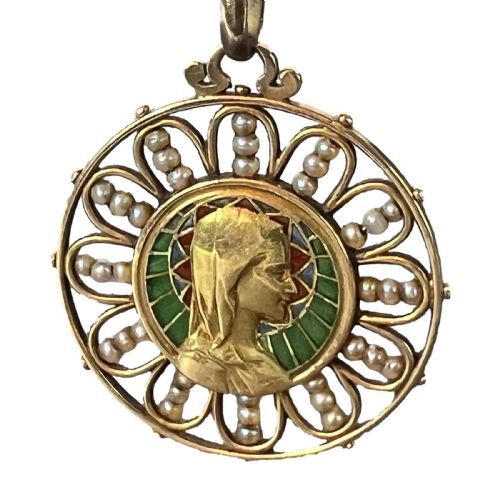
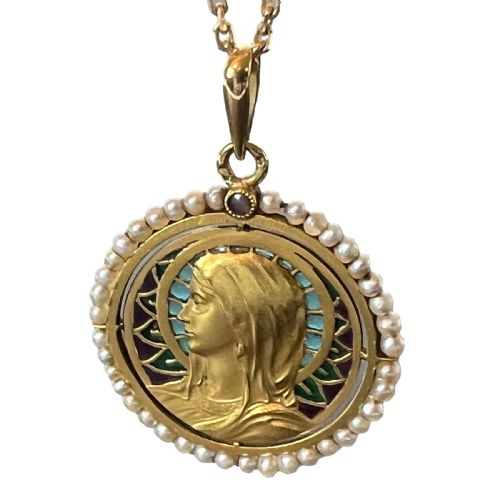
These French gold madonna charm pieces are devotional pendants spanning from the late nineteenth century to the mid-twentieth century.
French Gold Madonna Charm
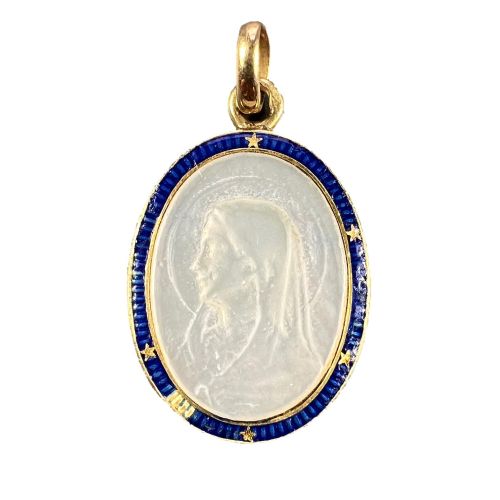
When someone searches for a French gold madonna charm, they encounter devotional medals, pendants, and charms typically rendered in yellow, rose, or white gold. These pieces portray the Virgin Mary, the Madonna and Child, or the Sacred Heart, often associated with French religious and ecclesiastical traditions.
The items span periods from the 1890s through the 1950s, capturing stylistic shifts from Art Nouveau curves to mid-century forms. The most frequently met examples on this page are 18K yellow gold medals carrying images of the Virgin Mary, designed to be worn as pendants or attached to charm bracelets.
Materials and Techniques
Makers utilised 18-carat yellow, rose, and white gold as the primary metal for these pendants, frequently stamping the pieces with French hallmarks. Gold frames often enclose the central medallion, which depicts religious iconography struck in relief.
Artisans incorporated decorative elements such as enamel, mother-of-pearl, and seed pearls into the designs. Techniques like plique-a-jour enamel and pierced metalwork appear across the pieces, allowing light to pass through the coloured glass sections.
French Gold Madonna Charm Retail Price Guide 2026
Typical asking prices for french gold madonna charm among the pieces listed under this phrase on Sellingantiques today, from the lower quarter to the upper quarter. They describe what is for sale here now, not the wider market.
Tiny raised halos and miniature robed figures invite you to examine entire holy scenes rendered inside circles no bigger than a coin.
Assessing Quality and Craftsmanship
The application of specialised techniques like plique-a-jour enamel or the inclusion of seed pearls and mother-of-pearl backings elevates the complexity of a piece. Well-preserved enamel work free from loss and robust, cleanly pierced gold borders mark the upper tier of production.
Rasumny·Emile Monier·Mazzoni·Dropsy·Sellier·Arnault·Augis Grun·Serraz
The French Gold Madonna Charm Glossary
- Madonna and Child
- Depiction of the Virgin Mary holding the infant Jesus. This is a central motif in Christian art and appears frequently on these religious medals.
- Plique-a-jour
- An enamelling technique where enamel is applied in cells without a backing, resembling miniature stained glass. It allows light to shine through the translucent coloured material.
- Sacred Heart
- A devotional image representing the physical heart of Jesus Christ as a symbol of divine love. It is often combined with depictions of the Virgin Mary on French medals.
- Hallmark
- An official stamp applied to precious metals to indicate purity. French gold items commonly feature distinct marks denoting 18-carat fineness.
French Gold Madonna Charm: Frequently Asked Questions
How were these religious medals originally worn?
Historically, people wore these pieces suspended from chains around the neck as pendants or hung from charm bracelets. Their dual classification as pendants and charms allowed for versatile daily wear.
Today, collectors continue to wear them on chains or incorporate them into modern charm collections. The attached jump rings or loops facilitate easy attachment to various types of jewellery.
What periods do these pendants come from?
The listings encompass pieces produced from the late nineteenth century through the mid-twentieth century, specifically spanning the 1890s to the 1950s. A large proportion of the available items date from the early decades of the twentieth century.
Stylistic elements help indicate the era of manufacture, moving from ornate Art Nouveau designs to later mid-century aesthetics. This timeline captures several decades of French devotional jewellery production.
What do the different imagery types represent?
The imagery typically depicts the Virgin Mary, the Madonna and Child, or the Sacred Heart, reflecting traditional French religious devotion. Inscriptions such as Alma Mater or Ave Maria often accompany the central figures.
These motifs served as personal expressions of faith and protection for the original owners. The specific titles and symbols provide insight into the devotional practices of the period.