
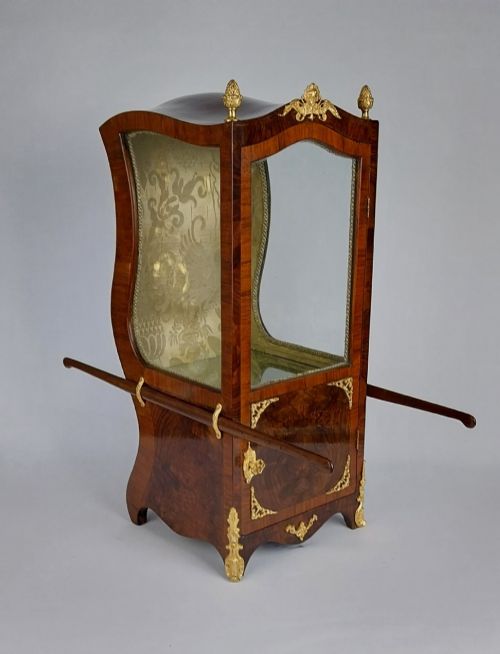


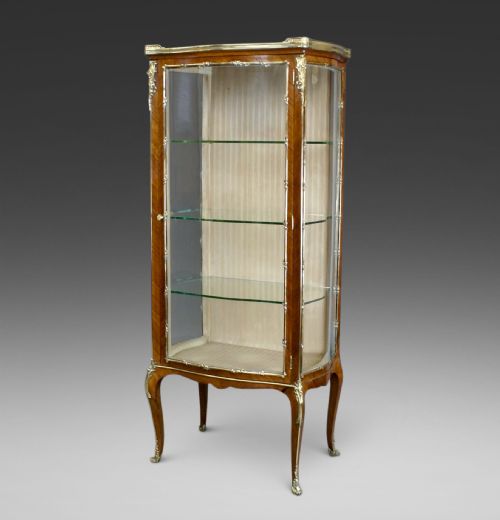

French Glazed Showcase
These pieces of french glazed showcase bring refined storage and clear presentation into a room through generous glass panels.
French Glazed Showcase
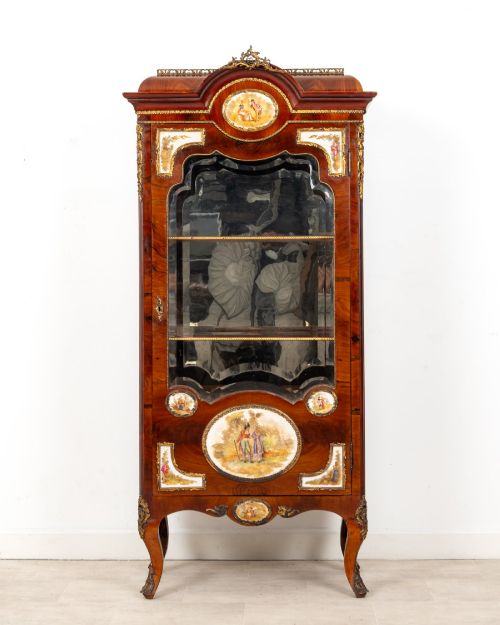
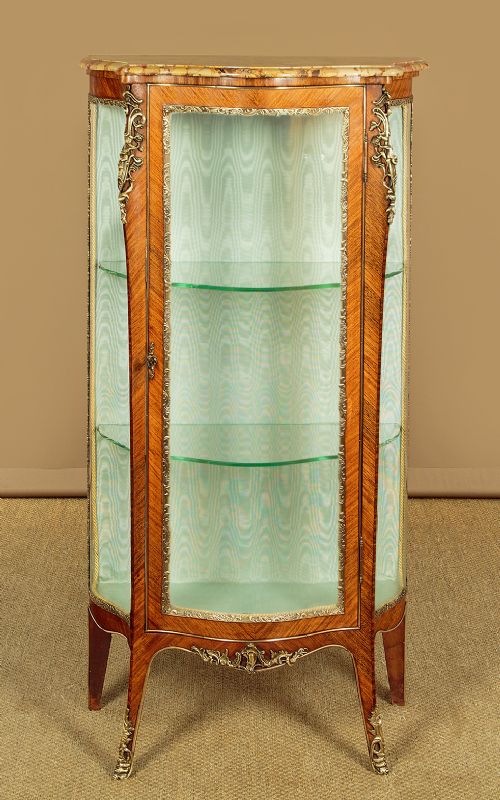
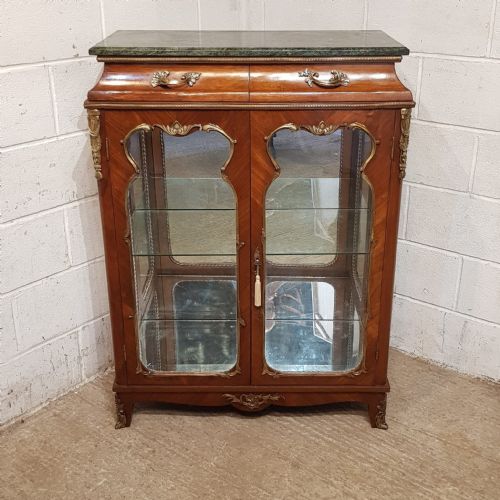
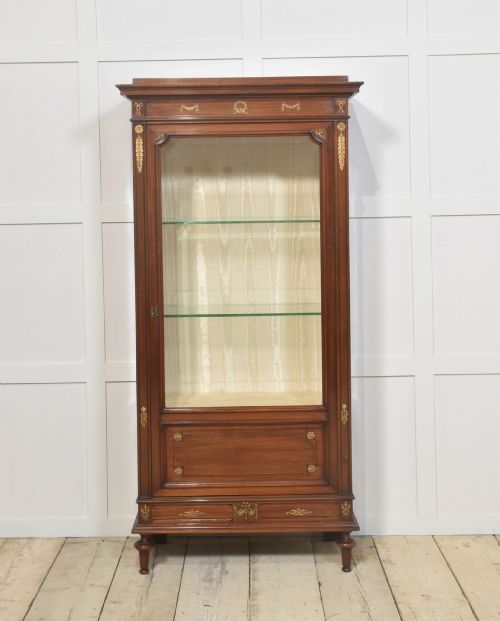
A french glazed showcase, frequently identified as a vitrine or display cabinet, is designed to exhibit decorative objects, porcelain and silverware behind glass doors and side panels. The forms span upright cabinets, cylindrical pedestals, table-top cases and low bijouterie tables intended for tabletop display.
Most examples encountered on this page date from the nineteenth century through the early twentieth century, reflecting revivalist tastes such as Louis XV, Louis XVI and French Empire. These pieces combine timber frames with extensive glazing to allow light to enter from multiple angles and illuminate the contents within.
How they were made
Cabinets were constructed using cabinet timbers such as walnut, mahogany, kingwood, rosewood and yew, often applied as veneers over firmer secondary woods or arranged in geometric parquetry patterns. Structural frames supported large expanses of curved or flat glass secured within rebated wooden mouldings.
Metal ornament played a major role in the construction, utilising cast or chased ormolu and gilt brass mounts applied to corners, feet and cornices to accentuate the contours of the cabinet. Marble tops were frequently fitted to the upper surfaces of nineteenth-century pieces to provide a durable and decorative finish.
The furniture spans nineteenth-century revival styles, Edwardian pieces and early twentieth-century vitrines.
What varies in quality
The degree of refinement in the metal mounts distinguishes standard production from finer cabinet-making, where ormolu is crisply chased and heavily gilded rather than cast as simple brass extrusion. Cabinetwork precision is visible in the tightness of veneer joints, the execution of parquetry and the smoothness of door alignment.
Materials and decorative flourishes elevate individual pieces, such as the inclusion of hand-painted Vernis Martin panels, inset porcelain plaques or complex curved glass panes. The choice of rich timbers like kingwood and walnut over plain secondary woods marks a higher standard of manufacture.
Francois Linke·Siegel
The French Glazed Showcase Glossary
- Ormolu
- Gilded bronze mounts applied to furniture. This technique involves amalgamating gold and mercury onto a bronze base.
- Vitrine
- A glass-fronted cabinet designed for displaying porcelain, books or curiosities. The term derives from the French word for glass.
- Parquetry
- Geometric wood inlay forming patterns across furniture surfaces. Craftsmen arrange contrasting timber veneers to create decorative motifs.
- Vernis Martin
- A type of decorative lacquer developed in eighteenth-century France. It mimics Asian lacquerwork using translucent varnishes over painted panels.
- Bijouterie table
- A shallow display table with a glass top and glazed sides. These pieces were historically used for holding small trinkets and jewellery.
French Glazed Showcase: Frequently Asked Questions
What is a french glazed showcase used for?
These cabinets served historically to display collections of porcelain, silver and small curiosities safely behind glass while keeping dust away. They allow light to circulate around fragile decorative objects.
Today they function similarly in domestic interiors, holding collections or personal items while acting as decorative furniture centrepieces.
How do I date a french glazed showcase?
Dating relies on combining the timber species, construction methods, hardware and prevailing stylistic revival. Nineteenth-century examples often feature heavy ormolu mounts and marble tops.
Later pieces from the early twentieth century may adopt simpler Edwardian lines or lighter marquetry work influenced by Louis XVI styling.
What woods were used in these cabinets?
Cabinetmakers utilised a range of domestic and exotic timbers depending on the period and desired finish. Walnut, mahogany and rosewood provided sturdy structural frames and rich grain patterns.
Finer pieces often incorporated kingwood veneers arranged in geometric parquetry alongside contrasting inlay work.
How do I care for a antique vitrine?
Maintenance involves keeping wooden surfaces clean with a soft dry cloth and avoiding silicone-based polishes. Ormolu mounts should be dusted gently without abrasive cleaning agents.
Positioning the cabinet away from direct sunlight and radiators protects the timber veneers and prevents the wood from drying out.