



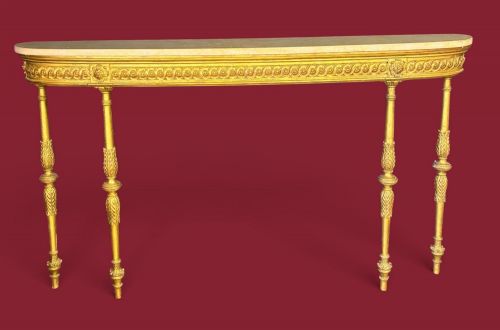


French Gilt Sofa
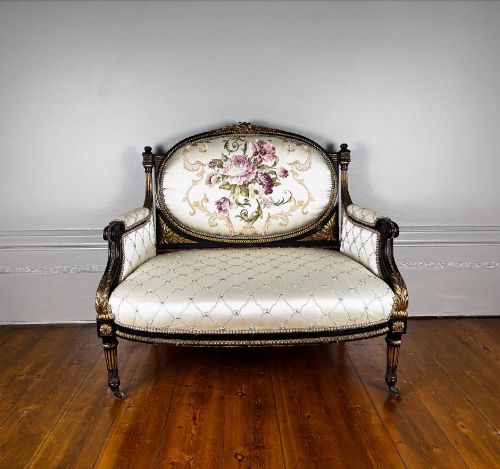
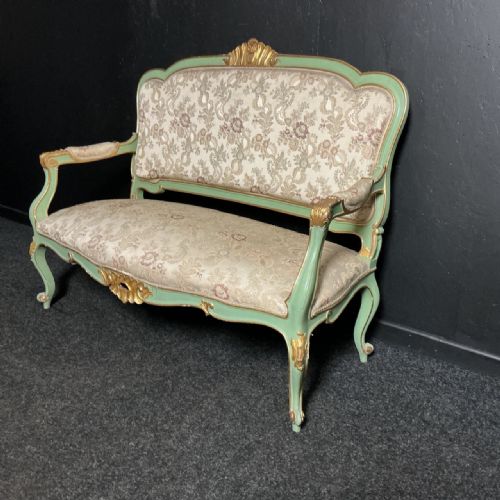
A French gilt sofa brings undeniable presence to a room, combining carved woodwork with gold leaf and upholstered seating from the nineteenth and early twentieth centuries.
French Gilt Sofa
A french gilt sofa encompasses various seating forms such as canapés, settees, and boudoir seats originating from the nineteenth century onwards. Buyers searching this phrase typically encounter pieces reflecting historical revival styles like Louis XV and Louis XVI, characterised by ornate frames and gold-toned finishes.
The selection ranges from compact two-seat window sofas to larger salon suites and cane-backed daybeds. Many examples incorporate painted elements, ebonised accents, or exposed wood alongside traditional upholstery.
Origins span continental workshops, with frequent appearances of French and Swedish empire influences, alongside nineteenth-century Victorian interpretations of Rococo and Neoclassical designs.
Materials and construction methods
Frame construction relies predominantly on hardwoods such as beech and walnut, chosen for their stability and suitability for intricate carving. Master craftsmen shaped these timbers into curved cabriole legs and serpentine rails typical of period seating.
Surface decoration involves applying gold leaf or gilt paint to wooden frames, sometimes paired with ebonised details or parcel gilt highlights. Canework panels and silk or tapestry fabrics complete the upholstery and backrests.
French Gilt Sofa Retail Price Guide 2026
Typical asking prices for french gilt sofa among the pieces listed under this phrase on Sellingantiques today, from the lower quarter to the upper quarter. They describe what is for sale here now, not the wider market.
Some nineteenth-century makers evidently believed that if a little gold paint was good, an entire room of shimmering gilded seating was simply magnificent.
Assessing quality and craftsmanship
Quality rests in the crispness and depth of the hand-carved woodwork, where sharper detail in floral motifs and scrolling acanthus indicates superior artisan skill. Cast metal or ormolu mounts, where present, reveal precision in their chasing and secure attachment to the frame.
The integrity of the gilt surface and the retention of original gilding significantly influence the character of a piece. Upholstery standard and the structural firmness of the underlying beech or walnut frame determine everyday durability.
Holland + Son
The French Gilt Sofa Glossary
- Canapé
- An upholstered sofa with an exposed wooden frame, often featuring a decorative carved back and open arms. This form became central to French salon seating.
- Giltwood
- Timber coated with gold leaf or metallic powder applied over a prepared gesso ground. It provides a reflective, opulent finish characteristic of formal period furniture.
- Louis XV Style
- A design aesthetic defined by asymmetrical curves, organic plant motifs, and cabriole legs. It draws inspiration from the mid-eighteenth-century French court.
- Louis XVI Style
- A neoclassical design movement characterised by straight tapered legs, geometric symmetry, and classical architectural details. It emerged in opposition to the preceding Rococo curves.
- Bergère
- An enclosed upholstered armchair or sofa featuring padded sides and a built-in upholstered back. The exposed wooden frame is typically carved and gilded or painted.
- Ormolu
- Gilded bronze mounts applied to furniture for decorative accent. This technique requires mercury gilding or modern electroplating to achieve its rich metallic sheen.
French Gilt Sofa: Frequently Asked Questions
What is the difference between a canapé and a settee?
A canapé is a traditional French term for an upholstered sofa with an exposed decorative wooden frame, typically featuring open arms and a carved back rail. Settees represent a broader category of long seats that may include English or continental interpretations.
While both provide seating for multiple people, a canapé generally adheres strictly to French stylistic periods like Louis XV or Louis XVI.
How do I identify Louis XV versus Louis XVI styles?
Louis XV furniture relies heavily on asymmetry, sweeping curves, and organic motifs such as scrolling foliage and cabriole legs. The overall feeling is flowing and ornate.
Louis XVI furniture shifts toward strict symmetry, straight fluted legs, and neoclassical straight lines or oval backs inspired by ancient architectural motifs.
Where should I place a gilt sofa in a modern home?
These sofas function well as focal points in formal living rooms, large bedrooms, or expansive hallways where their gilded frames can catch the light. Pairing them with contemporary furnishings creates a striking contrast of texture and era.
Consider room traffic to ensure the delicate carved woodwork and upholstered fabric remain protected from daily wear.
Are these sofas comfortable for daily lounging?
Period frames were designed for upright salon socialising rather than casual sprawling, featuring firm padding and supportive backs. Many twentieth-century restorations upgrade internal webbing and cushioning to improve comfort while maintaining the historic silhouette.
Checking the seat depth and cushion fill helps determine how well a specific piece suits everyday relaxation.