


French Gilt Porcelain Tray
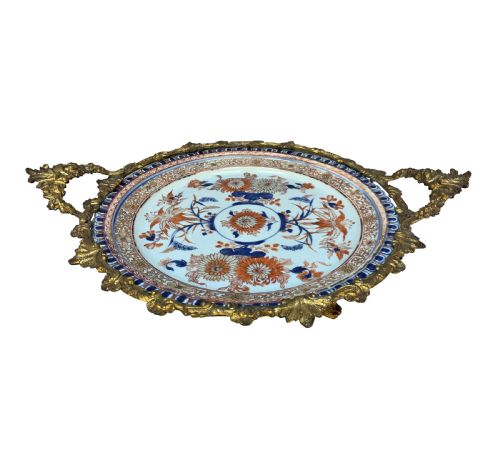
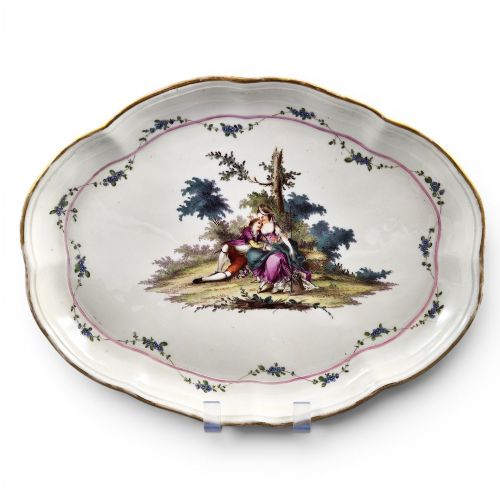
These french gilt porcelain tray pieces bring porcelain and ormolu together on tables, uniting painted scenes with bronze mounts.
French Gilt Porcelain Tray
A french gilt porcelain tray takes many forms across this selection, from breakfast sets and dessert services to individual pin dishes and centrepieces. They emerge from periods spanning the eighteenth century through to the early twentieth century, drawing on French Rococo, Neoclassical, and Japonisme styles.
Marseille and Sevres factories provide porcelain bodies, often enhanced with Bleu Celeste grounds or Watteau scenes. Makers such as Samson and Louis Pierre Malpass shape these wares alongside attribution to Joseph-Gaspard Robert.
Mounts in ormolu, gilt bronze, and champleve enamel frame the porcelain, creating functional vessels designed for display and service. Pieces range from large oval platters to compact trinket dishes.
How they were made
Makers combine hard-paste porcelain with cast metal mounts, securing vessels in ormolu and gilt bronze frames. Enamel work, including champleve techniques, adds coloured detail to the metal surrounds.
Gold leaf and gilding highlight the porcelain rims and painted panels, contrasting with Bleu Celeste backgrounds. Artisans paint figurative scenes by hand, depicting subjects such as Watteau motifs on factory wares.
Listings feature eighteenth-century and nineteenth-century pieces, incorporating porcelain, enamel, ormolu, and champleve enamel across various decorative forms.
What varies in quality
The sophistication of the painted decoration dictates the standing of an item, distinguishing hand-painted figural scenes by known makers from standard factory output. Finesse in the application of gold leaf and the crispness of porcelain bodies separate ambitious compositions from simpler service pieces.
The weight and chasing of ormolu or gilt bronze mounts influence the overall character of a piece. Heavier, more detailed cast metal frames integrated cleanly with the porcelain elevate the standing of the tray or dish.
Joseph Gaspard Robert·Samson Paris·Louis Pierre Malpass
The French Gilt Porcelain Tray Glossary
- Ormolu
- Gilded bronze applied as mounts and decorative framing to porcelain vessels. This technique became central to French decorative arts.
- Champleve enamel
- A method where enamel is fused into troughs or cells carved into the surface of metal mounts. It creates colourful geometric or floral patterns.
- Bleu Celeste
- A bright sky-blue porcelain ground colour associated with Sevres production. It provides a striking backdrop for gilt and painted decoration.
- Japonisme
- An aesthetic style influenced by Japanese art and design. It appears in nineteenth-century French porcelain decoration.
- Rococo Revival
- A nineteenth-century revival of eighteenth-century Rococo style featuring asymmetrical scrolls and naturalistic motifs.
French Gilt Porcelain Tray: Frequently Asked Questions
How are these trays dated?
Dating relies on stylistic evidence, factory marks, and the integration of metal mounts. Eighteenth-century pieces display different paste characteristics and hand-painted palettes compared to later nineteenth-century interpretations.
Changes in neoclassical and rococo revival tastes across the periods help narrow the decade of production. Examining the relationship between the porcelain body and the gilt bronze mount provides further context.
What is champleve enamel?
Champleve enamel involves carving recesses directly into a bronze or metal surface to hold coloured vitreous glass paste. Firing fuses this enamel into the carved channels, producing flush coloured patterns.
On these items, the technique appears in metal mounts that frame or support the porcelain dishes.
Who made these pieces?
Production involves established factories and identifiable makers such as Samson in Paris and Louis Pierre Malpass. Attribution extends to eighteenth-century figures like Joseph-Gaspard Robert in Marseille.
Many examples originate from Sevres or regional French workshops working within revival styles.
Where were they used?
These trays served functional roles in formal dining and domestic entertaining, holding dessert sets, breakfast wares, or tea services. Centrepieces occupied prominent positions on tables during meals.
Smaller trinket dishes and pin trays functioned on dressing tables and mantelpieces for holding personal items.