





French Gilt Bronze Decor
French gilt bronze decor brings the rich metals and polished stone of nineteenth-century interiors straight into your home.
French Gilt Bronze Decor
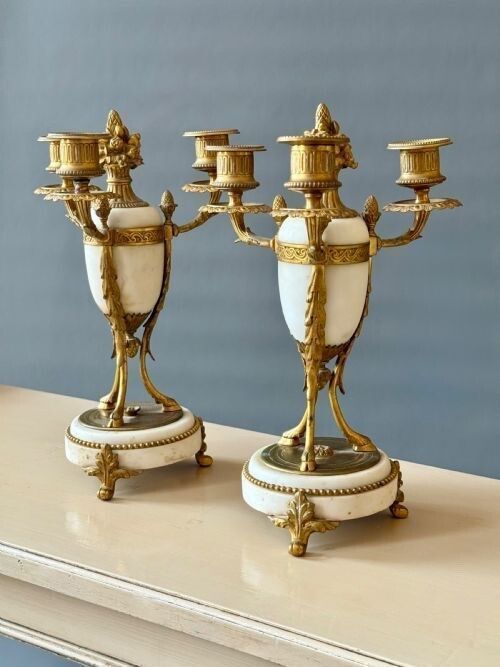
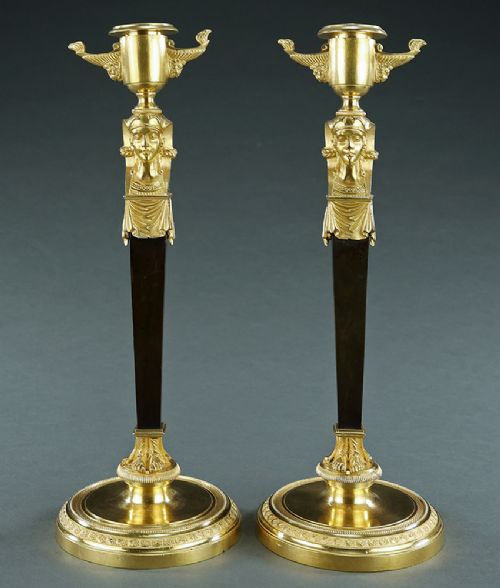
French gilt bronze decor comprises nineteenth-century objects designed for domestic ornamentation, including candelabra, candlesticks, and fireplace accessories. Buyers seeking french gilt bronze decor will encounter numerous pairs of candleholders, chenets, and tazzas dating across the eighteen-hundreds.
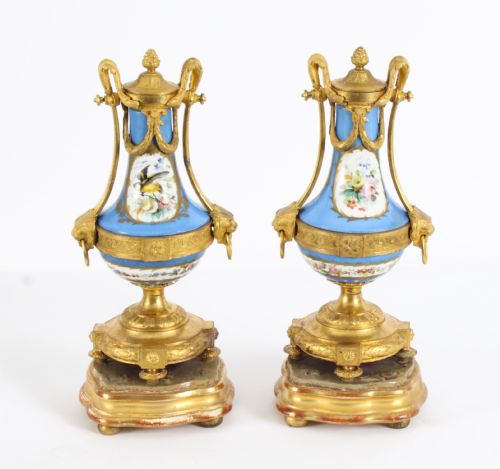
The forms span distinct historical revivals, featuring French Empire, Louis XVI Neoclassical, and French Rococo Revival styles. Many pieces combine metalwork with white marble, onyx, rouge marble, or bleu celeste porcelain.
Makers and foundries produced both utilitarian objects like inkstands and purely decorative items such as furniture mounts and statues. These items reflect the elaborate tastes of nineteenth-century French design and Grand Tour aesthetics.
Evaluating quality
Quality rests upon the crispness of the cast bronze details and the depth of the mercury gilding or ormolu finish. Superior pieces exhibit hand-chased surface enrichment that accentuates the drapery, flora, and figures.
The selection of supporting materials also distinguishes the range, particularly the weight and grain of the white marble, onyx, or rouge marble plinths. Cohesion between patinated bronze elements and gilt highlights indicates higher workshop standards.
French Gilt Bronze Decor Retail Price Guide 2026
Typical asking prices for french gilt bronze decor among the pieces listed under this phrase on Sellingantiques today, from the lower quarter to the upper quarter. They describe what is for sale here now, not the wider market.
Listings feature items in nineteenth-century styles including French Empire, Louis XVI Neoclassical, and Rococo Revival.
Poix Blin·E F Caldwell
The French Gilt Bronze Decor Glossary
- Ormolu
- A term for gilded bronze, created by applying an amalgam of gold and mercury to a bronze base. This technique produced a rich, durable golden finish on nineteenth-century decorative objects.
- Chenets
- Fire dogs or fireplace accessories placed on hearths to support logs. French examples frequently incorporate Rococo or Empire gilt bronze figures and scrollwork.
- Candelabra
- Branched lighting devices designed to hold multiple candles. Nineteenth-century versions often feature central shafts flanked by adjustable arms.
- Tazza
- A shallow cup or ornamental vessel raised on a stem and foot. These pieces were utilised for display on tables and mantelpieces.
- Champlevé
- An enamelling technique where troughs are carved into the metal surface and filled with vitreous enamel prior to firing. It appears frequently on decorative inkstands and desk fittings.
French Gilt Bronze Decor: Frequently Asked Questions
What is French gilt bronze?
French gilt bronze refers to decorative objects cast in bronze during the nineteenth century and finished with a gold-mercury amalgam known as ormolu.
These items range from functional lighting to fireplace furniture and decorative urns.
How do I clean gilt bronze?
Gilt bronze requires gentle dusting with a soft, dry cloth to protect the delicate metallic surface. Moisture and chemical cleaners can strip the historical gilding.
Preserving the original ormolu finish maintains the visual integrity of the piece.
What periods do these pieces date from?
The listings span the nineteenth century, encompassing objects made around eighteen hundred, eighteen forty, eighteen eighty, and nineteen hundred. Styles shift from French Empire and Retour d'Egypte to Louis XV and Rococo revivals.
Each period reflects distinct aesthetic preferences within French decorative arts.
Where were these items displayed?
These decorative objects sat upon mantelpieces, tables, and desks within nineteenth-century drawing rooms and formal reception spaces. Fireplace accessories like chenets and fenders occupied the hearth.
Grand Tour travellers also brought home smaller bronzes and candelabra as souvenirs.