




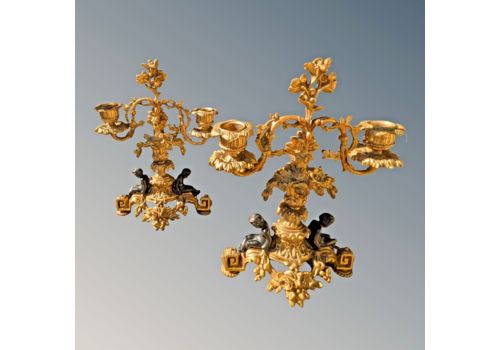


French Gilt Bronze Candleholders
French gilt bronze candleholders bring heavy metalwork, marble bases and classical motifs to a mantelpiece or table.
French Gilt Bronze Candleholders
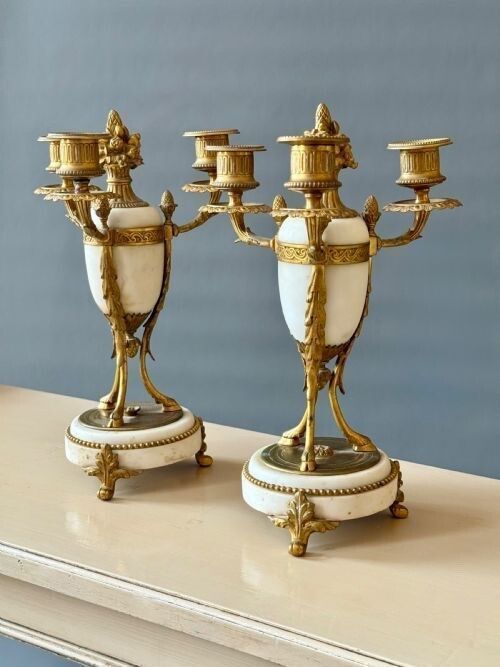
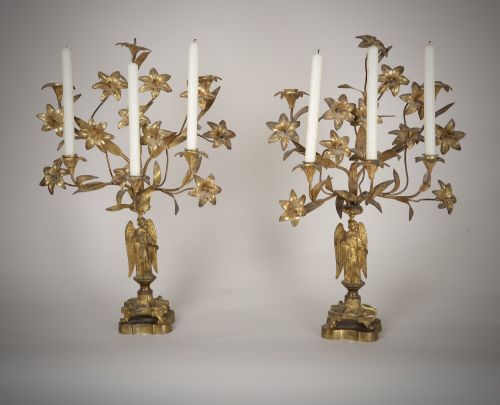
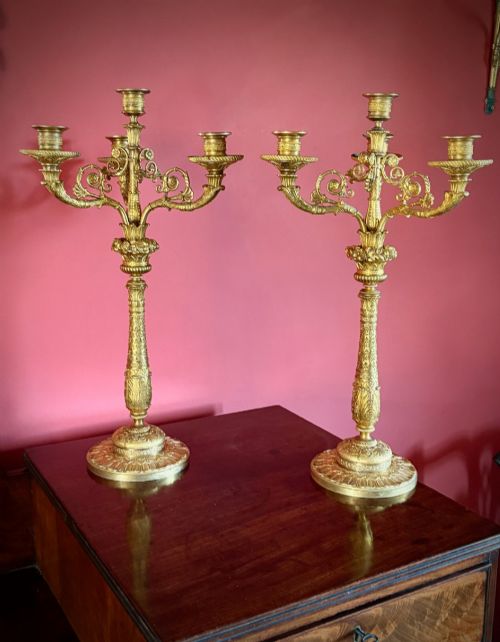
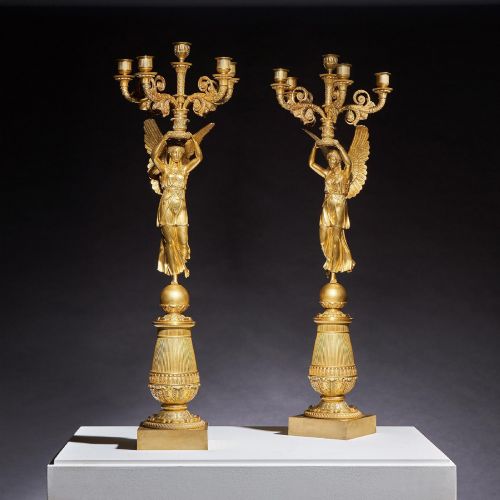
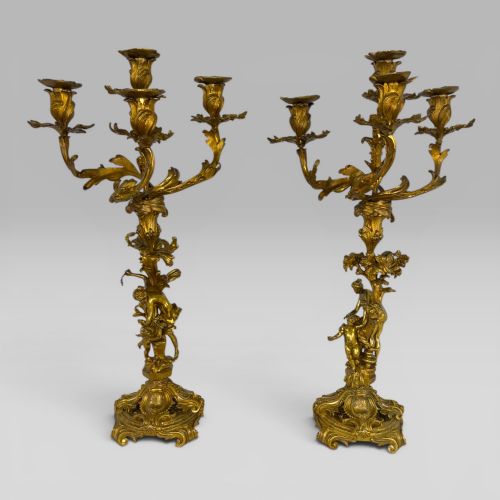
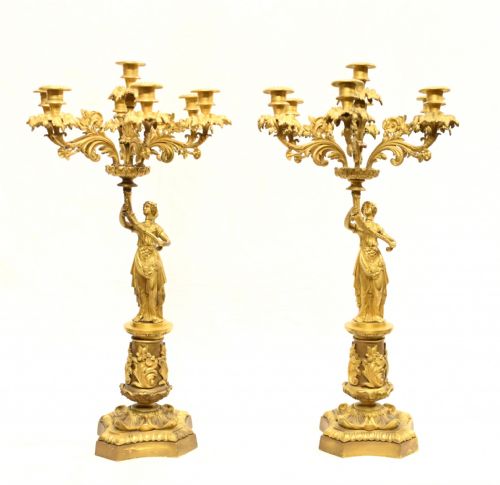
When you search for french gilt bronze candleholders, you encounter a selection of candelabra, candlesticks, and wall lights spanning the nineteenth century. These items range from single candlesticks to large multi-branch candelabra featuring figural elements such as cherubs, maidens, and animals.
The objects appearing on this page originate predominantly from nineteenth-century France, alongside related Victorian and Grand Tour pieces. Makers and designers drew inspiration from classical antiquity, the Renaissance, and the reigns of Louis XVI.
Pairs dominate the selection, designed to sit symmetrically on mantelpieces or side tables. Forms vary from simple single-socket sticks to elaborate five-light candelabra incorporating porcelain, marble, and patinated bronze alongside the central gilt metalwork.
How they were made
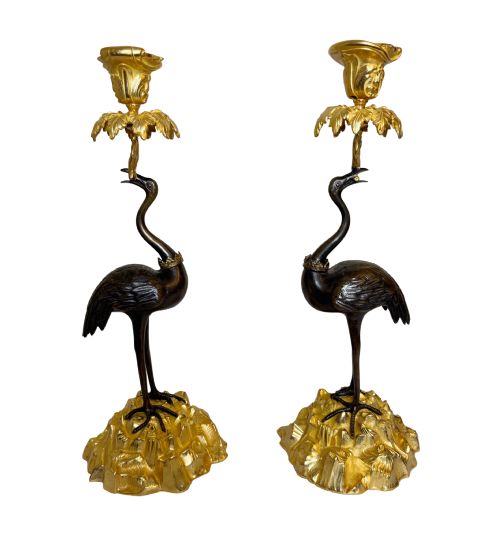
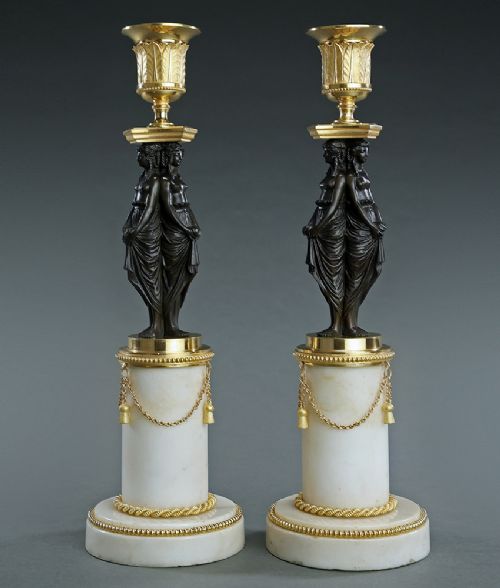
Foundries utilised cast bronze and brass, applying mercury gilding or electroplating to achieve the bright golden surface known as ormolu. Artisans combined this gilt finish with contrasting dark patinated bronze to create depth in figural and architectural components.
Marble and porphyry frequently form the heavy bases of these pieces, anchored by bronze mounts and feet. Selected examples integrate porcelain bodies, such as Chinese vases or Samson porcelain figures, fitted directly into the metal framework.
French Gilt Bronze Candleholders Retail Price Guide 2026
Typical asking prices for french gilt bronze candleholders among the pieces listed under this phrase on Sellingantiques today, from the lower quarter to the upper quarter. They describe what is for sale here now, not the wider market.
Storks and flamingos occasionally join the usual cherubs and maidens, holding candle sockets in unexpected avian beaks.
What varies in quality
The weight and selection of supplementary materials also indicate grade. Solid marble bases, substantial bronze gauge, and intricate mounting denote superior construction compared to lighter assemblies.
Pierre Philippe Thomire·Claude Clodion
The French Gilt Bronze Candleholders Glossary
- Ormolu
- Gilt bronze produced by applying a mercury and gold amalgam to a bronze object and heating it to drive off the mercury. This technique yields a deep, durable golden finish characteristic of French decorative arts.
- Candelabra
- A branched candlestick holding multiple lights on separate arms. These pieces often feature a central shaft flanked by symmetrical candle nozzles.
- Patinated bronze
- Bronze treated with chemicals or heat to produce a dark brown, green, or black surface colour. This dark finish provides contrast against bright gilt bronze mounts.
- Grand tour
- Nineteenth-century travel souvenirs purchased by affluent tourists visiting cultural sites in Europe. These items frequently include miniature bronzes and architectural marbles.
- Caryatid
- A sculpted female figure serving as an architectural support element. In these metalwork pieces, the figure often forms the main shaft of a candlestick.
French Gilt Bronze Candleholders: Frequently Asked Questions
How do I identify Louis XVI style pieces?
Louis XVI style metalwork incorporates classical architectural elements such as fluted columns, acanthus leaves, urns, and strict symmetry. Ornamentation draws directly from ancient Greek and Roman design.
Figures on these pieces typically wear classical drapery, and bases often feature geometric mouldings and square marble plinths.
Are these candleholders made of solid gold?
These items consist of bronze, brass, or other base metals coated in a thin layer of gold through gilding techniques. Solid gold would be too soft and heavy for structural candlesticks.
The gold surface provides the appearance of precious metal while the underlying bronze or brass provides structural strength.
How should I clean gilt bronze?
Dust gilt bronze gently with a soft, dry cloth to remove surface particles. Avoid chemical polishes, abrasives, and water, which can strip the thin gold layer or damage underlying patination.
Harsh cleaning agents remove the historic surface finish and expose the base metal beneath. Professional conservation is advisable for heavily soiled pieces.