
French Gilt Brass Clock
When you search for a french gilt brass clock, you enter a world of nineteenth-century horology spanning ornate mantel pieces and portable carriage timepieces.
French Gilt Brass Clock
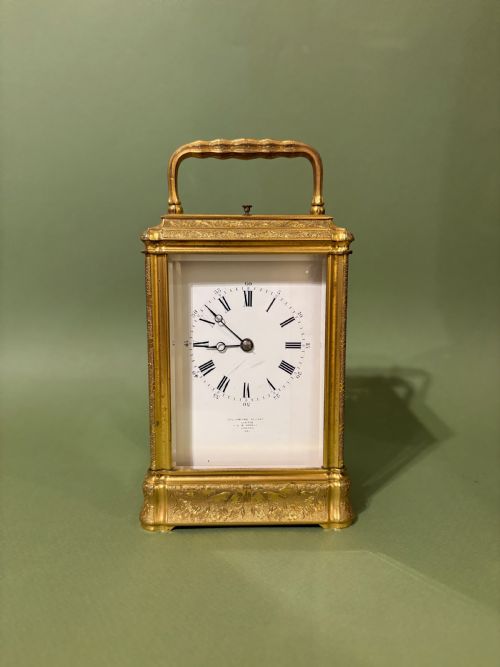
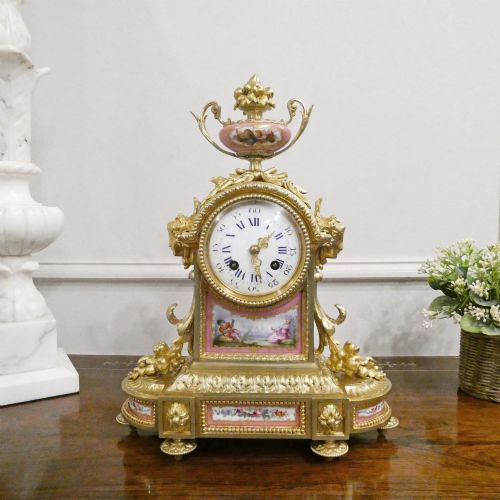
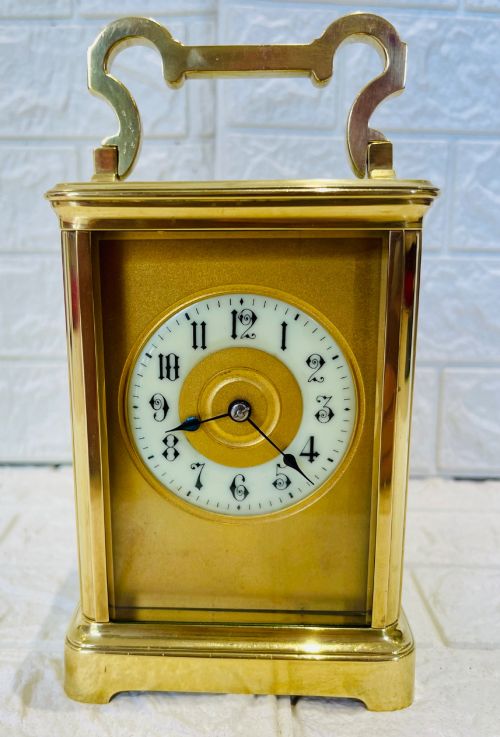
A french gilt brass clock encompasses a broad variety of nineteenth-century domestic timepieces, ranging from heavy mantel ornaments to portable carriage clocks housed in bevelled glass cases. The selection draws heavily upon Victorian tastes alongside continental movements spanning the middle decades of the eighteen-fifties through to the dawn of the twentieth century.
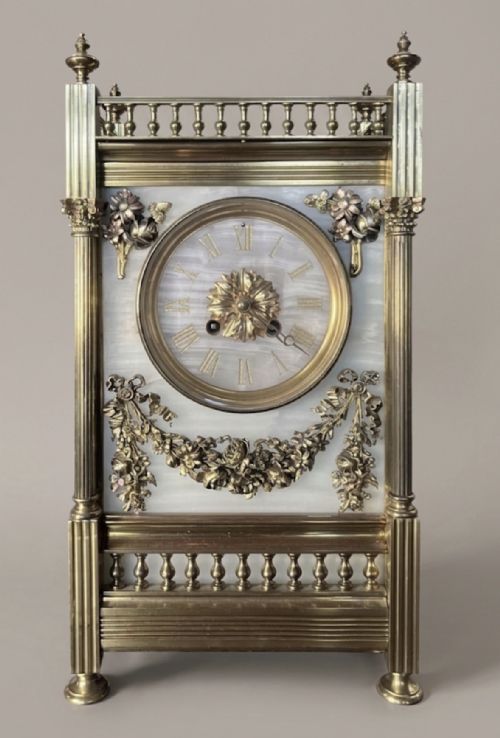
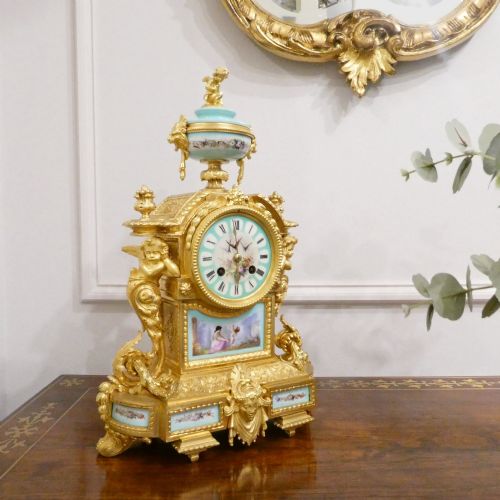
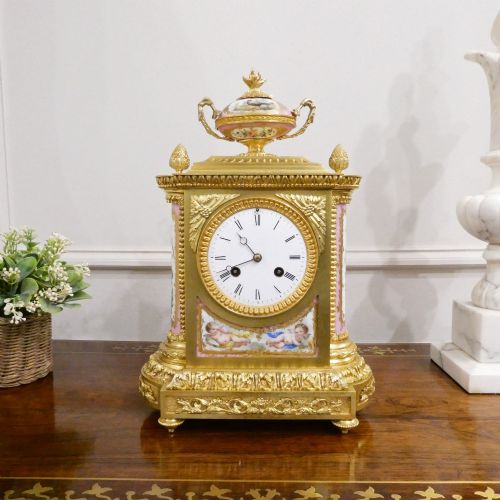
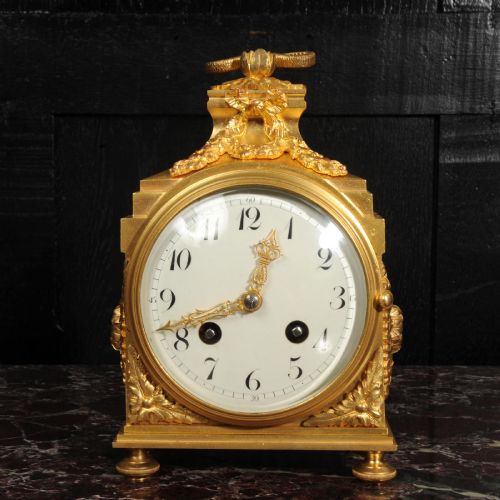
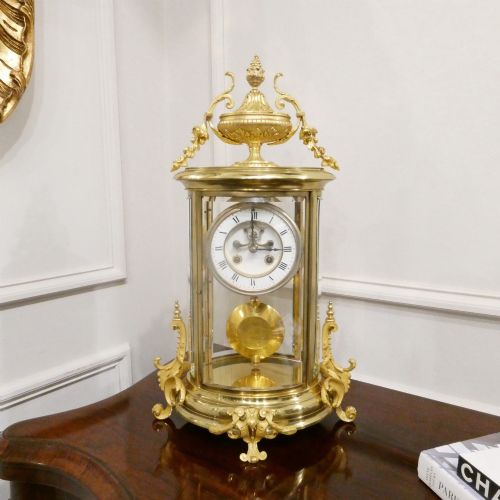
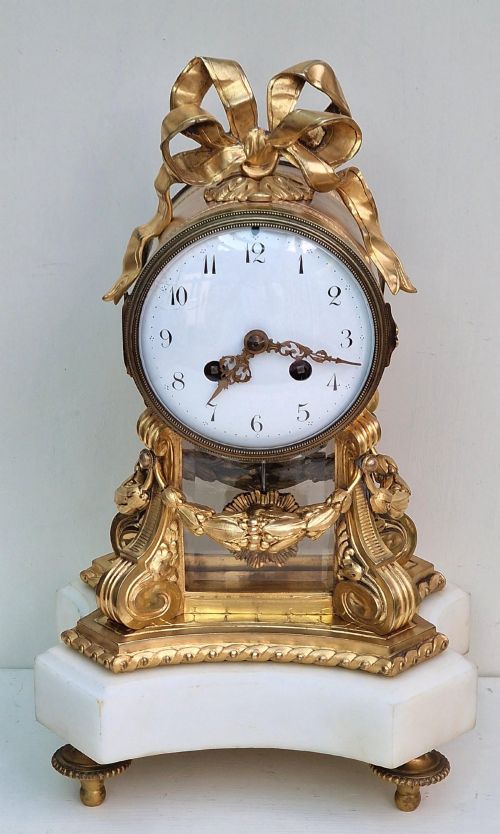
Buyers encountering this search phrase frequently meet mantel clocks styled in the French Rococo Revival or Louis XVI manner, often accompanied by matching porcelain urns or candelabra in garniture sets. Alternatively, architectural four-glass designs and brass carriage clocks with enamel dials appear with regularity across the inventory.
Materials and Construction
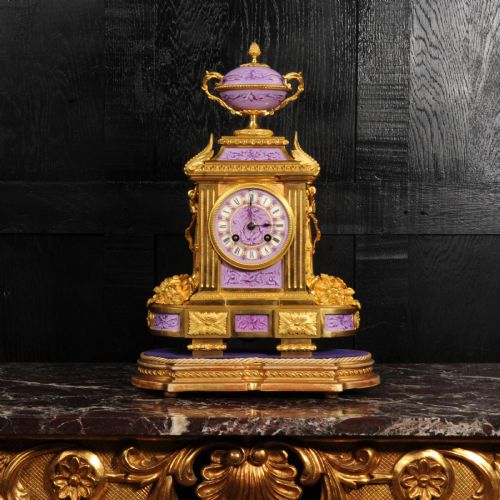
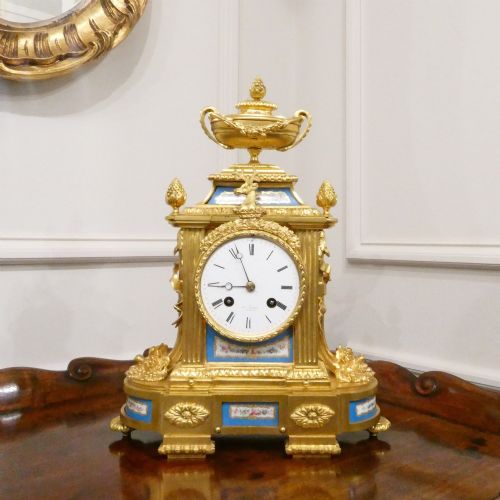
The physical structure relies fundamentally upon cast brass finished with ormolu, silver gilding, or polished gilt layers to create a luminous metallic surface. This framework frequently incorporates decorative panels of Sèvres porcelain, champlevé enamel, white or black marble, and tortoiseshell veneers.
Movements within these enclosures were typically engineered by established continental workshops using brass wheel trains and steel arbors, driving either platform escapements in smaller carriage clocks or pendulum regulation for larger architectural mantel pieces.
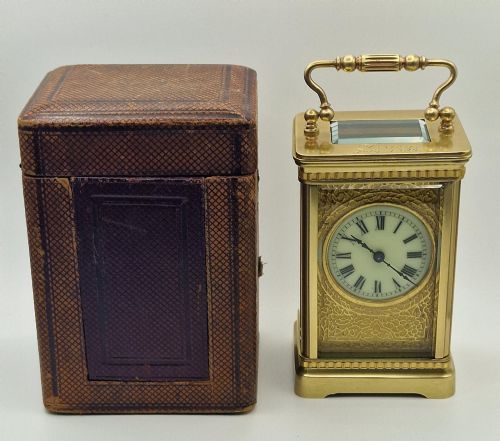
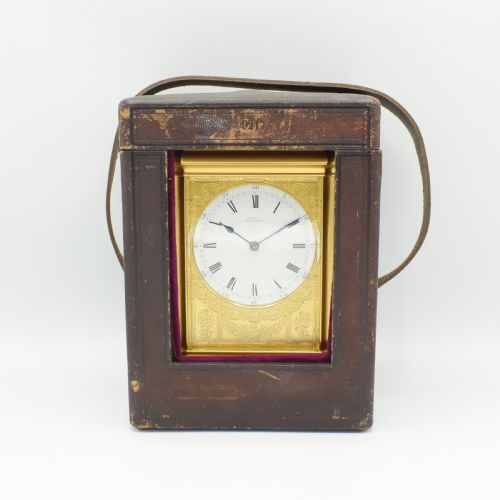
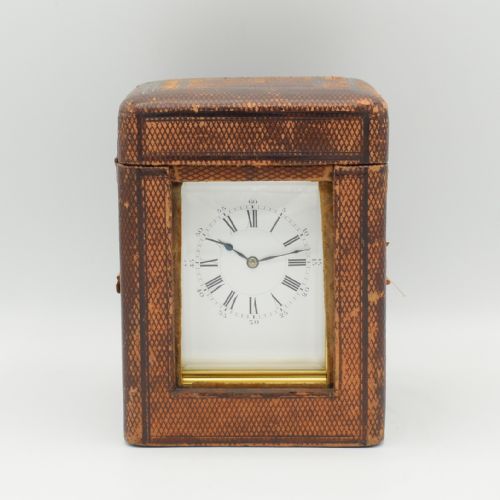
Some travel in leather cases so fitted they whisper of nineteenth-century packing trunks and bumpy carriage rides.
Evaluating Excellence
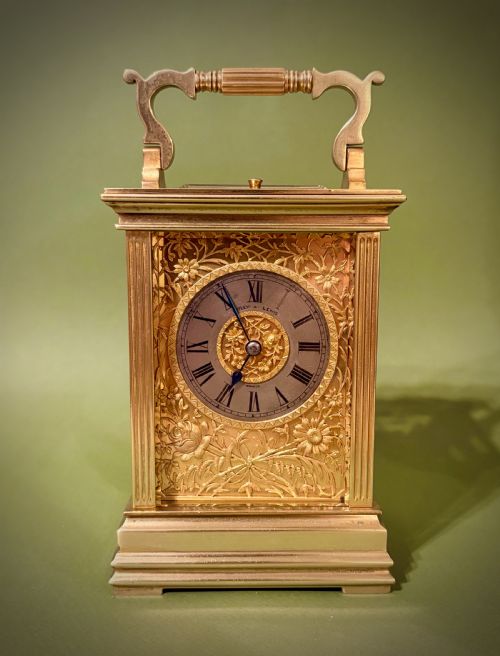
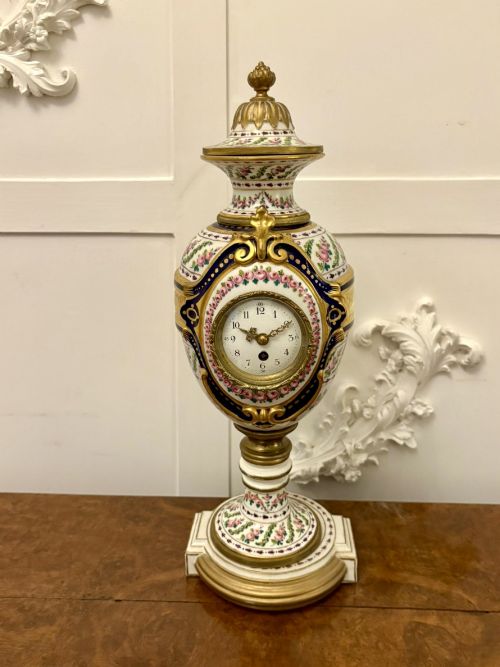
Superior examples are distinguished by the crispness of the cast mounts and the depth of the mercurial or fire gilding upon the brass surface, whereas lesser items display softer relief and simpler plating. Hand-painted porcelain panels and fully engraved dial masks elevate a piece above standard mass-produced variants.
The presence of named maker signatures on the movement backplate or dial signals a higher grade of horological craftsmanship. Completeness also dictates standard, with original travel cases for carriage clocks and matching multi-piece garniture sets commanding greater appreciation.
Henri Jacot·Achille Brocot·Henry Marc·Japy Freres·Samuel Marti·Richard et Cie·Etienne Lenoir·Vincenti et Cie·A D Mougin·Fritz Marti
The French Gilt Brass Clock Glossary
- Garniture
- A set comprising a central clock flanked by matching decorative objects such as urns or candelabra. These matched assemblies were designed to sit symmetrically upon a mantelpiece.
- Carriage clock
- A small, portable spring-driven timepiece fitted with a handle and glass panels for travel. They often feature repeating mechanisms that sound the hours and quarters on demand.
- Ormolu
- Finely ground high-carat gold mercury-gilded onto a bronze or brass base object. The technique produces a rich, durable metallic lustre characteristic of luxury French metalwork.
- Four-glass clock
- A mantel clock enclosed by four bevelled glass panes that expose the mechanical movement within. They typically feature delicate enamel dials decorated with floral garlands or Arabic numerals.
- Champlevé
- An enamelling technique where troughs are dug into the metal surface and filled with vitreous paste before firing. The resulting coloured patterns ornament the surrounding brass framework.
- Platform escapement
- A miniature self-contained regulating assembly used in portable timepieces instead of a hanging pendulum. It allows the clock to maintain accuracy while moving.
French Gilt Brass Clock: Frequently Asked Questions
How do I wind a carriage clock?
Most antique carriage clocks utilise a double-ended key to wind both the time train and the striking train through apertures in the base or backplate. Care should be taken not to over-wind the mainspring.
Turning the hands should generally be done clockwise, though delicate movements benefit from professional handling if resistance is encountered during winding.
What is a clock garniture?
A clock garniture is a decorative set consisting of a central mantel clock accompanied by two matching side pieces, such as candelabra or porcelain urns. These sets were designed to create a balanced centrepiece on a drawing room fireplace.
Materials commonly match across all items, pairing gilt brass with marble or hand-painted porcelain panels.
How do I date a French brass clock?
Dating relies upon stylistic cues such as the revival period indicated by the mounts, alongside serial numbers or maker marks stamped onto the brass movement backplate. Many nineteenth-century French makers entered exhibition records or earned medals that appear as stamped hallmarks.
Architectural styles ranging from Louis XVI revivals to Empire forms further narrow the manufacturing window.
Are these clocks suitable for daily use?
These nineteenth-century timepieces function reliably as daily timekeepers provided they have undergone professional servicing and cleaning. Regular oiling keeps the brass gear trains operating smoothly over time.
Carriage clocks require careful placement away from direct heat sources, while heavier marble and bronze mantel clocks need stable, level surfaces.