




French Furniture Piece
A french furniture piece brings continental proportion and intricate carving into a room, offering both practical utility and distinct period character.
French Furniture Piece
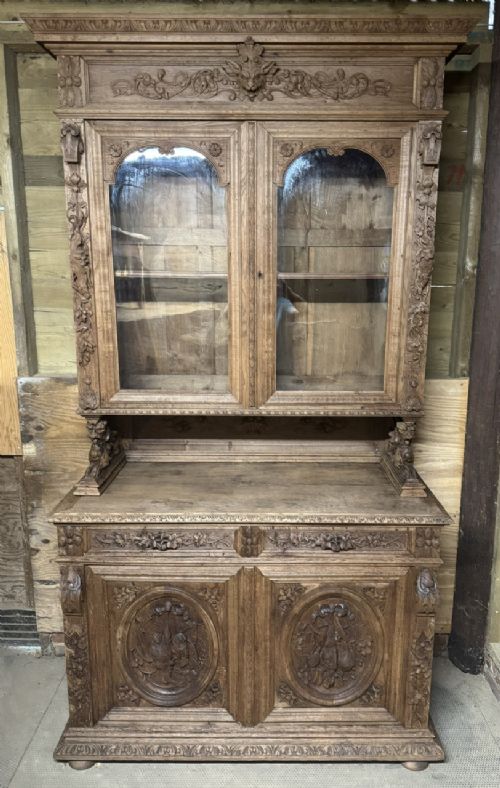
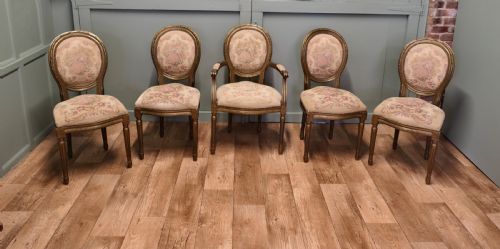
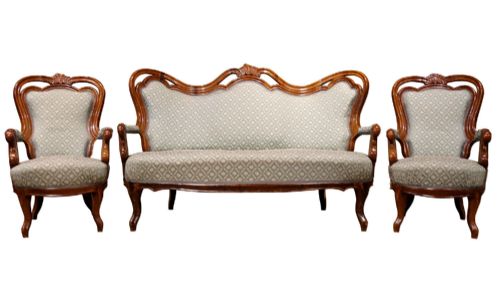
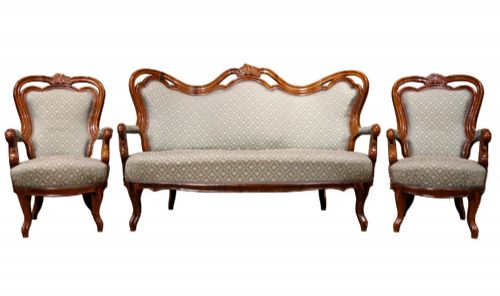
A french furniture piece encompasses large seating suites, cabinets, and miniature samples originating from the nineteenth and early twentieth centuries. The selection on this page leans heavily towards substantial salon suites, bedroom suites, and specialised chaises longues spanning multiple decades.
Buyers encounter distinct historical revivals such as Louis XV, Louis XVI, and Empire styles alongside streamlined Art Deco designs. Walnut and mahogany form the backbone of these pieces, often paired with giltwood, brass, and original textile upholstery.
Miniature salesman samples and apprentice chests also appear within this category, capturing the exact joinery and proportion of full-scale pieces in a smaller format. These diverse forms reflect the shifting tastes of French makers from the mid-nineteenth century through the 1930s.
Materials and Construction
Cabinetmakers utilised dense timbers like walnut, mahogany, burr walnut, and exotic veneers including zebrano and calamander to build structural carcasses and decorative facades. Marquetry inlay adds intricate visual patterns to drawer fronts and tabletops on select bedroom and salon pieces.
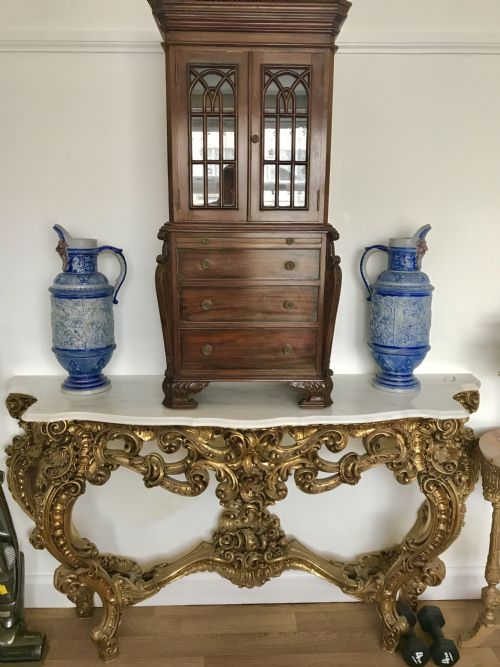
Giltwood frames and carved oak elements receive detailed hand-chizzling, demonstrating traditional joinery and deep relief work typical of nineteenth-century workshops. Brass mounts, glass panels, and leather or textile upholstery complete the construction of seating and display items.
French Furniture Piece Retail Price Guide 2026
Typical asking prices for french furniture piece among the pieces listed under this phrase on Sellingantiques today, from the lower quarter to the upper quarter. They describe what is for sale here now, not the wider market.
An apprentice carved a tiny bureau so precisely that even the miniature keyholes operate.
Judging Quality and Execution
The distinction between standard production and exceptional execution rests in the crispness of the hand-carving and the choice of timber veneers. Finely figured burr walnut and book-matched marquetry elevate a cabinet or bedroom suite above simpler solid-wood constructions.
The survival of original surfaces, such as paint, polish, or tapestry upholstery, preserves the integrity of the piece. Superior suites maintain balanced proportions across all matching elements, whether a five-piece salon set or an eleven-piece dining or seating arrangement.
The French Furniture Piece Glossary
- Duchesse Brisée
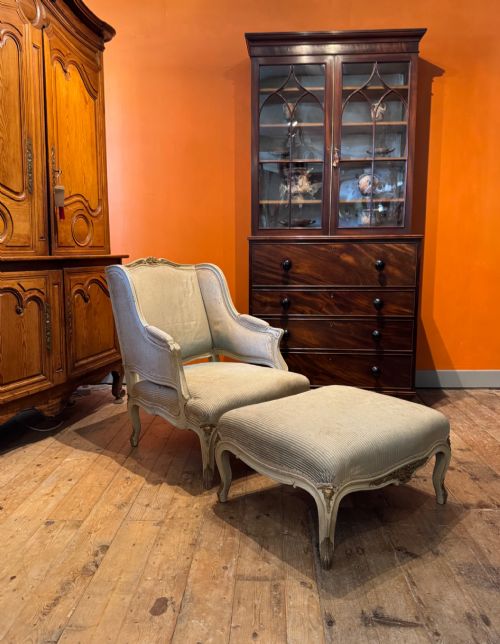
- A multi-part daybed or chaise longue designed for reclining, often splitting into an armchair and a footstool. This form became popular in refined eighteenth-century interiors and later revivals.
- French Polishing
- A wood finishing technique that applies numerous thin coats of shellac using a rubbing pad to achieve a high-gloss surface. It highlights the natural grain of mahogany and walnut timbers.
- Giltwood
- Timber that has been coated with a thin layer of gold leaf or gold paint. This finish is frequently found on nineteenth-century salon suites and ornate mirror frames.
- Marquetry
- Decorative veneer work arranged in geometric or pictorial patterns across wooden surfaces. Cabinetmakers use contrasting woods such as walnut and fruitwoods to create these designs.
- Apprentice Piece
- A small-scale model created by a craftsman to demonstrate skill and secure professional standing. These items replicate full-sized furniture with exact proportions and joinery.
French Furniture Piece: Frequently Asked Questions
What is a duchesse brisée?
A duchesse brisée is a multi-part chaise longue that combines an upholstered chair with an extended footrest or secondary stool. This configuration allows the user to recline fully while maintaining formal salon seating.
Versions span nineteenth-century revival periods, frequently featuring carved wooden frames and original fabric upholstery.
How do I date an antique French suite?
Dating relies on identifying the prevailing stylistic revival, such as Louis XV curves, Empire symmetry, or later Art Deco geometric lines. Timber selection and upholstery methods also provide clues to the decade of manufacture.
Nineteenth-century pieces often display heavy carving and giltwood, while 1930s examples utilise exotic veneers like zebrano and calamander.
Were miniature furniture pieces used as toys?
Miniature items were typically created as apprentice pieces, salesman samples, or specialised tabletop display cabinets rather than children's toys. Craftsmen used them to showcase their mastery of complex joinery and carving techniques.
These scaled-down chests and bookcases mirror the exact construction methods of full-sized furniture.
How do I care for polished walnut furniture?
Walnut furniture requires protection from direct sunlight and excessive humidity to prevent timber movement and fading. Regular dusting with a soft, dry cloth maintains the polished shellac or wax surface.
Avoid placing items near direct heat sources, which can dry out antique veneers and cause cracking.