



French Foot Stools
French foot stools bring classical European elegance to a room, offering low seating or a place to rest your feet.
French Foot Stools
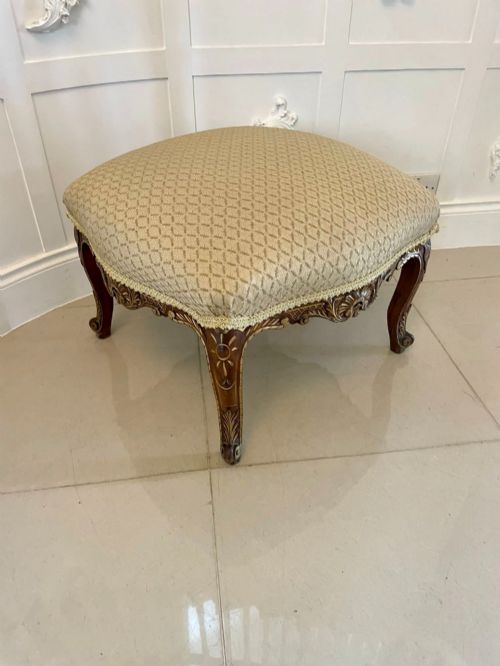
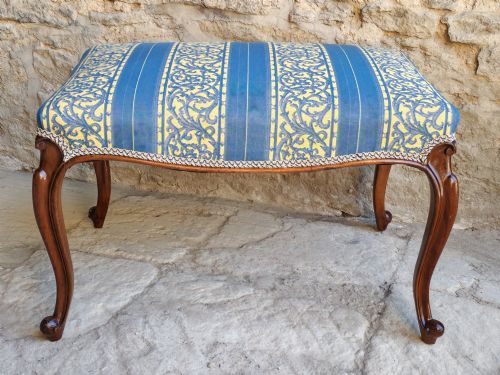
When you search for french foot stools, you encounter a range of low seating options spanning from the Regency period through to the early twentieth century. The selection includes pieces reflecting Louis XV style, Louis XVI style, and Victorian Rococo Revival aesthetics.
You are most likely to meet walnut and beech examples upholstered in various fabrics, velvet, and tapestry. Forms span from simple foot boards and poufs to carved freestanding stools and piano stools.
The origins stretch across the nineteenth century into the 1920s, showing both British interpretations of French taste and direct continental pieces. These items serve as functional foot rests and decorative low seats in traditional interiors.
Materials and construction
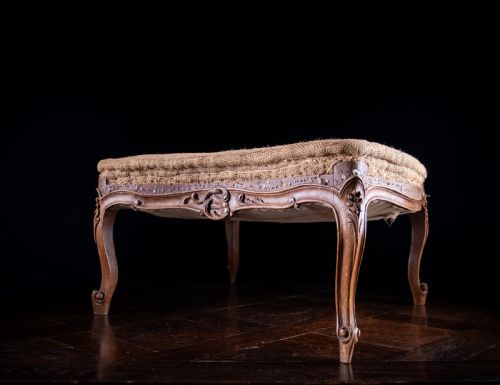
Carved timber frames form the structural core of these pieces, utilising woods such as walnut, mahogany, beech, and giltwood. Craftsmen shaped these materials into intricate period styles using traditional joinery and carving techniques.
Upholstery completed the pieces, employing fabrics like velvet, tapestry, hessian, and patterned textiles. Metal elements such as brass and ormolu mounts occasionally provided structural or decorative accents.
French Foot Stools Retail Price Guide 2026
Typical asking prices for french foot stools among the pieces listed under this phrase on Sellingantiques today, from the lower quarter to the upper quarter. They describe what is for sale here now, not the wider market.
Listings feature items spanning the Regency era, 1800, 1830, 1860, 1880, 1890, 1900, and 1920.
Assessing quality
The standard of carving distinguishes finer examples from simpler workshops, with crisp detailing in the wood or giltwood setting superior pieces apart. Timber selection also plays a role, where dense walnut and mahogany demonstrate greater substance than lesser woods.
Upholstery finish and the preservation of original or period-appropriate textiles contribute to the overall integrity of the piece. Proportion and structural balance determine whether a stool holds visual presence in a room.
The French Foot Stools Glossary
- Giltwood
- Wood covered with a thin layer of gold leaf. This finish appears frequently on pieces designed in formal continental styles.
- Curule stool
- An ancient X-shaped seat design revived in later furniture making. The curved legs cross to form a distinctive support structure.
- Ormolu
- Finely chased and gilt bronze used for decorative mounts. It adds metallic contrast to mahogany and other dark woods.
- Tapestry
- Heavy hand-woven fabric depicting pictorial or geometric designs. It is often utilised as period upholstery on traditional foot rests.
- Regency
- A British design period spanning the early nineteenth century. Furniture from this era often draws inspiration from classical antiquity.
French Foot Stools: Frequently Asked Questions
What is a french foot stool used for?
These low seats function primarily as foot rests placed before armchairs and sofas. They also serve as standalone decorative seats in bedrooms and drawing rooms.
Their compact size allows them to move easily around a room as needed for extra seating.
How do I identify a Louis XV style stool?
Louis XV style pieces typically feature characteristic flowing cabriole legs and asymmetrical carved ornamentation. The woodwork often exhibits organic motifs like scrolling foliage and floral patterns.
Construction from this design tradition emphasises curves rather than straight lines.
Are these stools suitable for daily use?
Solid timber construction makes these pieces durable for everyday resting of feet or occasional sitting. However, delicate gilt surfaces and antique upholstery require careful maintenance to prevent wear.
Placing them in low-traffic areas helps preserve fragile textiles and carved details.
What woods were commonly used?
Walnut, beech, and mahogany appear frequently in the framing of these nineteenth-century pieces. Giltwood and painted finishes were also applied to achieve specific decorative effects.
Secondary woods like beech served well for carved frames due to its fine grain.