



French Floral Parquetry
French floral parquetry brings together intricate timber work and classic Continental forms that elevate any room.
French Floral Parquetry
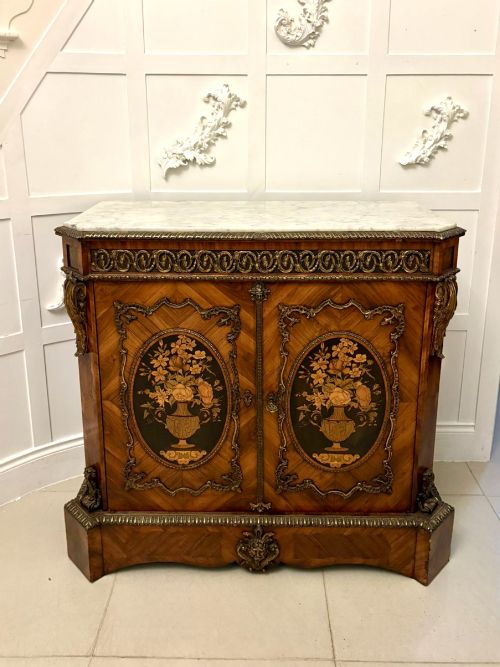
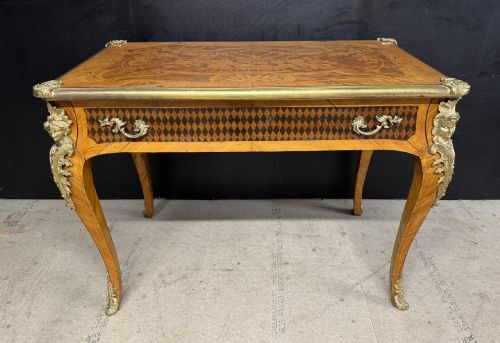
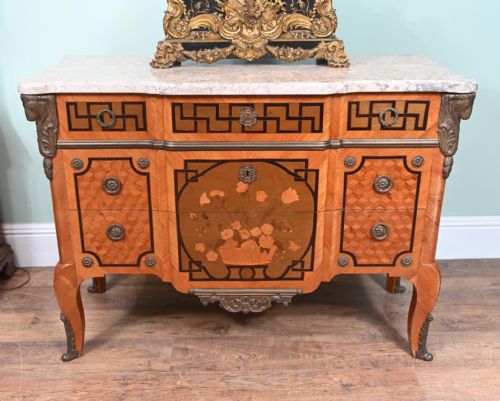
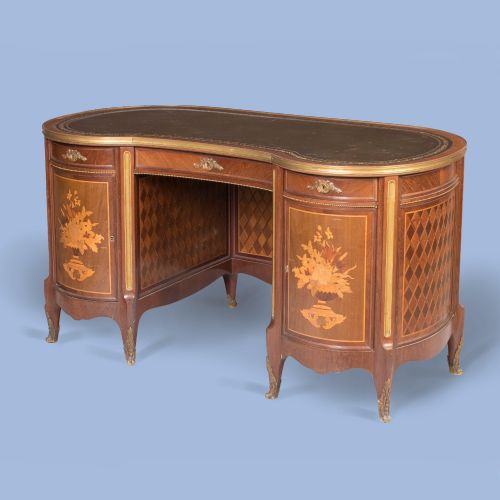
French floral parquetry comprises decorative items utilising precise wood veneers arranged to form botanical motifs and geometric patterns. These pieces span the nineteenth and early twentieth centuries, reflecting enduring design movements across various domestic forms.
Buyers encountering this search phrase will regularly find items such as occasional tables, side cabinets, and bureaux. The selection demonstrates distinct historical revivals including Louis XV and Louis XVI styles.
The objects originate primarily from French workshops of the eighteen-eighties through to nineteen-twenty. Walnut, kingwood, and rosewood form the structural and decorative foundation for these intricate floral compositions.
Materials and construction
Craftsmen built these items using a foundation of walnut or softer timbers overlaid with exotic veneer selections like kingwood, tulipwood, and rosewood. Contrasting wood tones allowed artisans to shade botanical petals and leaves naturally without artificial stains.
Gilt bronze and ormolu mounts frequently highlight the cabinetry, framing corners and enclosing marble tops. Brass details further accentuate the structural lines of desks, commodes, and side cabinets.
French Floral Parquetry Retail Price Guide 2026
Typical asking prices for french floral parquetry among the pieces listed under this phrase on Sellingantiques today, from the lower quarter to the upper quarter. They describe what is for sale here now, not the wider market.
Listings incorporate items spanning the nineteenth and early twentieth centuries, featuring walnut, kingwood, and marble materials across multiple revival styles.
Evaluating the craftsmanship
The precision of the veneer work dictates the standing of each piece, distinguishing simple geometric layouts from elaborate multi-timber floral compositions. Tighter joints between individual veneer segments indicate superior cabinet-making standards.
Mount quality separates standard production from finer outputs, visible in the sharpness of the ormolu castings and the integration of marble surfaces. Heavier, more detailed bronze hardware generally accompanies superior timber framing.
Paul Sormani
The French Floral Parquetry Glossary
- Parquetry
- Geometric wood inlay work arranged in repeating patterns. This technique forms the background fields upon which floral marquetry motifs are displayed.
- Marquetry
- The art of applying small pieces of veneer to a structure to form pictorial designs. Floral arrangements and urns are typical subjects executed in contrasting timbers.
- Ormolu
- Gilt bronze mounts applied to furniture edges and corners. These metallic elements protect vulnerable areas and enhance the decorative aesthetic.
- Kingwood
- A dense, richly figured timber native to Brazil utilised extensively in fine cabinet-making. Its dark brown tones feature prominent contrasting lighter streaks.
- Meuble d’appui
- A French term for a sideboard or support cabinet designed to stand against a wall. These cabinets often feature marble tops and elaborate parquetry doors.
French Floral Parquetry: Frequently Asked Questions
What is French floral parquetry?
French floral parquetry refers to decorative furniture embellished with precise wood veneers arranged into botanical and geometric patterns. These items originate predominantly from nineteenth and early twentieth-century French workshops.
Artisans utilised contrasting exotic timbers such as kingwood and rosewood to create naturalistic shading within the floral designs. Such pieces include occasional tables, cabinets, and desks.
How do I identify Louis XVI style?
Louis XVI style furniture is characterised by straight tapered legs, neoclassical symmetry, and restrained architectural details. Ormolu mounts on these pieces often feature classical motifs like ribbons, bead reels, and acanthus leaves.
This aesthetic contrasts with the earlier curving lines typical of Louis XV designs. Parquetry patterns on Louis XVI items tend towards orderly geometric arrangements framing floral panels.
Where should I place a parquetry table?
Parquetry tables suit principal reception rooms and studies where their detailed wood surfaces receive adequate light. Placing them away from direct sunlight preserves the natural tones of the delicate timber veneers.
Nest of tables offer flexible placement options as individual surfaces can be separated when entertaining. Side cabinets and commodes function effectively against prominent walls to display decorative objects.
What woods were used in these pieces?
Cabinet-makers relied on a foundation of walnut or oak overlaid with decorative veneers such as kingwood, tulipwood, and rosewood. These imported timbers provided the contrasting colour variations necessary for detailed floral marquetry.
Ormolu and brass additions complemented the warm timber tones. Marble tops frequently finished the upper surfaces of cabinets and commodes.