




French Entryway Furniture
French entryway furniture brings architectural presence and refined utility to a hallway through console tables, hall benches, and umbrella stands.
French Entryway Furniture
French entryway furniture encompasses practical pieces designed for hallways and vestibules, ranging from monumental console tables to rustic benches and coat stands. When searching for french entryway furniture, buyers encounter items built to furnish high-traffic transitional spaces with distinctive continental character.
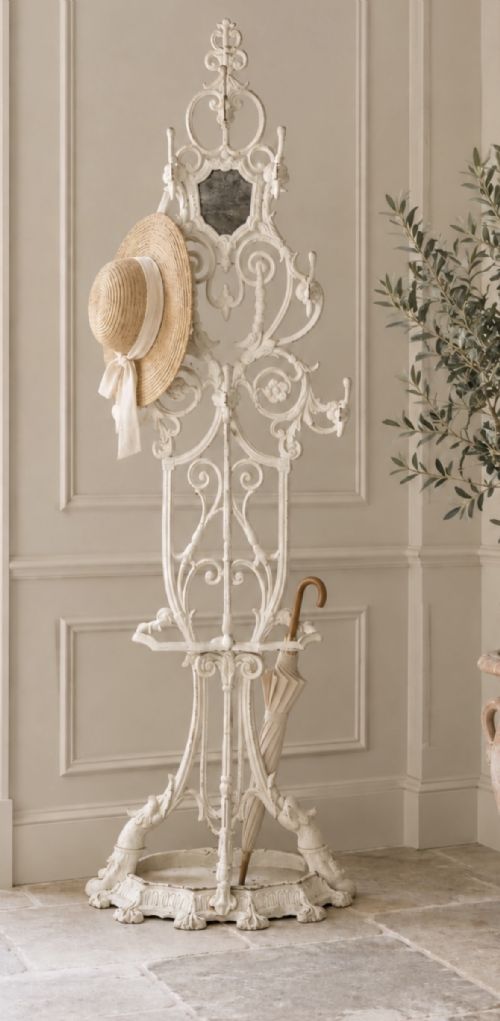
The pieces listed span multiple centuries, capturing the shift from formal eighteenth-century walnut hall tables to nineteenth-century console tables and early twentieth-century wrought iron stands. Regional expressions like French provincial country pine benches appear alongside grander urban forms such as French Empire flame mahogany consoles.
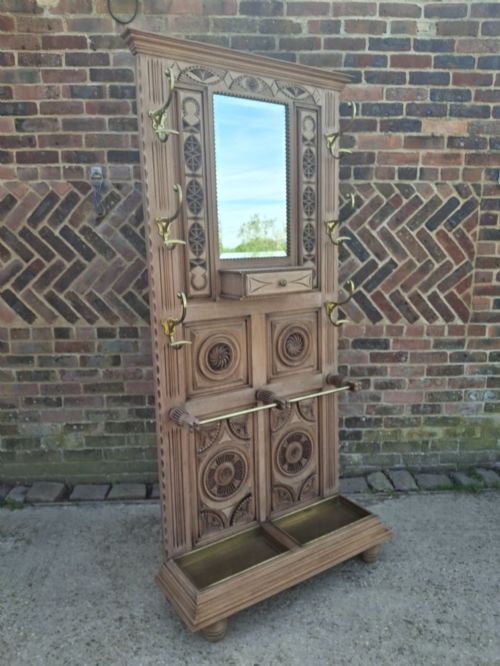
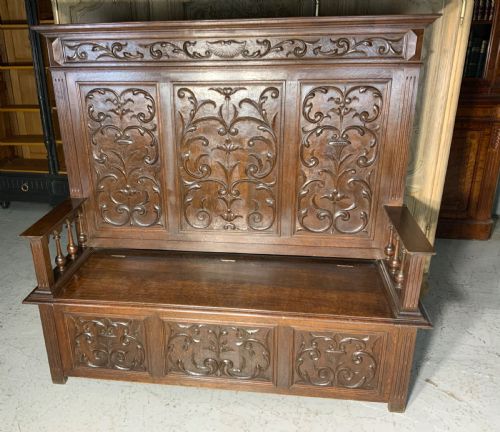
Console tables dominate the selection, frequently paired with marble tops and matching mirrors to create a striking first impression upon entering a home. Hall stands and storage benches provide functional utility, incorporating provisions for coats, umbrellas, and hidden compartments beneath seating.
How they were made
Cabinetmakers utilised dense hardwoods including oak, walnut, and mahogany, often shaping the timber into architectural forms or delicate marquetry patterns. Country pieces demonstrate scratch-built construction in pine, relying on straightforward joinery rather than courtly veneering techniques.
Surface decoration defines many examples, employing parcel gilt accents, painted finishes, and elaborate hand-carving in styles from Rococo Revival to French Renaissance. Wrought iron emerges in later twentieth-century pieces, forged into linear frames for hall stands.
Inlay and stone masonry complete the fabrication process, integrating fossil marble or white marble slabs into the tops of console tables. Glass mirrors accompany several console tables, framed in carved giltwood to reflect light in narrow hallways.
French Entryway Furniture Retail Price Guide 2026
Typical asking prices for french entryway furniture among the pieces listed under this phrase on Sellingantiques today, from the lower quarter to the upper quarter. They describe what is for sale here now, not the wider market.
A faux bamboo hallstand from nineteen-ten proves that Victorians and Edwardians loved botanical mimicry just as much as grand mahogany.
What varies in quality
The grade of materials sets the baseline for quality, distinguishing dense flame mahogany veneers and solid carved walnut from simpler painted pine or faux bamboo. Superior console tables feature thick slabs of fossil or decorative marble fitted precisely to the timber frame.
Execution of decorative detail separates standard production from exceptional work, seen in the depth of hand-carved foliage and the crispness of parcel gilt highlights. Integrated elements such as matching mirrors and specialised hardware demonstrate cohesive design ambition.
Structural integrity and original surfaces dictate value, with untouched patinas and robust joinery holding more appeal than heavily restored or altered frames. Scratch-built vernacular items rely on honest country construction, whereas formal Empire pieces demand meticulous proportion and symmetry.
The French Entryway Furniture Glossary
- Console table
- A table designed to be fixed against a wall, frequently supported by two front legs and secured with wall brackets. These pieces often feature marble tops and form the centrepiece of a hallway scheme.
- Demi-lune
- A half-moon shape characteristic of certain console tables and tabletops. This curved profile allows furniture to sit flush against a wall while softening the rectangular geometry of a hallway.
- Parcel gilt
- A surface treatment where selected areas of wood or gesso are highlighted with gold leaf. This technique accentuates carved details and mouldings against a contrasting painted or dark wood ground.
- Fossil marble
- A type of limestone containing organic fossils, polished to create a decorative stone surface. It appears frequently on the tops of nineteenth-century console tables.
- Marquetry
- The art of applying pieces of veneer to a structure to form decorative patterns and pictures. Makers utilised contrasting timber tones to build geometric or floral motifs on tabletop surfaces.
French Entryway Furniture: Frequently Asked Questions
What is a French console table?
A French console table is a wall-mounted or freestanding ledge table designed specifically for display and architectural accent in reception rooms and hallways. They often feature decorative marble tops and carved wooden bases.
Historically placed beneath mirrors, these tables provided a surface for lighting and decorative objects upon entering a residence.
How do I use a hall bench?
A hall bench serves as both a seat for putting on footwear and a storage unit for household items. Many period examples incorporate hinged seats hiding storage compartments.
Positioned near the main entrance, they manage clutter while establishing the decorative tone of the interior.
Are marble tops original?
Marble tops on French console tables are generally original to the piece, cut to fit the specific contours of the wooden base. The thickness and stone variety align with the period of manufacture.
Inspect the underside of the marble and its seating rebate to understand how the stone interacts with the frame.
How do I date a hall stand?
Dating a hall stand requires examining the materials, fixings, and stylistic cues present in the construction. Pieces utilising wrought iron point towards twentieth-century modernism, while carved oak examples lean toward the nineteenth century.
Hardware types and timber preparation methods offer further confirmation of the era in which the piece was built.