

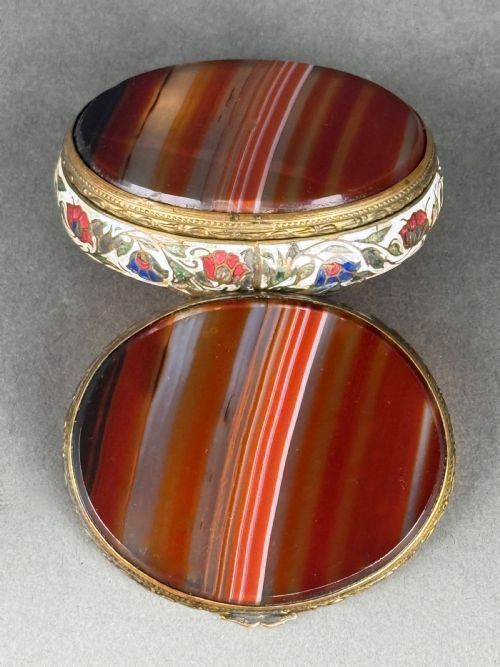


French Enamelled Box
A french enamelled box brings together fine metalwork and vitreous colour, offering a tactile piece of continental history for your dressing table.
French Enamelled Box
When you search for a french enamelled box, you encounter small personal containers designed for holding trinkets, pills, jewellery or powder.
The selections span from nineteenth-century glass trinket boxes in blue, green, and cranberry hues to champleve enamel pieces and Art Deco compacts.
Many items originate from nineteenth-century France, reflecting Victorian tastes, French Rococo Revival styles, and Belle Epoque design.
How they were made
Makers utilised materials such as brass, gilt bronze, sterling silver, porcelain, and coloured glass as foundations for intricate enamel work.
Techniques ranged from champleve enamel, where metal troughs are filled with vitreous paste, to hand-painted porcelain panels and guilloche patterns beneath translucent layers.
Metal mounts, hinges, and ormolu frames were cast and fitted to house the delicate glass and ceramic bodies securely.
French Enamelled Box Retail Price Guide 2026
Typical asking prices for french enamelled box among the pieces listed under this phrase on Sellingantiques today, from the lower quarter to the upper quarter. They describe what is for sale here now, not the wider market.
Several brass vesta boxes incorporate risqué miniature paintings hidden beneath sliding lids for private amusement.
What varies in quality
The standard of a french enamelled box depends on the crispness of the casting in the metal mounts and the precision of the enamel application.
Hand-painted details, such as miniature portraits or floral motifs, show considerable variation between standard production pieces and finer artisan creations.
The weight and integration of brass, gilt bronze, or silver hardware determine the structural integrity and overall finish of the container.
Jean-Baptiste Isabey·Belinda Gentle
The French Enamelled Box Glossary
- Champleve enamel
- An enamelling technique where troughs or cells are hollowed out in the surface of a metal object and filled with vitreous enamel before firing.
- Guilloche enamel
- A decorative engraving technique covered with transparent enamel, allowing the geometric pattern underneath to show through clearly.
- Ormolu
- Gilt bronze mounts used extensively to edge and support glass and porcelain boxes during the nineteenth century.
- Vesta case
- A small pocket container specifically designed to hold matches and keep them dry.
- Jewellery casket
- A larger container, often lined with silk or velvet, intended for storing precious ornaments on a dressing table.
French Enamelled Box: Frequently Asked Questions
What were french enamelled boxes used for?
These containers served practical and social functions in daily life, holding small valuables like rings, loose powder, snuff, or matches.
Wealthy owners kept them on dressing tables, desks, or carried them in pockets as fashionable accessories during the nineteenth and early twentieth centuries.
How do I date a french enamelled box?
Dating relies on identifying stylistic markers such as Victorian revival curves, Art Nouveau organic lines, or geometric Art Deco chrome work.
Materials also offer clues, as specific coloured glass bodies and champleve techniques align closely with late nineteenth-century production periods.
How should I clean my enamelled box?
Enamel and gilt bronze require gentle maintenance using a soft, dry cloth to remove dust without damaging the delicate metallic surfaces or painted scenes.
Moisture and harsh chemical cleaners must be avoided entirely to preserve the integrity of the antique glass, brass, and enamel components.
What is the difference between a trinket box and a pill box?
Trinket boxes generally offer larger capacities for storing jewellery, hairpins, or dressing table accessories, often featuring glass or porcelain bodies with hinged lids.
Pill boxes and snuff boxes are substantially smaller, designed to fit easily into a pocket or evening bag for personal use throughout the day.