




French Enamel Charm
A french enamel charm brings miniature colour and exquisite metalwork to a chain.
French Enamel Charm
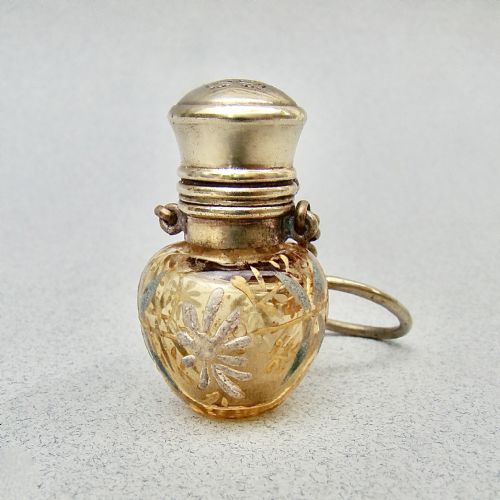
A french enamel charm takes many forms on this page, spanning pendants, medals, scent bottles, dressing table jars, and curtain tie backs. These pieces reflect diverse origins across the 18th century, 19th century, and early decades of the 20th century.
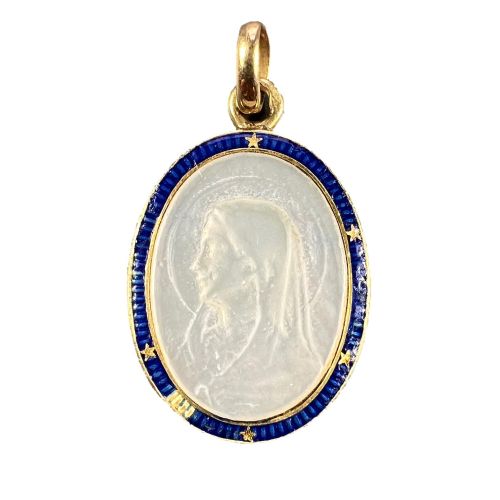
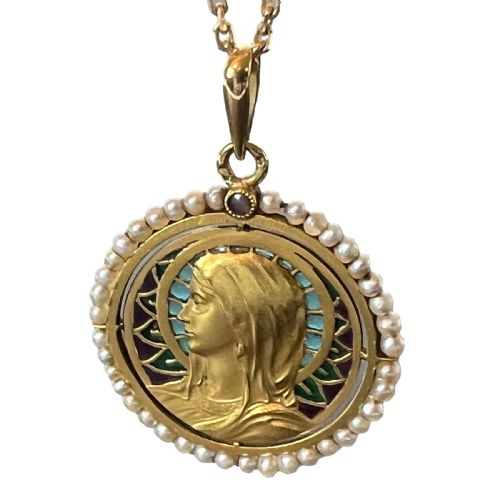
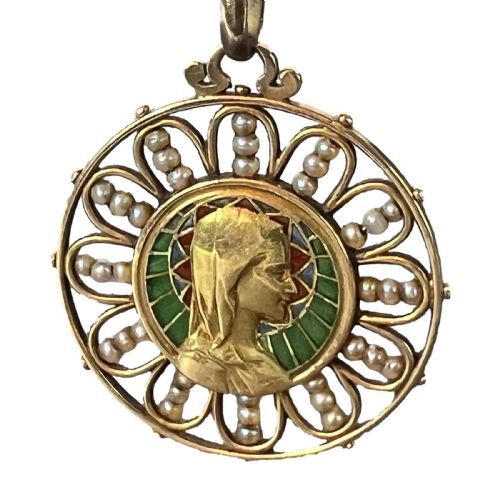
The buyer meets personal items most frequently here, particularly 18K yellow gold pendants depicting religious figures such as the Virgin Mary and the Madonna and Child. Other common designs feature coats of arms, gambling cards, love hearts, and birds.
Moser glass and Bristol blue glass also appear among the objects, alongside gilded metal and seed pearls. Styles range from Georgian and Victorian through to Art Nouveau, Belle Epoque, and Art Deco.
How they were made
Maker utilisation of 18K yellow gold forms the foundation for many of these small pendants and charms. Vitreous enamel and plique-a-jour enamel add translucent colour that catches the light through delicate metal cells.
Glass is shaped into scent bottles and dressing table jars, sometimes combined with gilding and enamelling. Seed pearls and mother of pearl provide further textural contrast against the warm tone of yellow gold.
French Enamel Charm Retail Price Guide 2026
Typical asking prices for french enamel charm among the pieces listed under this phrase on Sellingantiques today, from the lower quarter to the upper quarter. They describe what is for sale here now, not the wider market.
Even gambling cards find a permanent place in gold and enamel, ready to bring a lucky hand to a nineteenth century pocket.
What varies in quality
The refinement of the enamel work dictates much of the distinction between pieces, particularly in the precision of plique-a-jour cells and the depth of colour in red or white coatings. Clarity and preservation of the glass elements also play a significant role.
The intricacy of the gold mounting and the presence of fine details like seed pearls separate simpler items from more elaborate medals and pendants.
The French Enamel Charm Glossary
- Plique-a-jour
- An enamelling technique where enamel is applied in cells without a backing, resembling miniature stained glass. This lets light pass directly through the coloured sections.
- Vitreous enamel
- Glass powder fused to a metal surface through high heat. It creates a durable, glossy coloured finish.
- Seed pearl
- A very small natural pearl, often utilised in historic jewellery to accent borders and motifs. These pearls add a soft lustre.
- Chatelaine
- A decorative belt hook worn with suspended utilitarian items like scent bottles or keys. It served both a practical and ornamental purpose in historical dress.
French Enamel Charm: Frequently Asked Questions
How were antique scent bottles used?
Antique scent bottles held liquid perfumes and were carried on chatelaines or kept on dressing tables for daily grooming.
They allowed the owner to refresh their fragrance or combat unpleasant odours while away from home.
What motifs appear on these charms?
Common motifs include religious figures like the Virgin Mary and the Madonna and Child, alongside coats of arms and gambling cards.
Other designs incorporate floral elements, hearts, birds, and geometric patterns influenced by Art Nouveau and Art Deco styles.
What materials make up these pieces?
These pieces primarily utilise 18K yellow gold, vitreous enamel, glass, and seed pearls. Gilded metal and mother of pearl also appear across various items.
The combination of coloured enamel and precious metal defines the aesthetic of these historic French objects.