





French Empire Revival Table
These french empire revival table pieces bring monumental presence and neoclassical brass mounts straight into your room.
French Empire Revival Table
A french empire revival table encompasses forms like card tables and console tables dating primarily from the nineteenth century. These objects draw heavily on earlier neoclassical vocabulary, pairing architectural proportions with rich surface treatments. Collectors search for these pieces to anchor a room with distinct nineteenth century character.
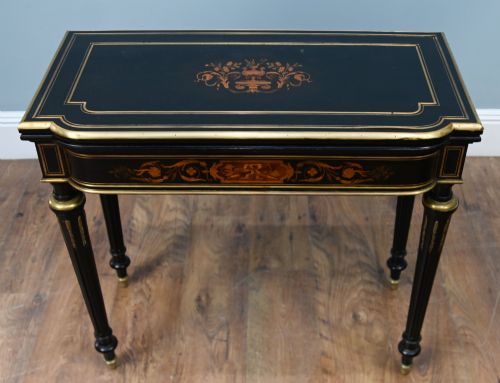
The versions most commonly met on this page include ebonised card tables featuring marquetry and burr birch console tables from the eighteen eighties. Pieces span the Victorian period and Napoleon III eras, often reflecting French Second Empire or Egyptian revival influences. Such tables served as functional furniture and grand decorative centerpieces in period salons.
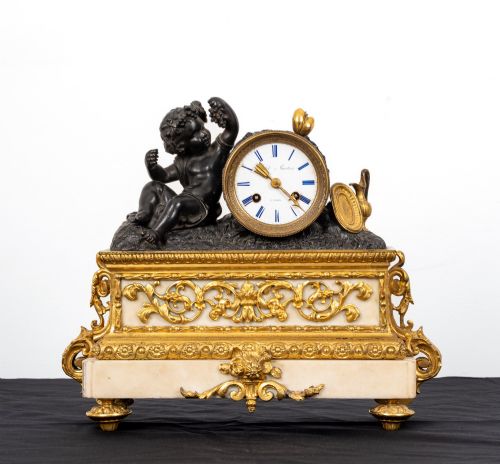
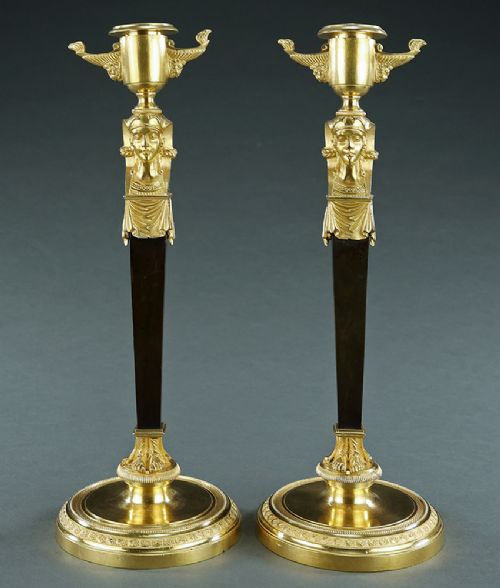
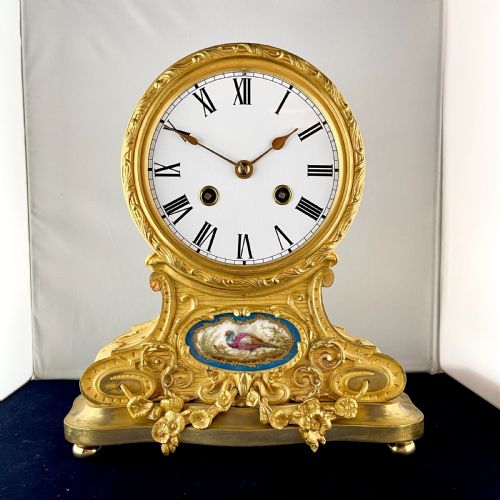
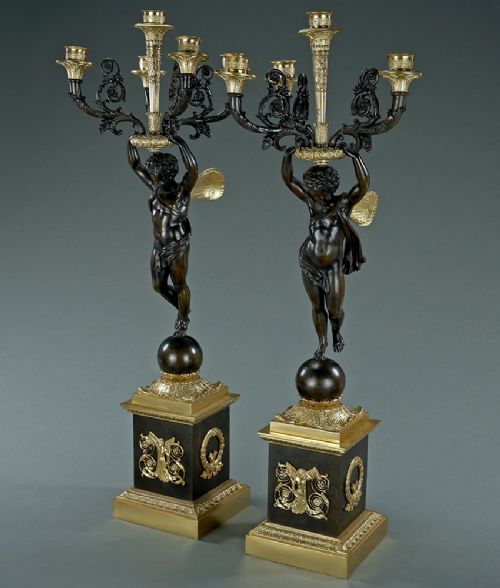
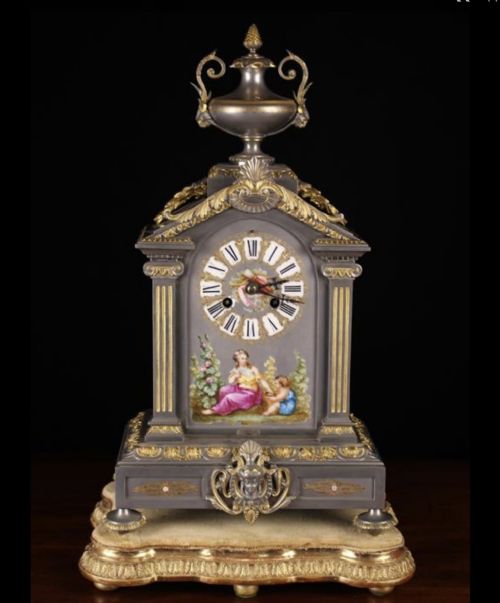
Alongside tables, related decorative arts like mantel clocks and candelabra frequently share the same stylistic markers. These items demonstrate the continuity of empire design across various household objects during the late nineteenth century. Each piece provides a tangible link to the ornate interiors of the period.
Materials and construction
Makers utilised timber foundations veneered in burr birch or finished with ebonised surfaces and detailed marquetry. These wooden structures provided sturdy frames for elaborate reception rooms, supporting heavy decorative schemes. Cabinetmakers employed traditional joinery techniques suited to complex geometric layouts.
Metalwork played a defining role, utilising cast bronze, gilt bronze, and ormolu for mounts and accents. These metallic elements were chased and gilded to create sharp contrasts against dark wood or marble tops. Workshops combined these disparate materials to achieve the opulent visual weight characteristic of the style.
French Empire Revival Table Retail Price Guide 2026
Typical asking prices for french empire revival table among the pieces listed under this phrase on Sellingantiques today, from the lower quarter to the upper quarter. They describe what is for sale here now, not the wider market.
Listings feature items from the nineteenth century, including the Victorian period, eighteen sixties, eighteen seventies, and eighteen eighties.
Evaluating quality and execution
The distinction between tiers rests upon the crispness of the bronze chasing and the depth of the ormolu gilding. Superior examples display sharply defined motifs in metal mounts without softness in the cast. Lesser pieces rely on shallow casting and flat surface finishing.
Timber selection and veneer matching dictate the standard of the tables themselves. Fine grain patterns in burr birch or precise execution in ebonised marquetry separate master workshops from mass production. The integration of stone elements, such as fitted marble tops, further elevates the overall execution.
Siffel and Cartier·Japy Freres·Eurotrope Bouret
The French Empire Revival Table Glossary
- Ormolu
- Finely ground high-carat gold mercury-gilded onto cast bronze. This technique creates a rich golden finish characteristic of nineteenth-century decorative arts.
- Marquetry
- The art of applying pieces of veneer to a structure to form decorative patterns and pictures. Craftsmen used various tinted woods to achieve intricate geometric or floral designs.
- Ebonised
- Timber treated to resemble ebony through staining and polishing processes. This dark finish provided a dramatic background for gilt bronze mounts.
- Gueridon
- A small antique table supported by one or more columns or figures. These pieces functioned widely as candle stands or small display tables in formal rooms.
- Console table
- A table fixed to a wall with the support of front legs or decorative brackets. They typically stood beneath mirrors or in entrance halls during the nineteenth century.
French Empire Revival Table: Frequently Asked Questions
What defines a french empire revival table?
These tables are nineteenth-century pieces that reinterpret classical neoclassical and empire designs through rich timbers and metal mounts.
They reflect the revival movements of the Victorian and Napoleon III eras, focusing on monumental proportions and decorative presence.
Where were these tables placed originally?
Console tables stood against walls in grand reception rooms, often positioned beneath large decorative mirrors.
Card tables occupied drawing rooms, unfolding to accommodate evening games and social gatherings.
How do I care for ormolu and gilt bronze?
Dust metal surfaces gently with a soft, dry cloth to prevent the accumulation of abrasive particles.
Avoid chemical polishes and liquid cleaners, which can strip the delicate mercury gilding from the bronze base.
How can I tell a console table from a card table?
Console tables are designed to remain against a wall and typically feature a fixed top with structural wall fixings or front legs only.
Card tables feature hinged tops that fold open to reveal a baize-lined or polished playing surface supported by pivoting legs.