


French Empire Marble Gueridon
A french empire marble gueridon brings neoclassical gravity and circular stone surfaces directly into the centre of a room.
French Empire Marble Gueridon
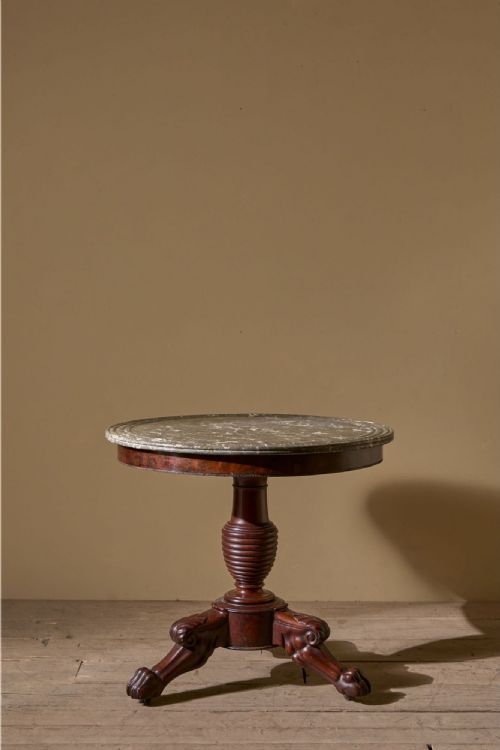
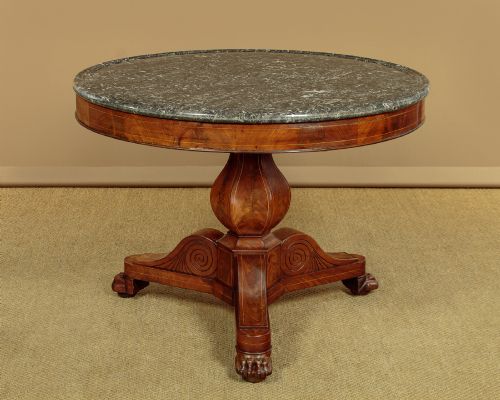
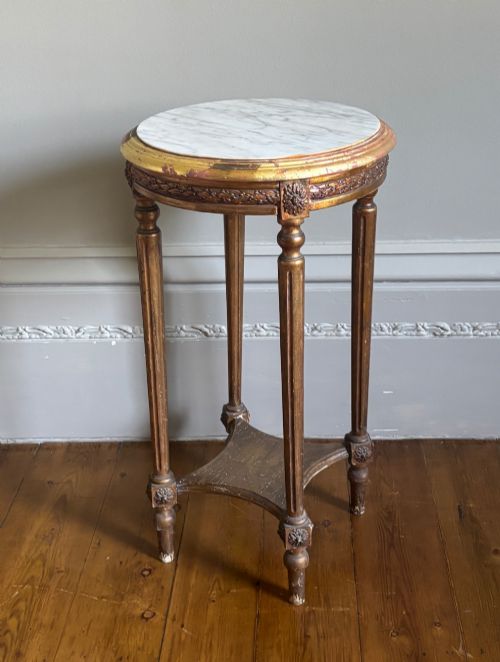
A french empire marble gueridon is a round pedestal table designed primarily as a centre table or occasional table, anchored by a substantial stone top. The form draws heavily on classical antiquity, emerging through nineteenth century French cabinet making in styles ranging from strict Empire to later revivals.
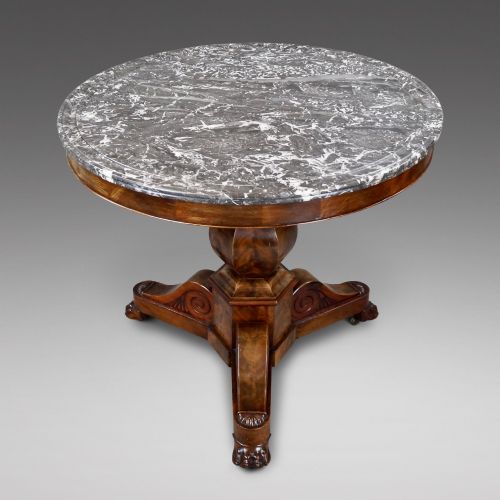
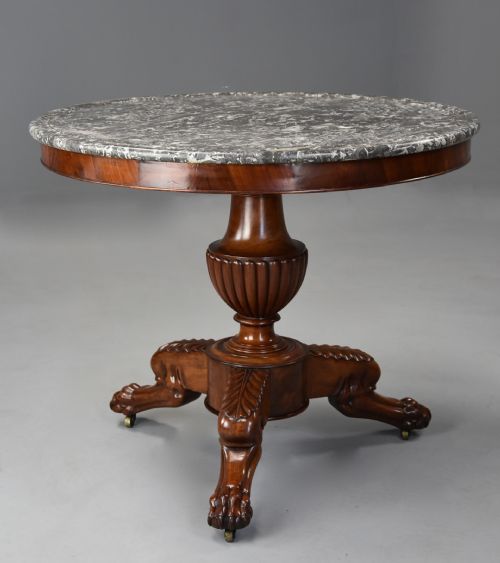
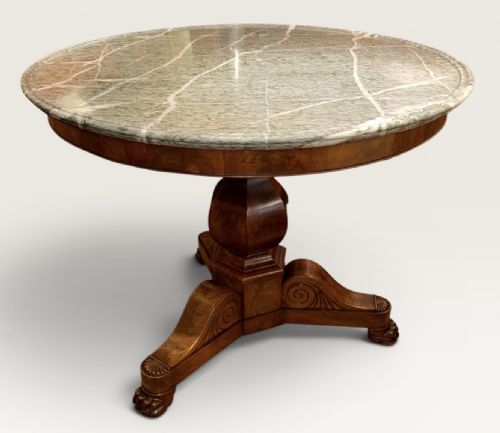
Most examples encountered on this page date from the nineteenth century, constructed with a central pillar above a triform or circular base. They function efficiently as standalone display pieces or central room anchors, bridging the gap between decorative art and functional furniture.
Materials and construction
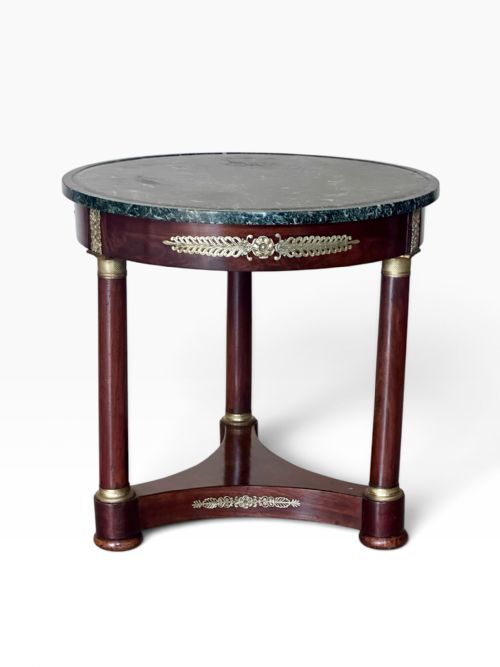
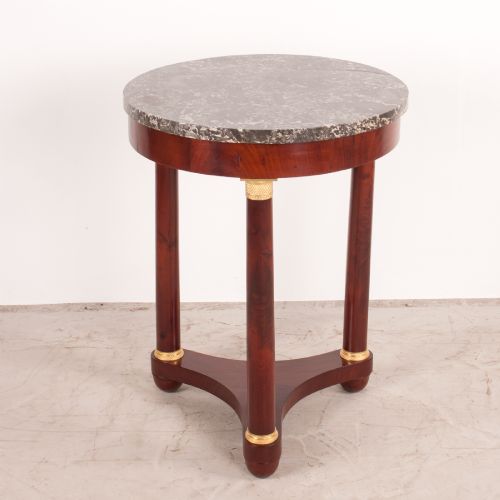
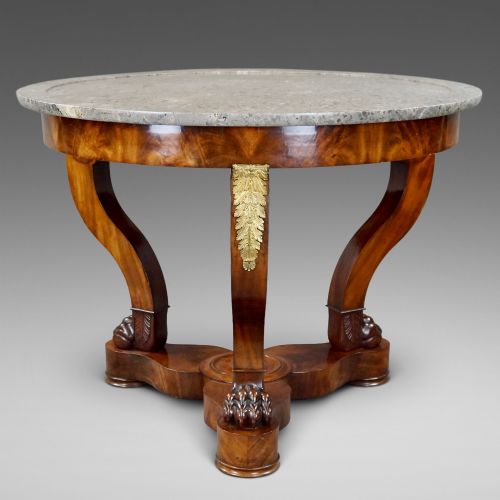
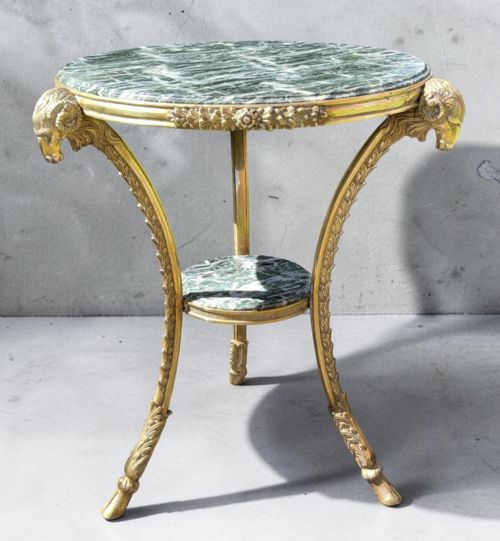
Makers relied on dense hardwoods such as mahogany and burr elm for the structural carcass and pedestal columns, frequently framing inset slabs of grey, red, or fossil marble. Ormolu, gilt bronze, and cast brass mounts accent the timber components, appearing as capitals, feet, or distinctive animal motifs like rams heads and swans.
Joinery and timber selection prioritized stability to support the considerable weight of the stone top without tipping. Surface treatments combine French polishing on the wood with finely chased gilt metalwork, creating a deliberate contrast between warm timber and cold, polished stone.
Several tables stare back with cast brass rams heads or carved swans guarding the central column.
What separates the grades
Quality rests in the crispness of the cast bronze mounts and the selection of the marble slab. Superior pieces display deeply chased ormolu details and finely figured flame mahogany veneers rather than plain secondary woods.
The architectural proportion of the pedestal relative to the stone top dictates the visual success of the piece. Rigorous joinery in the base and originality of the marble slab elevate an ordinary pedestal table into an exceptional antique.
The French Empire Marble Gueridon Glossary
- Gueridon
- A small circular table on a single central pillar or pedestal. The form originated in seventeenth century France before evolving into the classic nineteenth century centre table.
- Ormolu
- Gilt bronze mounted onto furniture or decorative objects. It involves applying a gold amalgam to bronze through heat, creating a durable golden finish.
- Triform
- A three-sided base or pedestal support often resting on claw feet. This configuration provides stability for heavy stone table tops.
- Flame mahogany
- Mahogany veneer cut to reveal a characteristic flamelike grain pattern. It was favoured by cabinet makers for prominent surfaces on high status tables.
French Empire Marble Gueridon: Frequently Asked Questions
What is a gueridon used for?
These tables traditionally stood in the middle of a saloon or hall to hold lamps, vases, or books. Their circular design allows people to walk around them easily in an open room.
Today they function effectively as central coffee tables or statement display pieces in a drawing room. The stone surface provides a practical, wipeable area for daily use.
How do I spot an original marble top?
Original marble tops generally show appropriate weathering, minute edge chips, and natural veering consistent with nineteenth century quarrying. They sit directly into a recessed wooden gallery or frame built specifically for the stone slab.
Replacement tops often lack the accumulated patina of the wooden base or fit unevenly into the rebate. Examining the underside reveals the original support blocking and timber shrinkage.
How do I tell Empire from later revival styles?
Original Empire period pieces exhibit the restrained architectural lines and restrained ormolu mounts associated with early nineteenth century French design. Woods tend to be dense mahogany with precise, hand-cut brass details.
Revival pieces from later in the century often incorporate more exuberant carving, painted surfaces, or alternative timbers like walnut and burr elm. The casting quality of the brass mounts on revival pieces frequently appears less sharp than earlier work.