



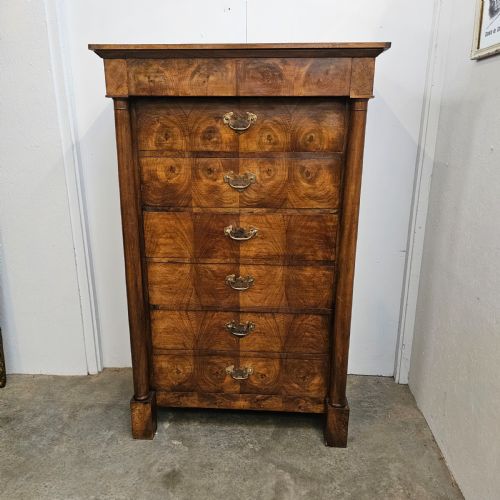


French Empire Dresser
A french empire dresser brings monumental architectural presence and rich mahogany or walnut timber into a room.
French Empire Dresser
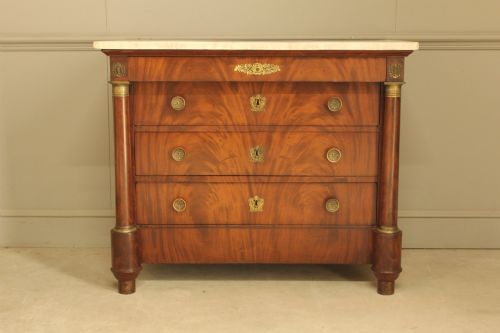
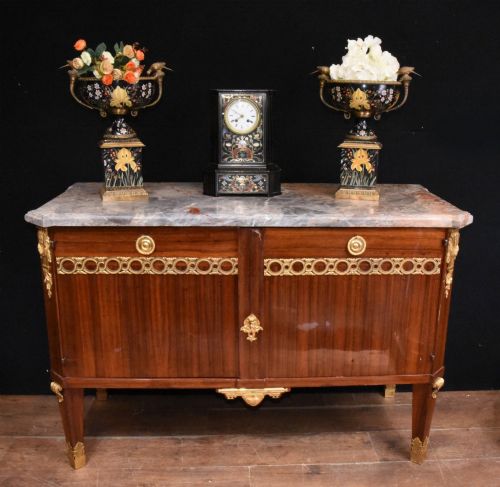
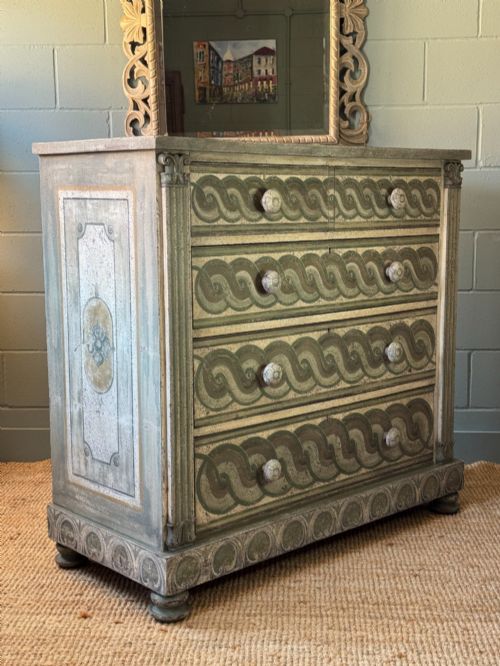
A french empire dresser principally encompasses substantial chest of drawers and commode forms rooted in the early nineteenth century and later revival periods. These imposing pieces serve as functional storage while delivering classical proportion and stately gravitas to an interior space.
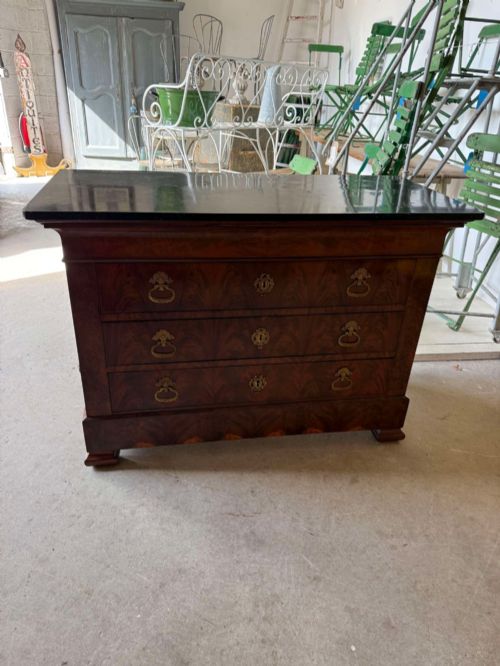
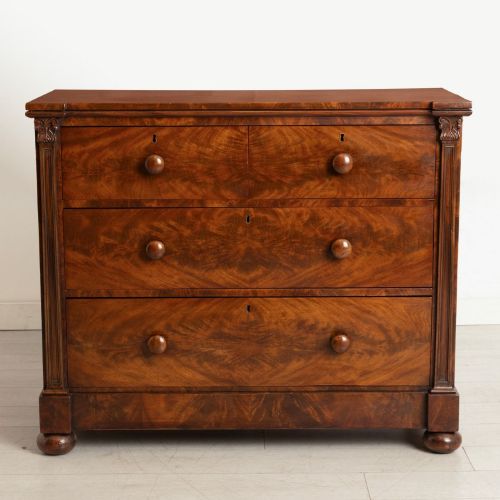
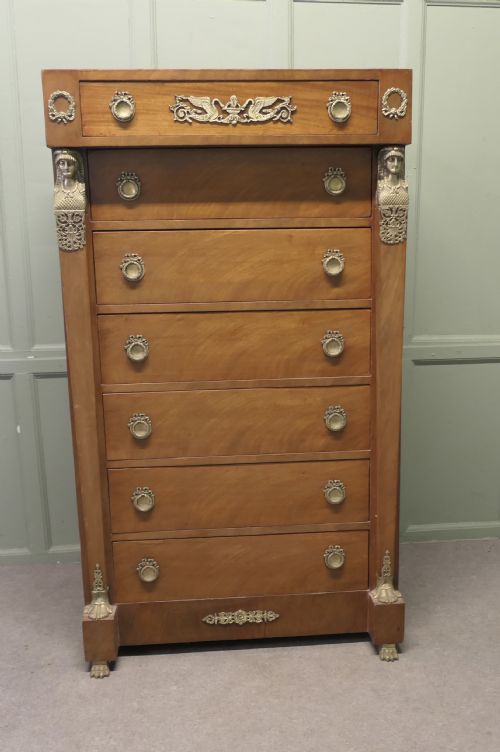
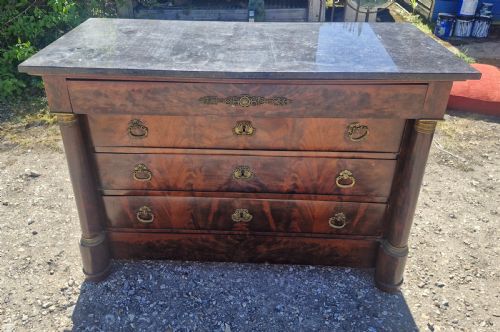
Most examples encountered here take the form of heavy timber commodes featuring disciplined rectangular carcases and restrained classical lines. Alongside these standard chests, buyers will occasionally locate tall six drawer formats, console tables, and decorative trinket boxes.
Originating predominantly from nineteenth century French workshops, these items span original Empire production through to Louis Philippe interpretations and later revival pieces. The enduring appeal lies in the fusion of architectural dignity and warm cabinet timbers.
How they were made
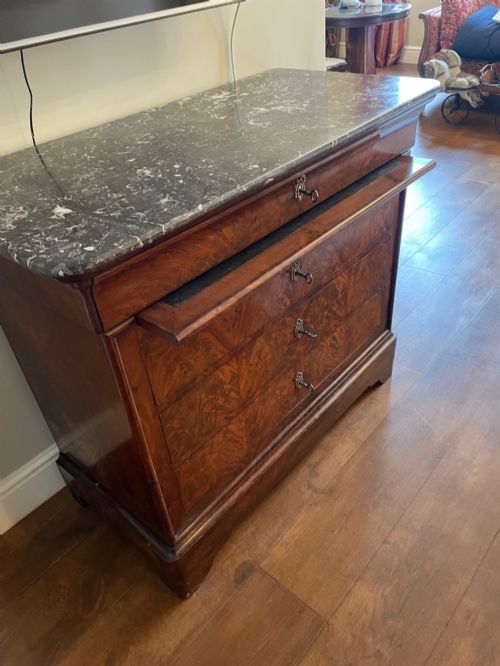
Cabinetmakers constructed these carcases primarily from dense foundational timbers like mahogany and walnut, frequently applying figured veneers such as rosewood and burr walnut across the drawer fronts. Bookmatched grain patterns create symmetrical visual movement across the surfaces of these chests.
Cast brass and gilt bronze ormolu mounts punctuate the dark timber surfaces, providing crisp classical detailing around keyholes and pilasters. Heavy marble slabs, including fossil marble variants, sit directly upon the timber tops to finish the construction.
French Empire Dresser Retail Price Guide 2026
Typical asking prices for french empire dresser among the pieces listed under this phrase on Sellingantiques today, from the lower quarter to the upper quarter. They describe what is for sale here now, not the wider market.
Periods represented span the eighteenth century, the nineteenth century, and the early twentieth century.
What varies in quality
The refinement of the cast ormolu mounts marks a clear distinction between standard production and superior craftsmanship. Finer pieces display crisp chiselling and deep fire gilding on the bronze elements rather than flat or softly cast metal.
Timber selection and veneer matching similarly dictate the hierarchy of these items. Expert bookmatching and the choice of richly figured burr walnut or dense mahogany elevate the visual impact of the carcase.
The French Empire Dresser Glossary
- Commode
- A low chest of drawers or cabinet standing on legs or feet. This French term is frequently used interchangeably with dresser in these listings.
- Ormolu
- Gilded bronze applied as decorative mounts on furniture and boxes. The technique involves coating bronze with a gold amalgam and firing.
- Bookmatching
- A veneer technique where adjacent slices of timber are opened like a book to mirror each other. This creates symmetrical patterns across drawer fronts.
- Fossil Marble
- A dense natural stone containing visible prehistoric fossil fragments. Slabs of this material commonly form the protective tops of these chests.
French Empire Dresser: Frequently Asked Questions
What is a french empire dresser?
A french empire dresser is a heavy timber chest of drawers or commode originating from nineteenth century France or subsequent revival periods. These pieces are characterised by classical architectural proportions and dark woods.
They often feature contrasting metal mounts and stone tops that reflect the formal design idioms of the period.
How were these dressers used historically?
These chests functioned primarily as bedroom or reception room storage for clothing and household linens. The broad flat tops also provided a surface for display.
Heavier marble tops allowed owners to place washing basins or decorative objects upon the furniture without risking the timber underneath.
How do I clean marble top furniture?
Clean the stone surface using a soft cloth dampened with warm water and mild neutral soap. Avoid acidic cleaners that can etch the polish.
Dry the marble thoroughly afterwards to prevent water spotting and maintain the natural sheen of the stone.
How do I identify a revival piece?
Revival pieces often date from later periods such as the early twentieth century while emulating earlier nineteenth century proportions. Examining the secondary timbers and internal construction methods helps clarify the actual age.
Stylistic cues alone can blend across eras, making the physical build of the carcase crucial for dating.