
French Empire Bronze Urns
French empire bronze urns bring classical proportion and rich metallic contrast to a room.
French Empire Bronze Urns
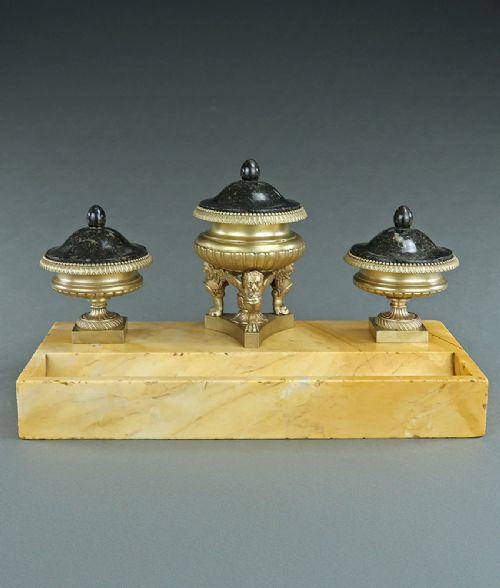
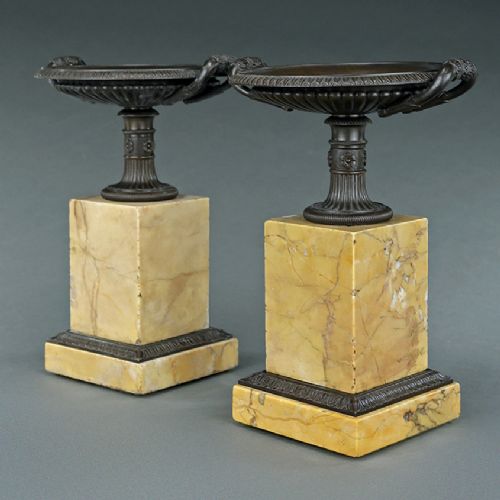
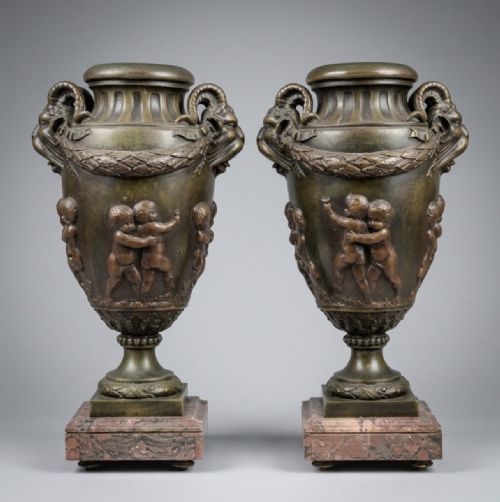
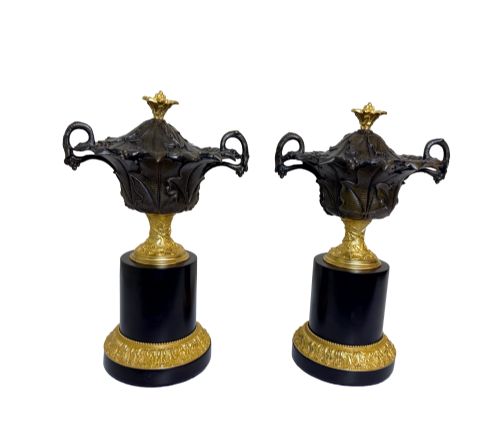
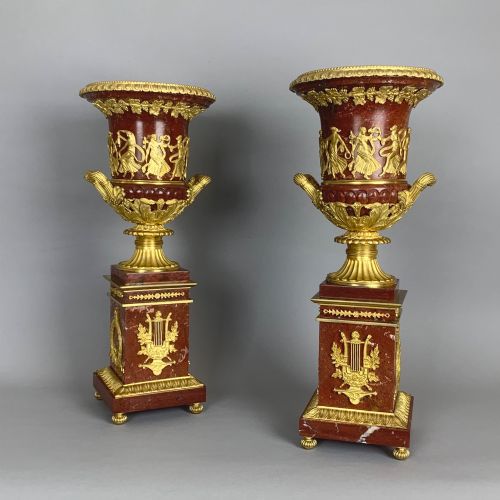
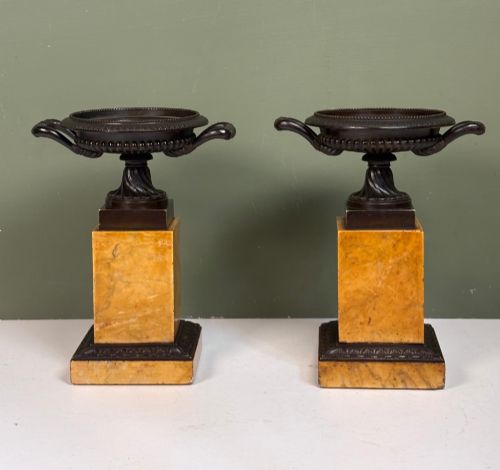
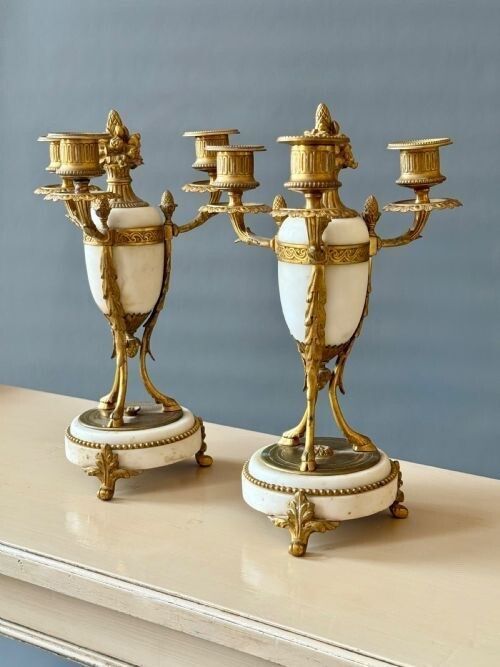
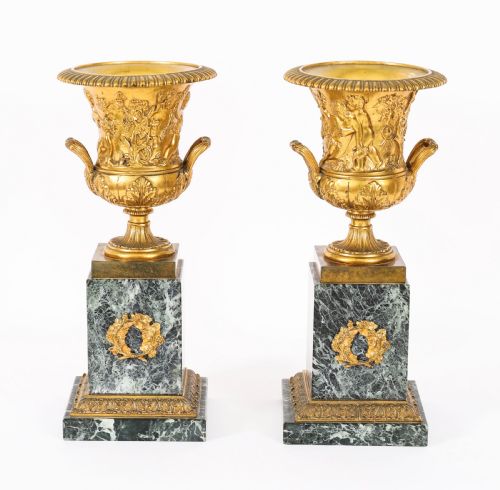
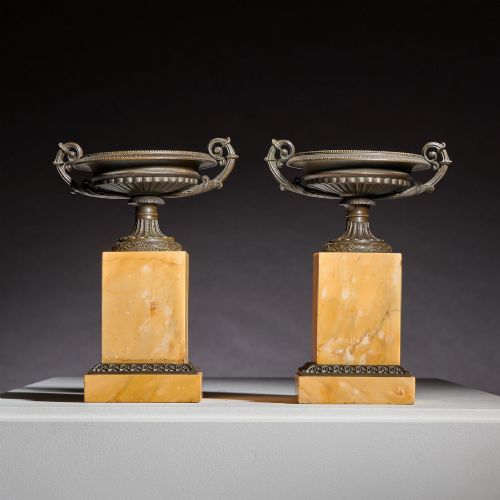
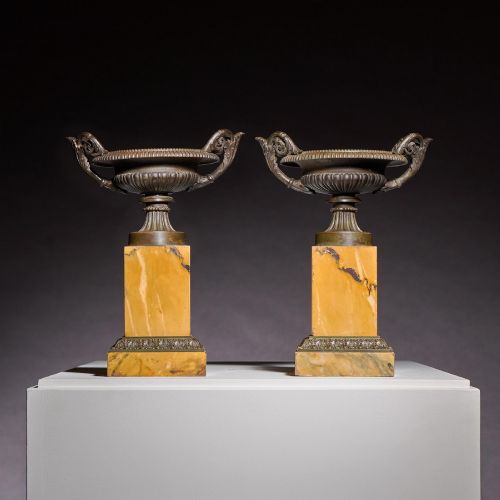
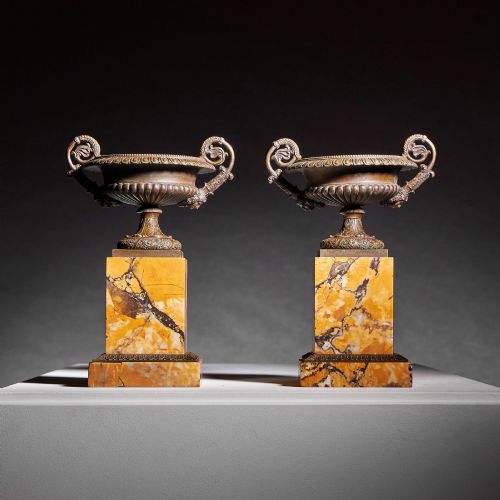
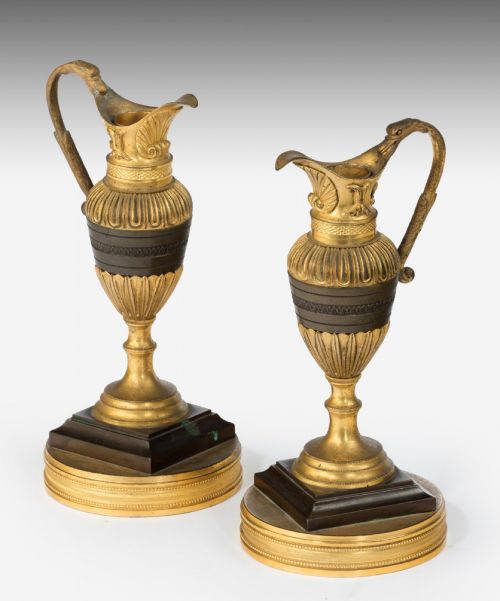
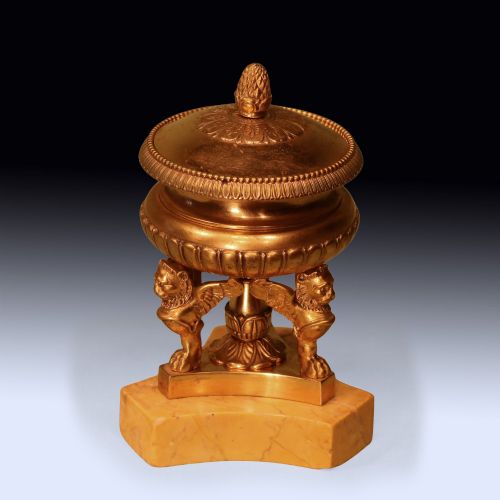
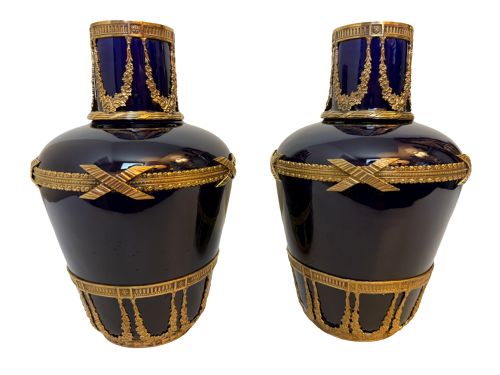
French empire bronze urns stand as formal decorative vessels, often taking the form of campana vases, tazzas, or cassolettes influenced by classical antiquity.
You will most frequently encounter pairs resting on square or plinth bases of white, black, or Sienna marble, dating mainly across the nineteenth century.
The style draws directly from Neoclassical and French Empire aesthetics, utilising disciplined symmetry, mythological motifs, and architectural profiles.
Materials and construction methods
Foundry workers cast the primary bodies in bronze, patinating some surfaces to a dark, matte finish while retaining a natural metallic grain.
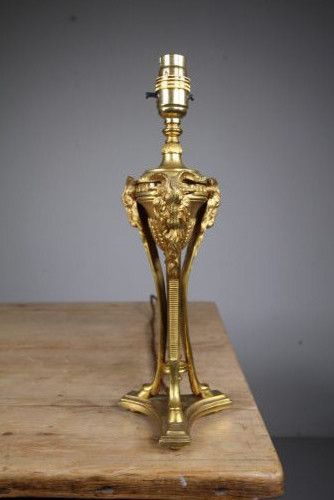
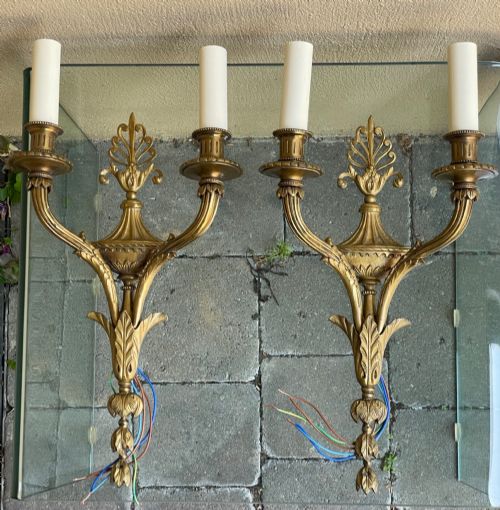
Gilding was achieved through mercury or fire gilding to produce rich ormolu mounts, handles, and collars that contrast sharply against the dark bronze and stone.
Sculptors and masons turned bases and pedestals from dense decorative stones like marble, alabaster, and onyx, securing the metal elements with threaded internal rods.
Some nineteenth-century cassolette lids flip upside down to reveal a hidden recess for burning fragrant oils during parlour gatherings.
Distinctions in execution and design
The crispness of the chased detail on the ormolu mounts separates standard production from superior examples, where hair, acanthus leaves, and classical drapery are rendered with sharp definition.
The choice and figuring of the underlying marble base contribute significantly to the overall presence, with richly veined Sienna or deep black marble commanding greater visual weight.
Proportion and structural integration determine the success of the piece, as finely balanced weight distribution between the metal urn and the stone plinth reflects disciplined workshop standards.
Lerolle Fres·Pons De Paul·Vincenti of Paris
The French Empire Bronze Urns Glossary
- Ormolu
- Gilded bronze produced by applying a mercury and gold amalgam to a bronze base and heating it to drive off the mercury. This technique creates a durable, deep golden surface finish found on many nineteenth-century mounts.
- Campana
- An inverted bell-shaped form derived from ancient Roman pottery. These vessels feature flared rims and pedestal feet common in classical garden and interior urns.
- Tazza
- A shallow saucer-like vessel raised on a stem and foot. They frequently appear in nineteenth-century collections fashioned from bronze and marble.
- Cassolette
- A decorative vase or urn featuring a reversible lid that can serve as a burner for perfumes or incense. They often combine marble bodies with ormolu collars and finials.
- Patinated bronze
- Metal treated chemically or thermally to produce a deliberate dark surface colour. This treatment highlights polished ormolu details placed nearby.
French Empire Bronze Urns: Frequently Asked Questions
Where were french empire bronze urns placed?
These decorative objects were traditionally displayed on mantelpieces, pedestals, or pier tables in formal nineteenth-century reception rooms.
Pairs were often arranged symmetrically to frame a central clock or mirror within a garniture set.
How do you clean ormolu mounts?
Dusting gently with a soft dry cloth is the safest method to remove everyday particles without disturbing the underlying metal finish.
Avoid commercial brass polishes entirely, as abrasive liquids can strip away the historic mercury gilding.
What is the difference between an urn and a tazza?
An urn is a deep, enclosed vessel with a body, neck, and base, often designed with handles and a fitted lid.
A tazza takes the form of a shallow, open basin elevated on a central stem and foot, functioning primarily as a decorative display dish.
Are these urns heavy?
The combination of cast bronze and solid stone bases makes these pieces remarkably heavy for their physical size.
Care should be taken when lifting them, ensuring both the metal body and the marble plinth are supported simultaneously.