


French Edwardian Ring
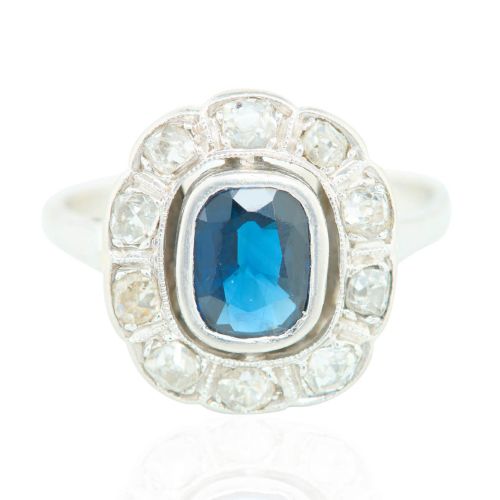
A french edwardian ring combines delicate gold and platinum mountings with old-cut diamonds and coloured gemstones.
French Edwardian Ring
A french edwardian ring is a piece of antique jewellery originating from the early twentieth century, characterised by refined proportions and intricate metalwork. The pieces found here span the edwardian period through to later art deco designs, maintaining distinctive continental craftsmanship.
Buyers encounter cluster configurations, solitaire mountings, and toi et moi styles featuring diamonds accompanied by sapphires, rubies, or pearls. Platinum-topped gold settings predominate, providing the bright white surface favoured by makers of the era to showcase gemstones.
Most examples rely on old-cut or rose-cut diamonds set closely together in millegrain borders. The overarching aesthetic moves from organic floral curves towards the geometric precision seen in subsequent decades.
How they were made
Goldsmiths utilised a combination of yellow or rose gold shanks paired with platinum heads, exploiting platinum's strength to hold stones securely with minimal metal. This dual-metal construction allowed artisans to build lighter, more intricate galleries than gold alone permitted.
Gemstones were hand-cut, yielding distinctive old mine, old European, or rose cuts with softer facets than modern stones. Setting techniques relied heavily on millegrain work, where tiny raised beads of metal edge the bezels and prongs for a textured finish.
Several rings conceal their age by hiding tiny French eagle punch marks inside shanks worn smooth by a century of fingers.
What varies in quality
Quality rests in the precision of the millegrain hand-work and the symmetry of the stone arrangement within the cluster or plaque. Superior pieces display crisp, uniform beaded edges and perfectly matched gemstone colours without heavy inclusions obscuring the brilliance.
The integrity of the original claw settings and the preservation of the platinum-topped surfaces separate finer survivors from heavily worn examples. Artisanal skill is evident where the metalwork enhances the stones rather than overwhelming them.
The French Edwardian Ring Glossary
- Old cut
- A diamond cut by hand before modern machinery, featuring a smaller table, higher crown, and open culet. These stones exhibit a softer, warmer candlelit sparkle compared to brilliant cuts.
- Millegrain
- A decorative technique involving a row of small metal beads bordering the edge of a setting. This borders the stones with a fine textured frame.
- Toi et Moi
- A ring style featuring two main stones positioned side by side, translating from French as you and me. The design symbolises two souls united.
- Navette
- A boat-shaped gemstone or ring setting that tapers to points at both ends, also known as a marquise shape. This silhouette elongates the finger.
- Plaque
- A flat, often pierced or openwork panel setting encrusted with small diamonds and gemstones. These geometric faces typify the transition into art deco tastes.
French Edwardian Ring: Frequently Asked Questions
How do I style a french edwardian ring?
These rings pair easily with modern bands or stack alongside other antique jewels due to their low profiles and neutral platinum settings. Their intricate metalwork complements both casual daytime wear and formal evening attire.
Consider pairing a diamond cluster with plain gold bands to let the antique textures stand out without visual clutter. The mixed metals often found in these pieces make them versatile for combining with yellow, white, or rose gold accessories.
What is the difference between edwardian and art deco rings?
Edwardian rings lean towards organic motifs, garlands, lace-like platinum work, and flowing curves inspired by nature. Art deco pieces introduce strict geometry, strong symmetry, and bold lines.
As the period progressed into the nineteen-twenties and thirties, designs shifted from soft floral sprays to sharp triangles, stepped plaques, and contrasting coloured stones like rubies and sapphires.
Are these rings suitable for everyday wear?
While historic pieces require mindful care, sturdy platinum-topped gold mountings handle normal daily activities well. Owners should remove them during heavy physical work or gardening to protect the delicate millegrain.
Routine checks by a jeweller ensure the old-cut stones remain secure within their original claw and bezel settings. Gentle cleaning with warm soapy water maintains the sparkle of the diamonds and pearls.
How can I identify genuine period craftsmanship?
Genuine pieces display hand-cut stones, irregular facet patterns typical of early cutting techniques, and handmade platinum-on-gold construction. Maker marks and French control stamps on the outside of the shank provide further clues.
Look for the soft, worn patina on the gold and the delicate hand-beaded millegrain work that machine-made reproductions struggle to replicate accurately.