

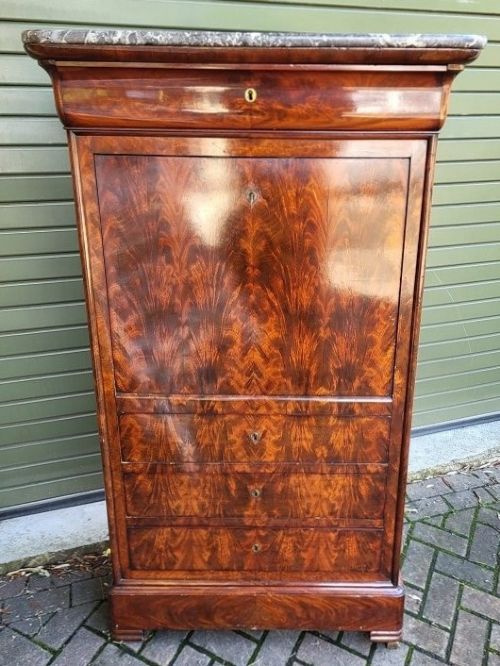


French Drop Front Cabinet
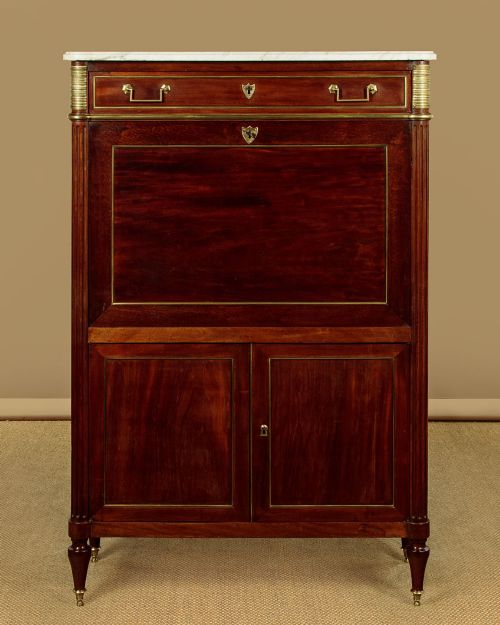
A french drop front cabinet combines the private workspace of a writing desk with the clean, architectural presence of a tall case piece.
French Drop Front Cabinet
When searching for a french drop front cabinet, collectors encounter a lineage of writing furniture that conceals a fitted interior behind a vertical fall-leaf. These pieces span several centuries, with the nineteenth century producing the largest number of variations across revival styles.
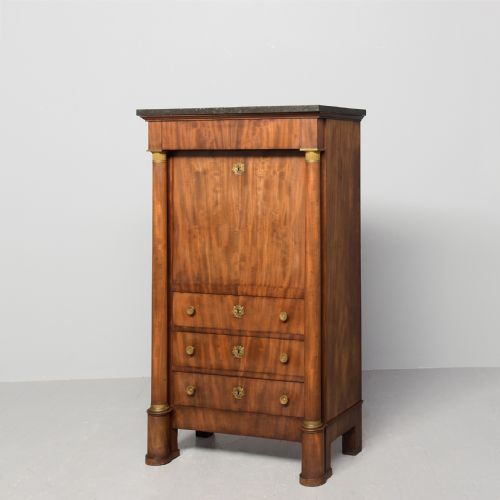
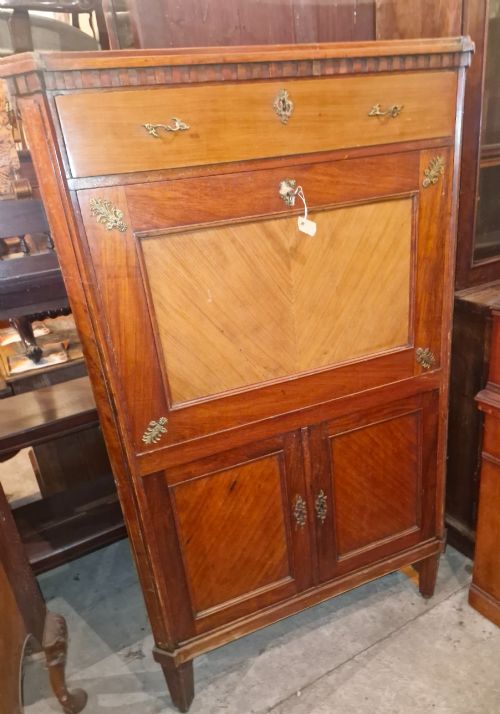
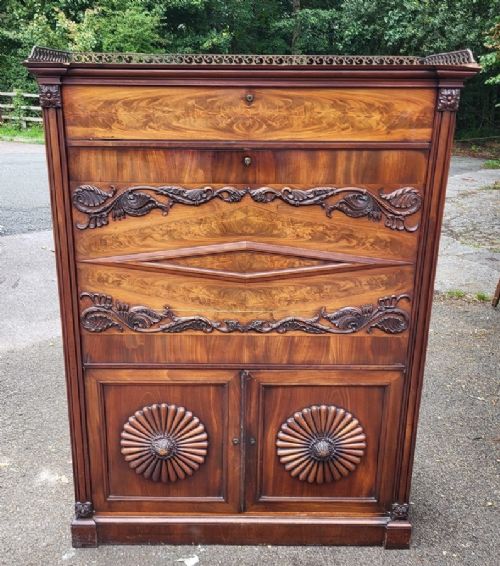
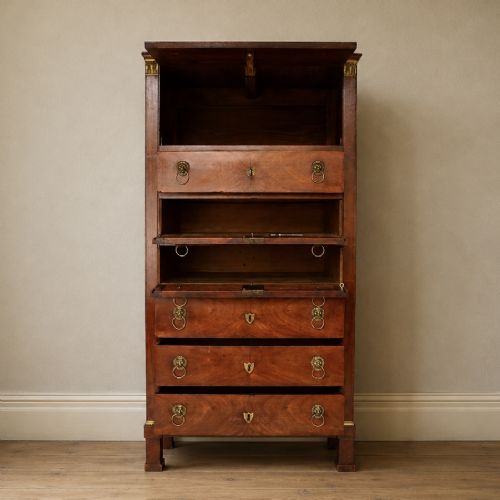
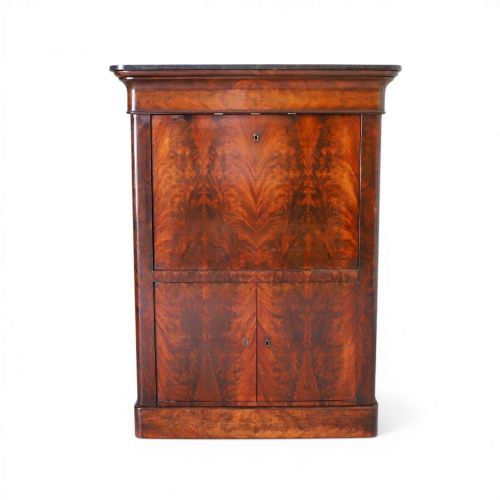
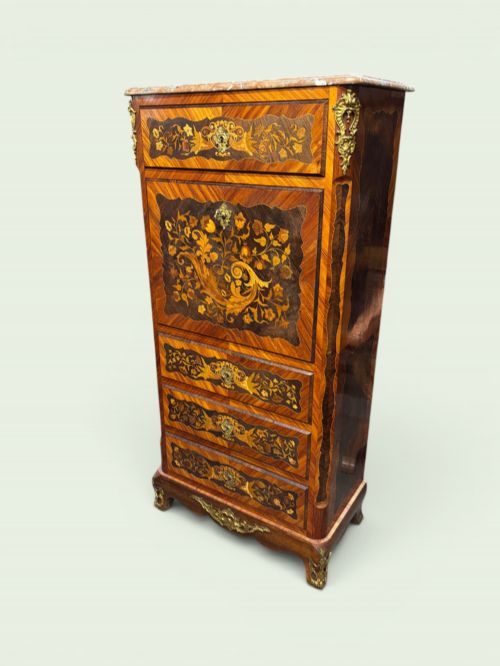
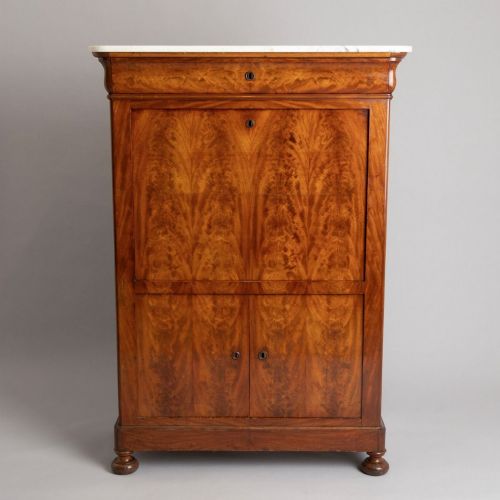
The most frequent form on this page is the secretaire à abattant, built tall and narrow to house compartments and secret drawers above lower cupboard doors. Such pieces function equally as decorative case furniture and as compact writing desks for daily use.
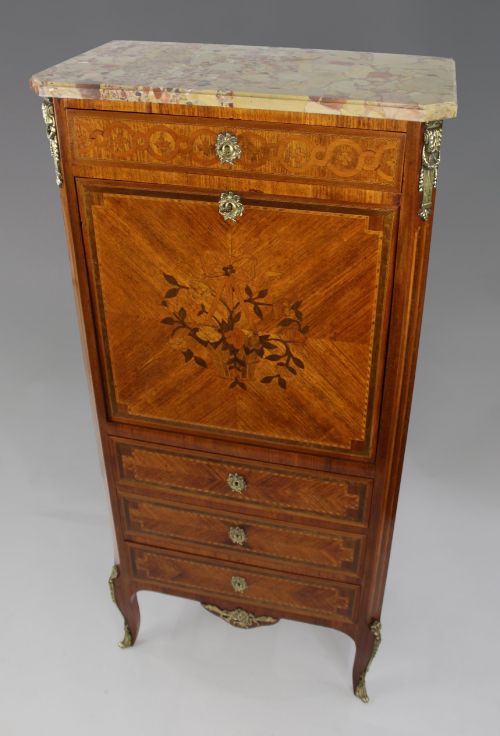
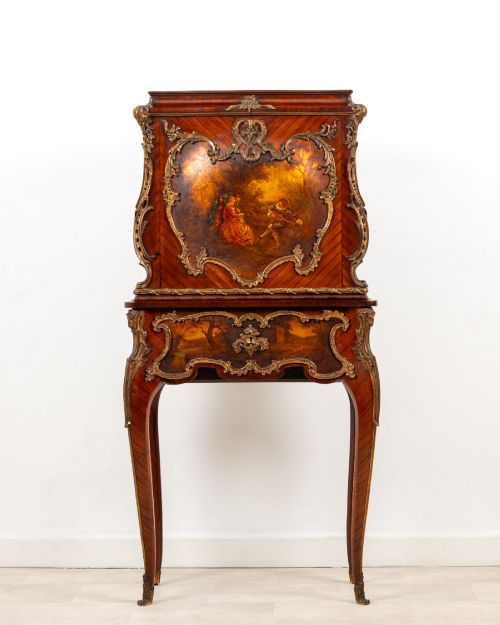
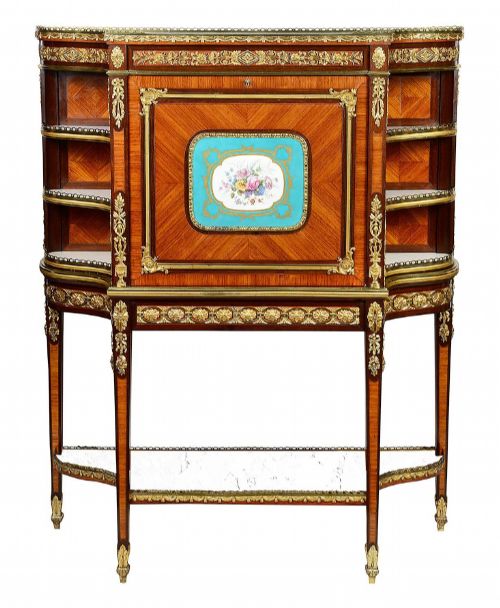
Makers drew on diverse aesthetic movements, ranging from the structured symmetry of the Empire period to the curved flourishes of Louis XV and Louis XVI revivals. Marquetry and parquetry surfaces appear frequently alongside rich veneers of mahogany, kingwood, and walnut.
How They Were Made
Cabinetmakers constructed the carcase using solid foundational timbers like oak or pine, then applied decorative veneers such as flame mahogany, rosewood, and satinwood to the exterior faces. Marquetry panels incorporated contrasting woods to create floral or geometric patterns across the fall-leaf and drawer fronts.
Mounts cast in brass and ormolu were chased and applied to corners, escutcheons, and feet to accentuate the structural lines of the cabinet. Heavy marble slabs, often in shades of white or grey, were fitted to the top surface as a durable and decorative finish.
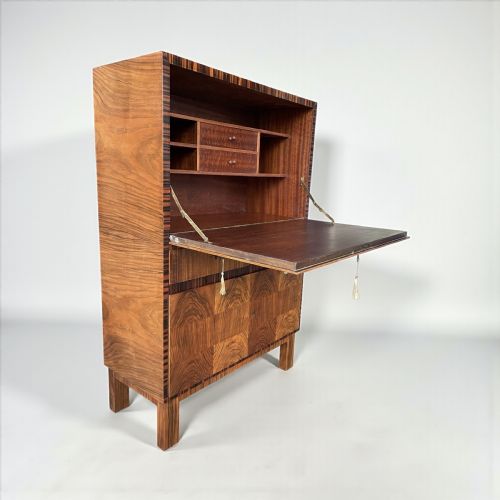
Interior compartments relied on precise joinery to house small drawers, pigeonholes, and occasionally hidden compartments released by spring mechanisms. The drop front itself required robust hinges and internal supports to bear the weight of writing.
Secret drawers require discovering hidden wooden catches tucked behind pigeonholes before they yield their tiny interior spaces.
What Varies in Quality
The sophistication of the timber selection and the precision of the marquetry work dictate much of the piece's standing. Finer examples display continuous grain matching across the fall-leaf and drawers, whereas simpler versions rely on standard veneer application without pattern continuity.
The crispness of the ormolu mounts and the weight of the marble top signal the original cost of production. Hand-chased bronze mounts show sharp detail and depth, whereas mass-produced alternatives appear softer and lack definition.
Internal engineering also separates standard cabinetmaking from master work. Smooth action in the drop-front hinges, well-fitted secret drawers, and substantial secondary woods inside the carcass denote higher manufacturing standards.
Blake, London·Millet
The French Drop Front Cabinet Glossary
- Secretaire à abattant
- A tall writing cabinet featuring a vertical drop-down writing surface that conceals an interior of small drawers and pigeonholes. This form dominates French case furniture from the nineteenth century.
- Ormolu
- Gilt bronze ornamentation applied to furniture corners, mounts, and handles. It provides a bright metallic contrast against dark woods like mahogany and kingwood.
- Marquetry
- The art of applying decorative veneer pieces of different woods, metals, or shells to form pictorial or geometric designs. It is commonly found on revival cabinets.
- Parquetry
- A geometric mosaic of wood pieces used for decorative veneer on floors and furniture surfaces. Squares, triangles, and herringbone patterns frequently appear on these pieces.
- Vernis Martin
- A type of simulated Japanese lacquer developed in France during the eighteenth century and imitated in later revival pieces. It employs translucent varnishes over painted scenes.
French Drop Front Cabinet: Frequently Asked Questions
What is inside a drop front cabinet?
Opening the front reveals a fitted interior designed for correspondence and paperwork. This typically includes a leather-lined writing surface, multiple small drawers, and pigeonholes for letters.
Many examples also incorporate hidden compartments or secret drawers accessed by removing internal sections or pressing concealed catches.
How do I care for marble tops?
Marble surfaces require gentle cleaning with a damp cloth and mild soap to avoid dulling the stone or damaging the polish. Acidic liquids like wine, citrus, or vinegar should be wiped away immediately to prevent etching.
Applying a protective wax specifically formulated for stone helps maintain the natural sheen over time without yellowing.
Can I use these as a desk?
These pieces were built specifically for writing and correspondence, making them practical for modern laptop use or letter writing. The fall-leaf provides a stable writing platform when lowered and supported by internal mechanisms.
Users should verify the height and depth of the open writing surface to ensure comfortable seating with a standard chair.
How do I identify the wood type?
Identifying the primary wood involves examining the grain pattern, colour, and weight of the exterior surfaces. Mahogany displays a reddish-brown tone with straight or ribbon-like grain, while kingwood and rosewood feature distinctive dark striping.
Veneers can sometimes obscure the secondary structural timbers, which are often visible inside the drawers as oak or pine.