



French Decorative Candlesticks
French decorative candlesticks bring sculptural presence to a room, cast in bronze and ormolu to catch the evening light.
French Decorative Candlesticks
French decorative candlesticks encompass matched pairs and multi-branch candelabra spanning the nineteenth and early twentieth centuries. When looking at french decorative candlesticks, buyers encounter heavy metal castings, marble bases, and carved or painted wooden forms.
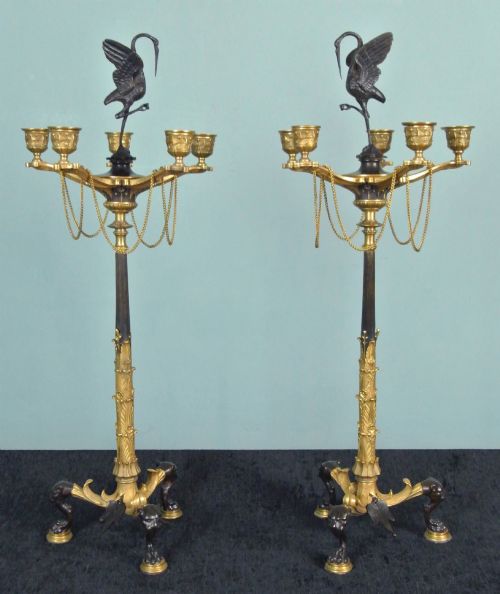
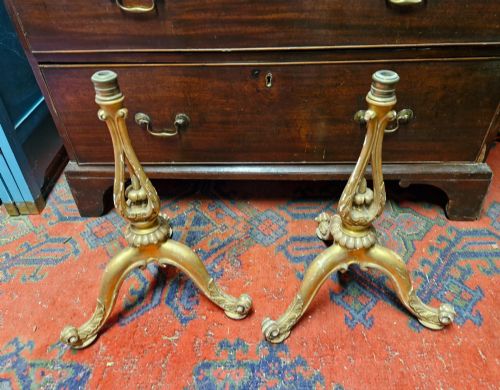
The selections here range from Regency and Restauration periods through to Art Nouveau and Art Deco designs. Ormolu, gilt bronze, and patinated bronze dominate the forms, frequently paired with marble or porcelain components.
Makers such as Barbedienne, Abel Landry, and Rene Lalique appear alongside unmarked period foundry work. Functional lighting conversions and decorative desk accessories sit alongside traditional candleholders.
How They Were Made
Foundries utilised lost-wax and sand-casting techniques to shape bronze and brass into intricate figural and architectural motifs. Artisans then applied mercury gilding, known as ormolu, or hand-applied patination to the metal surfaces.
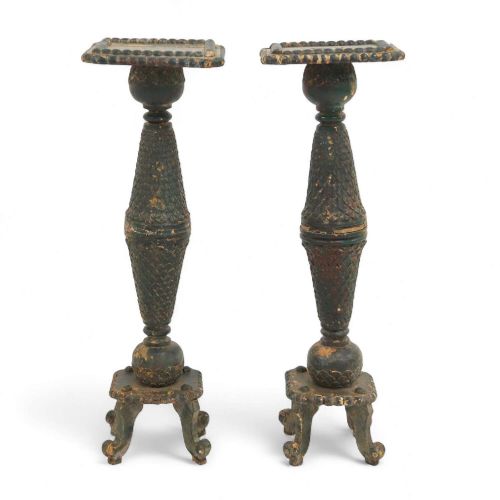
Marble plinths, carved wood, and porcelain de Paris sections were combined with the metalwork using threaded rods and pins. Original green paint and parcel gilt highlights were layered directly onto wooden and metal substrates.
French Decorative Candlesticks Retail Price Guide 2026
Typical asking prices for french decorative candlesticks among the pieces listed under this phrase on Sellingantiques today, from the lower quarter to the upper quarter. They describe what is for sale here now, not the wider market.
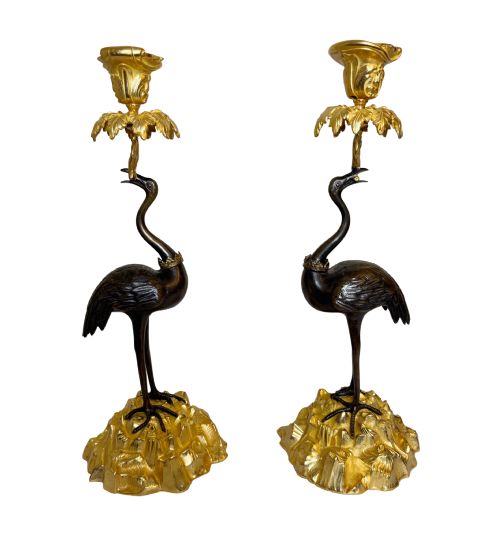
Playing cats and leaping dolphins share table space with majestic flamingos across these historic French metalwork designs.
What Varies in Quality
The crispness of the chasing separates superior castings from softer production pieces, as skilled artisans hand-finished every leaf, feather, and facial feature after removal from the mould. Depth and durability in the fire-gilt ormolu also distinguish high-end foundry output from simpler painted or plated alternatives.
Integration of secondary materials dictates overall refinement, where fitted marble bases and hand-carved wooden elements show superior joinery and material selection. Signed works by established makers demonstrate greater artistic ambition in design and proportion than anonymous workshop equivalents.
Barbedienne·Abel Landry·Rene Lalique
The French Decorative Candlesticks Glossary
- Ormolu
- Gilt bronze produced by applying a mercury and gold amalgam to a bronze base and heating it until the mercury vaporised. This technique creates a durable, warm golden finish characteristic of nineteenth-century decorative objects.
- Candelabra
- A branched candlestick designed to hold multiple candles simultaneously from a single central stem. These pieces often feature removable branches to function as standard single candlesticks.
- Patinated bronze
- Metal treated with chemical solutions to produce a controlled surface colour ranging from deep brown to black. This finish accentuates the modeled contours of figural and ornamental castings.
- Restauration period
- A French design era bridging the fall of the Empire and the July Monarchy, noted for restrained neoclassical proportions. Pieces from this time balance classical motifs with simpler structural lines.
- Cloisonné
- An enameling technique where thin metal strips form compartments on a metal surface, which are then filled with coloured glass paste and fired. It appears alongside ormolu mounts on select nineteenth-century pieces.
French Decorative Candlesticks: Frequently Asked Questions
How do I clean ormolu candlesticks?
Dust surfaces gently with a soft dry brush to protect the historic gilt layer.
Avoid commercial metal polishes entirely, as abrasive liquids strip away the thin gold surface.
Are these wired for electricity?
Selected examples arrive with electric fittings or previous lamp conversions integrated into their design.
Other pairs remain in their original configuration for standard wax candles.
How do I date nineteenth century bronze?
Examine the casting seams, mounting screws, and the quality of the hand-chased surface details.
Compare the stylistic motifs, such as dolphin supports or flamingo themes, against known period production dates.
Where should I place candelabra?
Position pairs on mantelpieces, sideboards, or large dining tables to balance the room visually.
Ensure they sit away from direct drafts to maintain even burning if used with real candles.