
French Crystal Drop Pendants
French crystal drop pendants bring dramatic illumination and period detail to a room, catching the light through cut glass and crystal lustre arrays.
French Crystal Drop Pendants
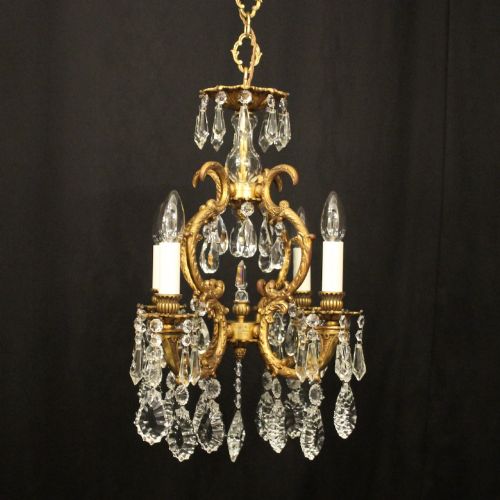
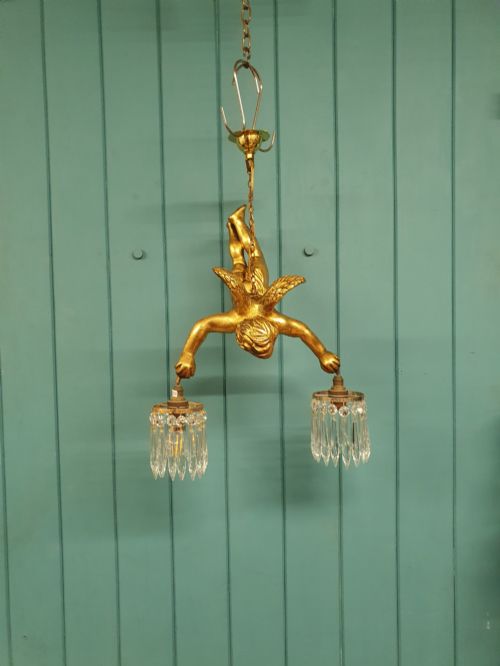
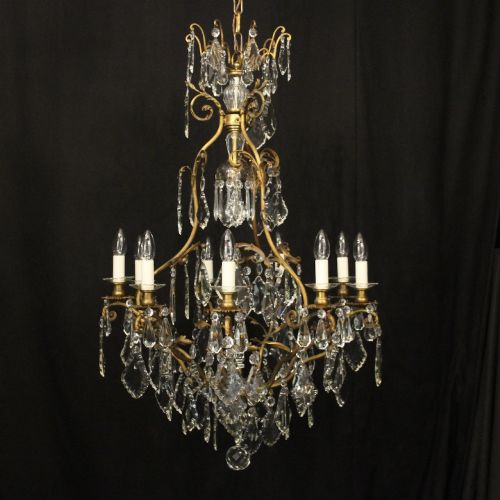
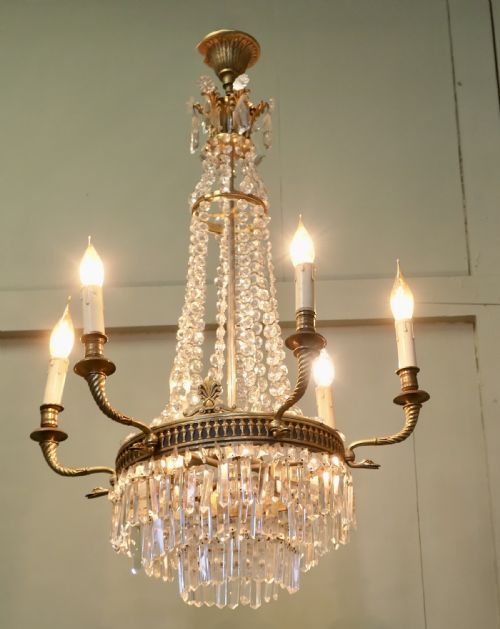
When you search for french crystal drop pendants, you encounter ornamental lighting fixtures spanning from the nineteenth century into the early twentieth century. The selection leans heavily toward chandeliers, ceiling lights, and wall sconces drawing on French Empire, Rococo, and Chateau styles.
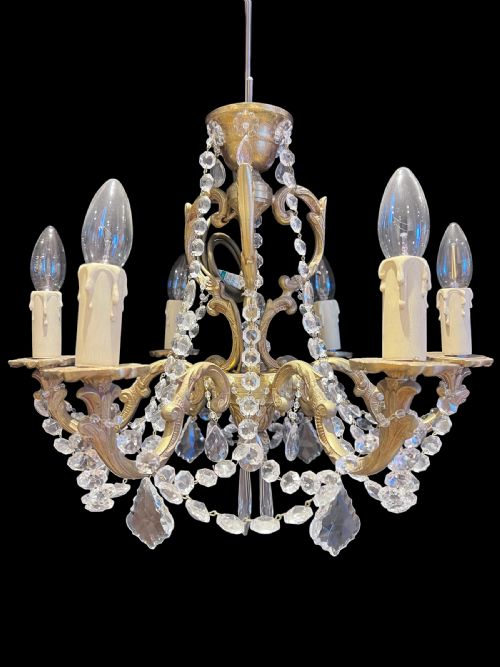
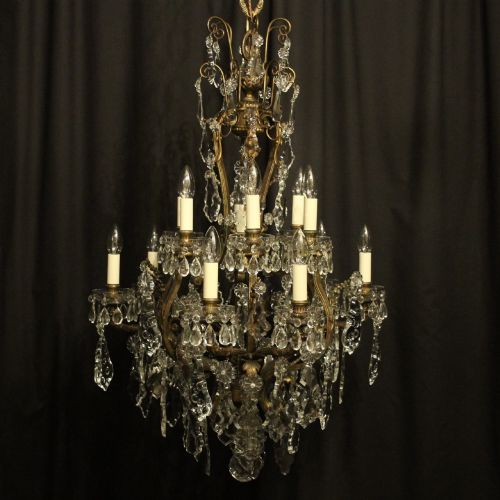
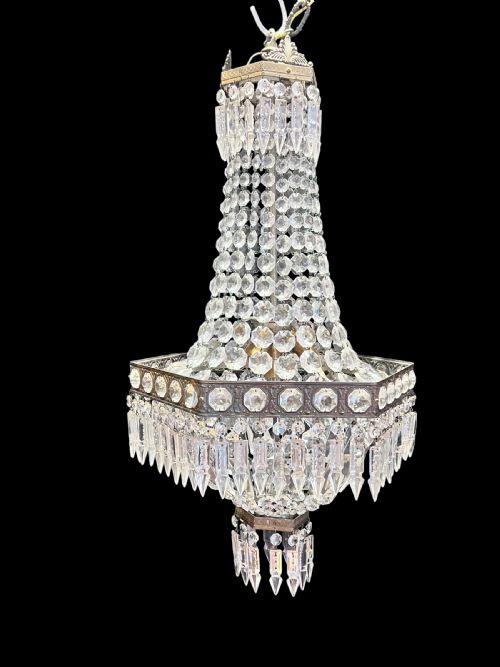
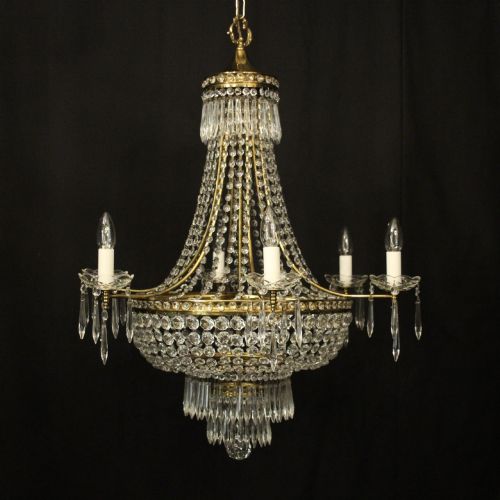
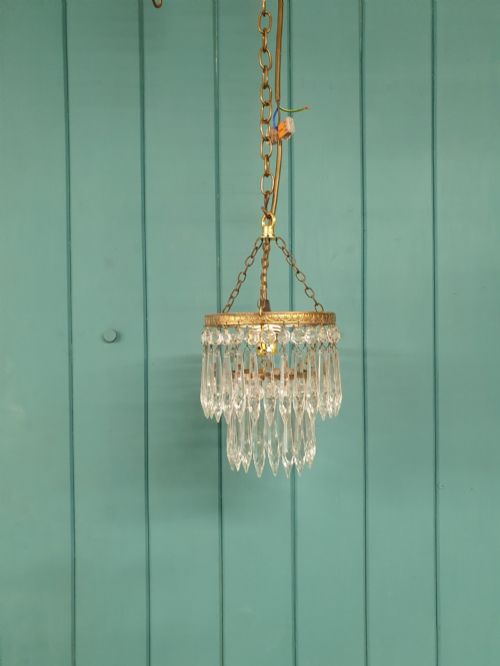
Most examples originate from the 1920s and 1930s, alongside nineteenth-century pieces reflecting earlier decorative revivals. These range from small basket and bag chandeliers to large multi-arm fixtures hung with extensive crystal drop arrays.
How they were made
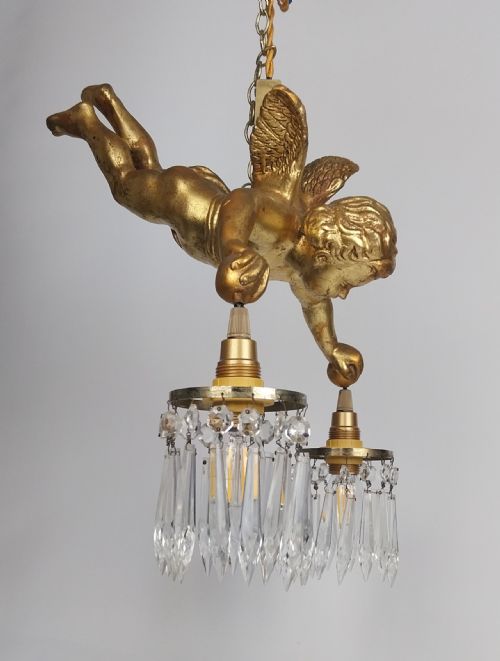
The structural frames rely primarily on brass, gilt bronze, gilt metal, and wrought iron, providing sturdy armatures for multiple lights. Gilding and silver gilding techniques often finish the metal surfaces.
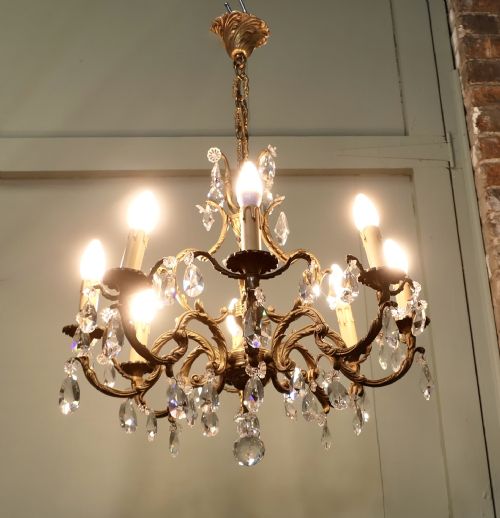
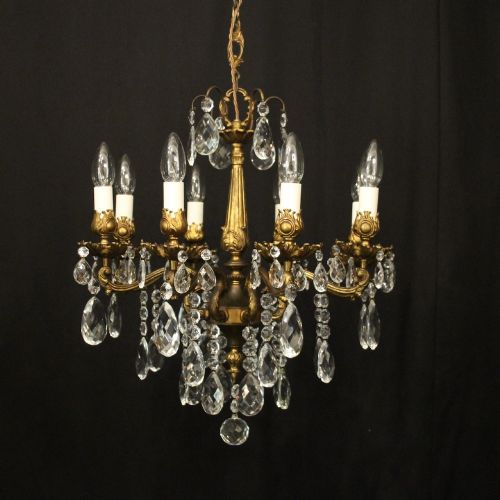
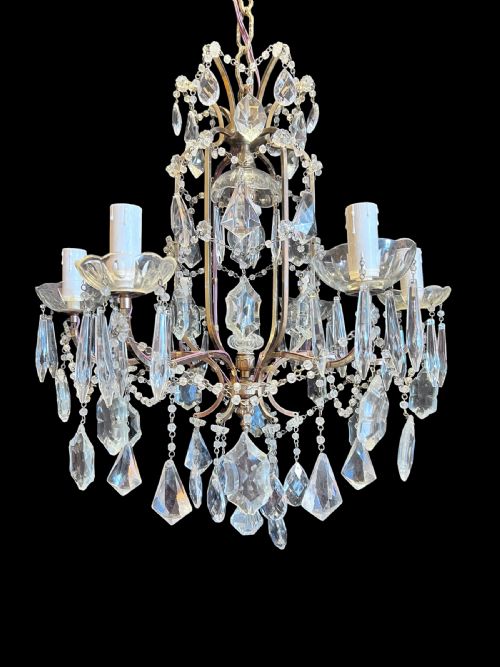
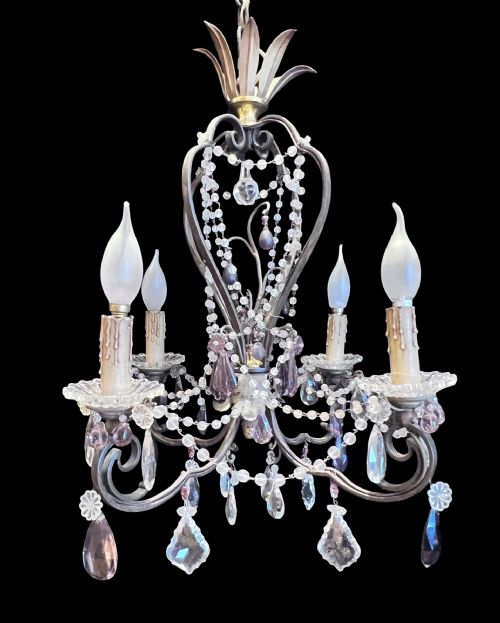
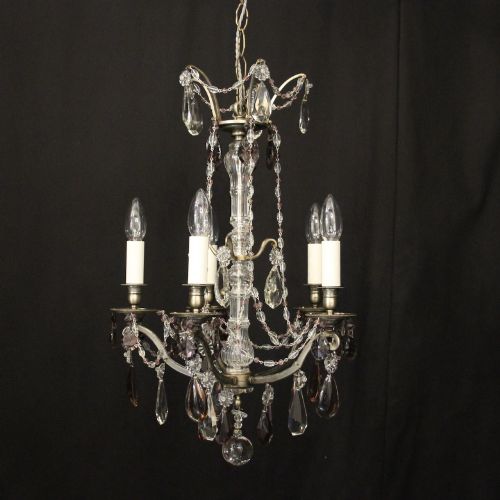
The ornamentation depends on cut glass and crystal components, including faceted drops, prisms, spikes, and lustres wired onto the metal frames. Coloured crystals, amethyst elements, and turquoise glass sometimes accent the standard clear glass configurations.
What varies in quality
The refinement of the metalwork distinguishes different tiers of these lighting fixtures. Heavy cast bronze and detailed gilt work provide a more substantial presence than simpler stamped brass frames.
The cut and clarity of the crystal components determine the brilliance of the piece. Precision-faceted drops and uniform prisms create significantly more complex light refraction than plain moulded glass pendants.
The French Crystal Drop Pendants Glossary
- Tent and waterfall
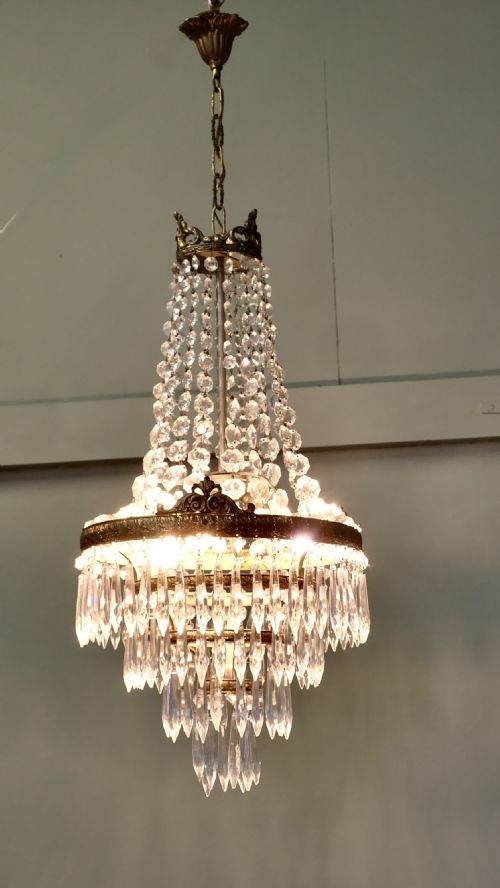
- A lighting configuration featuring an upper tent-like section of strung crystals above a cascading descent of further drops. This style defines many French Empire designs.
- Lustre
- A cut glass or crystal pendant suspended from a chandelier to reflect and refract light. These hang from the arms or crown of the fixture.
- Gilt bronze
- Metalwork coated with a thin layer of gold, providing a durable and warm metallic finish common in French period pieces. It holds intricate casting detail well.
- Spike chandelier
- A compact lighting form featuring sharp, projecting crystal elements arranged around a central body. These often appear in smaller Edwardian examples.
- Toleware
- Painted tinware incorporated into the body or decorative elements of lighting fixtures. It frequently introduces polychrome colour accents to the metal framework.
French Crystal Drop Pendants: Frequently Asked Questions
How do I hang a heavy chandelier?
These lighting fixtures require secure ceiling joist attachment and proper weight-bearing hardware. Professional electrical installation ensures safety given the substantial metal and crystal mass.
Weight distribution matters greatly with multi-arm brass and bronze frames, particularly for larger Empire style pieces.
What rooms suit these ceiling lights?
Dining rooms, hallways, and living spaces accommodate these decorative fixtures well. Their reflective crystal drops enhance ambient light in formal interiors.
Smaller bag or basket forms suit compact spaces, while multi-arm tent and waterfall chandeliers require higher ceilings for proper clearance.
How do I clean crystal drops?
Wiping individual crystals with a mild cleaning solution on a soft cloth restores their refractive clarity. Many collectors wash components individually while leaving the wired frame intact.
Careful handling prevents damage to the delicate brass pins and wire fixings holding each pendant in place.
How do I date a chandelier?
Examining the metal casting quality, wiring methods, and crystal cut styles helps indicate the period. Nineteenth-century pieces often display heavier cast bronze and hand-cut elements.
Edwardian and 1920s examples frequently incorporate machine-cut crystals and standard brass stampings alongside distinct stylistic revivals.